Quick summary
- Ao Phang Nga National Park is a Category 3 national park, and the foreign adult entrance fee is 300 baht.[1]
- The park was established in 1981 and spans approximately 154 square miles (400 square kilometers).[2]
- Bioluminescent plankton in Phuket are dinoflagellates that emit blue-green light when disturbed.[3]
- The bioluminescent plankton and sea canoes tour runs 8 hours, from US$88, rated 4.77 from 2,619 reviews.[4]
- For a beach vacation, November to February is the ideal time to visit Phang Nga Bay.[5]
- Top choice Plankton and Sea Canoes from US$88 Duration8 hours[4]Rated4.77 from 2,619 reviews[4]Live tour guideEnglish, Spanish, German[4]CancellationFree cancellation up to 24 hours ahead[4] Check availability
- Twilight Sea Canoe from US$106 Duration1 day[6]Rated4.90 from 1,954 reviews[6]Live tour guideEnglish[6]CancellationFree cancellation up to 24 hours ahead[6] See this tour
- Big Boat Canoeing from US$48 Duration10 hours[7]Rated4.72 from 4,048 reviews[7]Live tour guideEnglish, Thai[7]CancellationFree cancellation up to 24 hours ahead[7] See this tour
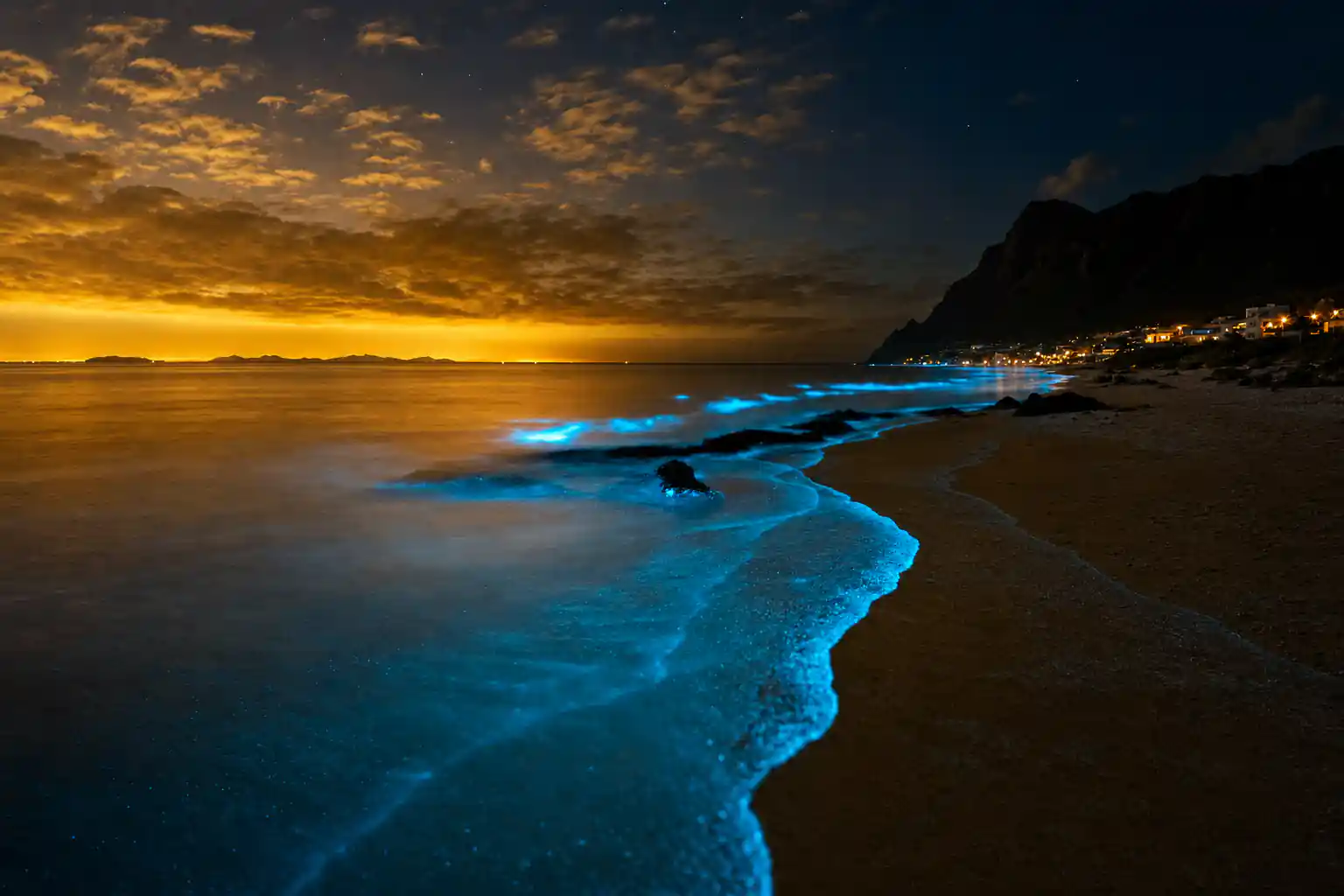
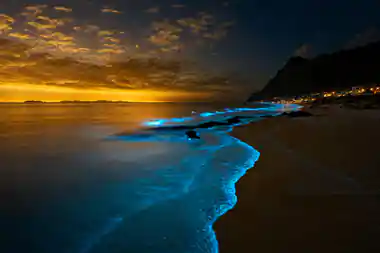
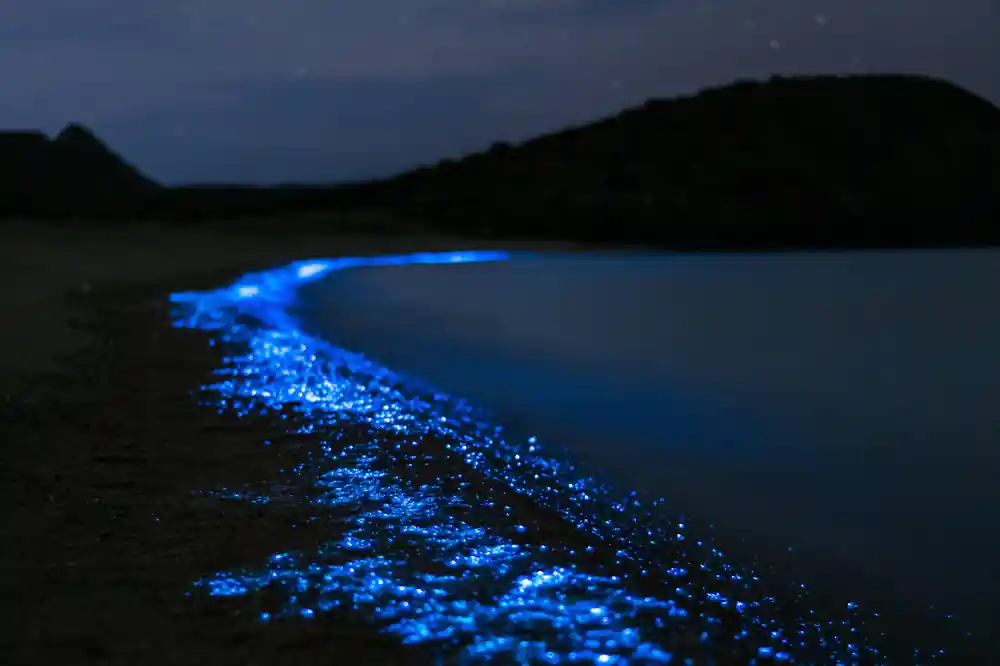
Bioluminescent plankton in Phuket are caused by dinoflagellates that emit blue-green light when disturbed, creating a glowing ocean effect best seen in dark, calm waters.
Is the Phang Nga Bay plankton tour worth booking?
Booking tips
- Compare tour listings and read the stops list before you choose
- Keep cash in baht for the park entrance fee
- Reserve ahead in high season and read the cancellation terms
- Decide whether you want a big boat or a smaller group
On the day
- Expect a van pickup and a ride to the marina
- Sun cream, a hat and a light layer for the boat
- Allow the full tour time and keep the rest of the day light
- Bring a dry bag for your phone and camera
What the Ao Phang Nga National Park entrance fee costs
Ao Phang Nga National Park is a Category 3 national park, and the entrance fee for a foreign adult is 300 baht.[1] That is the number to plan around, and it sits neatly next to the boat trip in your budget. Bring baht in cash and check the details of your tour before you leave the hotel.
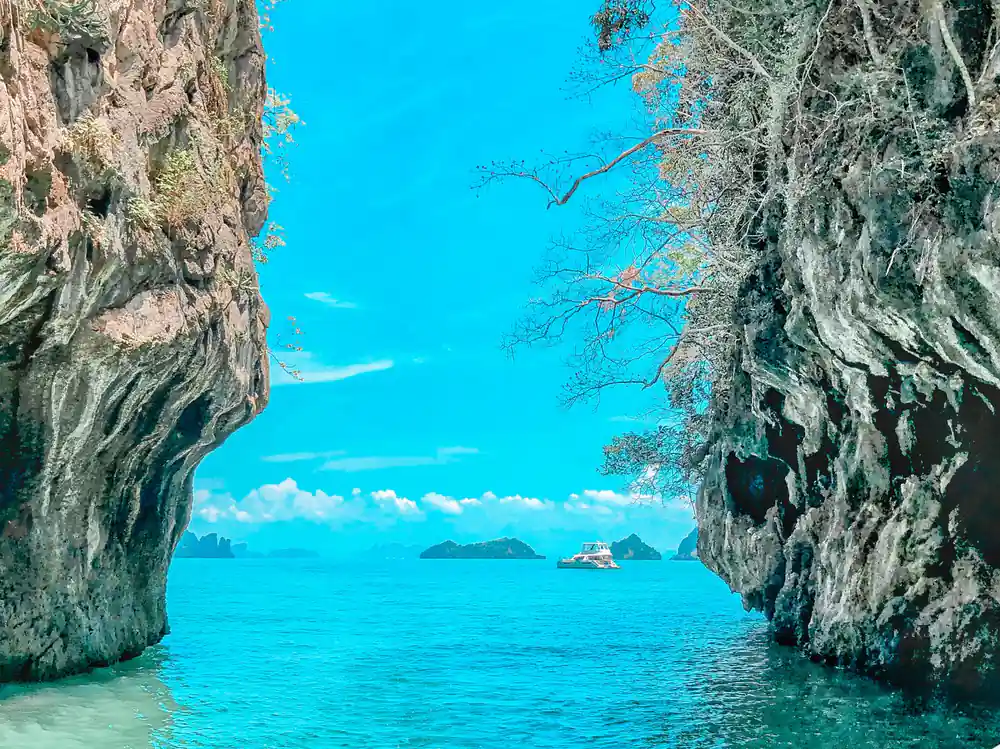
The bay is not a single gate on a road. It is a flooded karst landscape of limestone islands, sea caves, hidden lagoons and mangrove channels spread across the water north east of Phuket, and you normally arrive by boat with your group. Think of the fee as your contribution to the national park, while the rest of what you pay covers the van, the boat, the guide and the food.
Because the fee is charged for the park rather than the boat, it does not shift much between one tour and the next. If you are travelling as a family or a group, add it up before you decide, then ask whether the difference in price is better spent on a quieter boat, a smaller group or a longer day on the water.
Ao Phang Nga National Park tickets: what you are paying for
Tickets for the bay come in as many shapes as the islands. A big boat canoeing day starts from US$48, a six island speedboat loop starts from US$67, and the speedboat and canoe trip that ends with the plankton stop starts from US$88.[4][7][8] A private longtail day to James Bond Island with canoeing starts from US$416, which buys space, quiet and a schedule that bends around you.[9]
What you get for the money varies more than the price does. The plankton and sea canoe tour can be reserved now and paid later, has pickup available depending on your options, and offers free cancellation up to 24 hours in advance for a full refund.[4] Check the stops list before you book, because two tours with similar names can visit quite different islands.
Every price on a listing is a from price. Set aside the 300 baht foreign adult park entrance fee as well, and take a little spare cash for drinks and snacks at the island stops.[1]
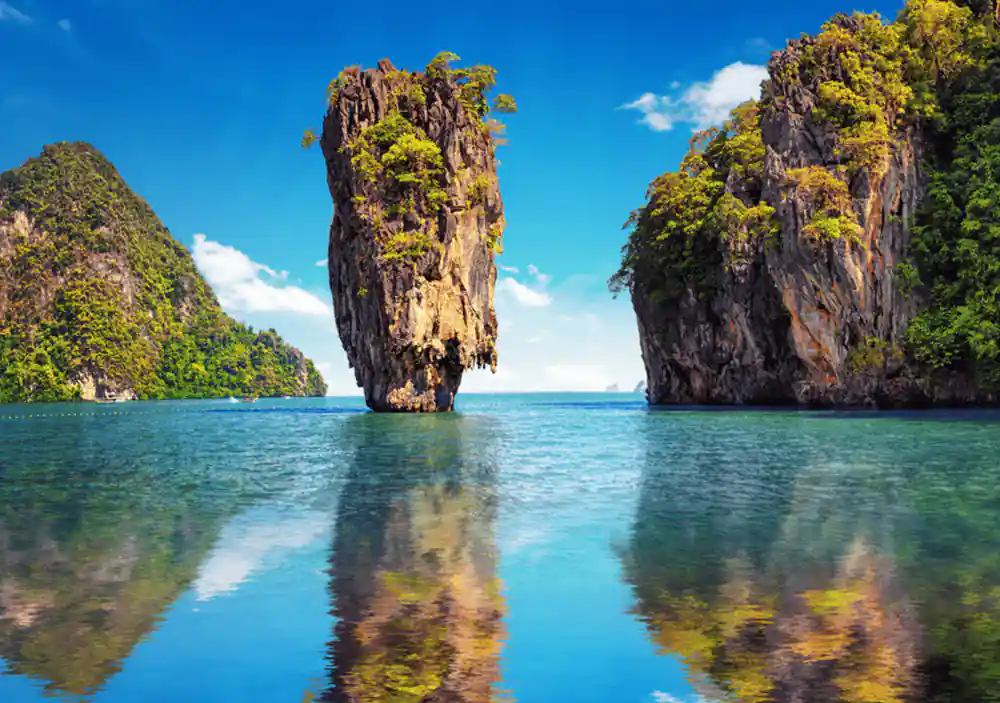
Limestone cliffs and calm green water where the bay opens out toward the hidden hongs
James Bond Island, Koh Panyee and the hidden hongs
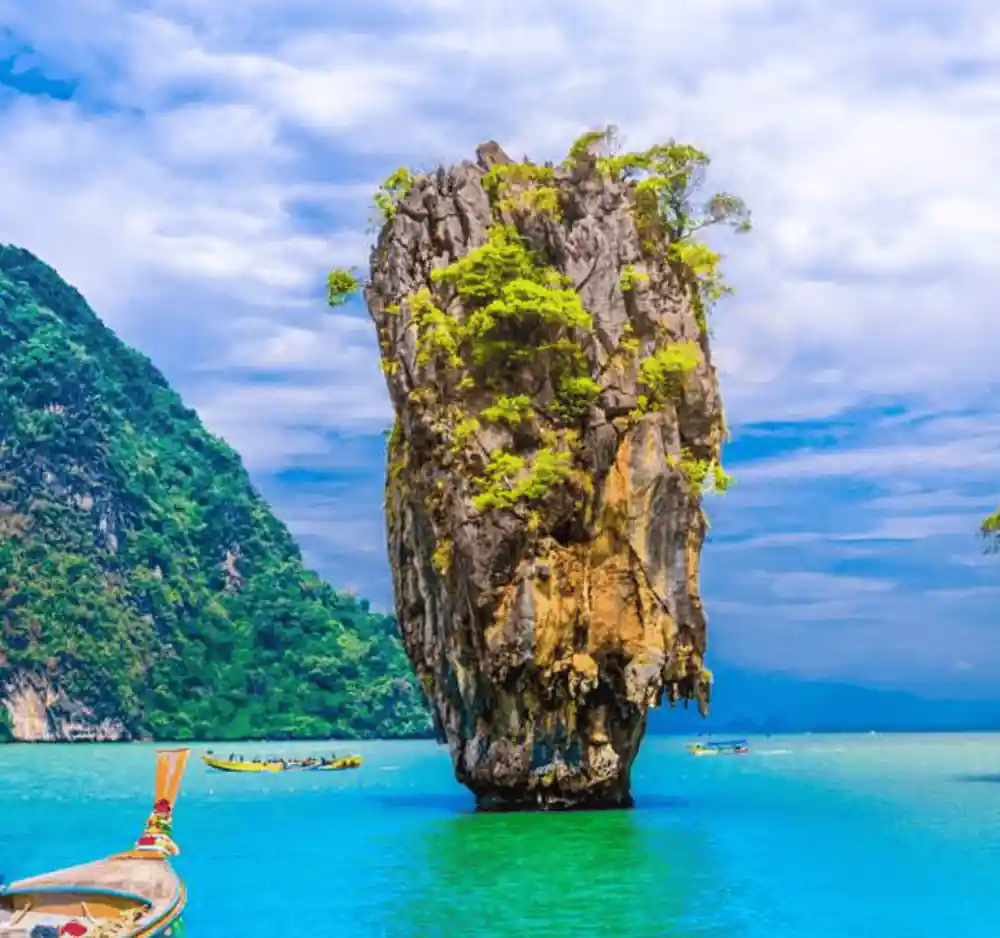
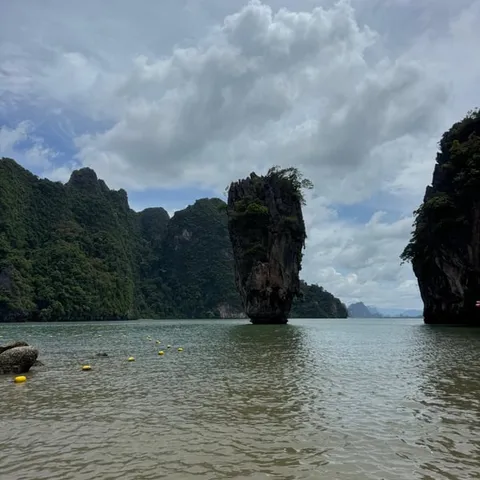
Three names turn up on almost every itinerary, and they are worth knowing before you choose one. James Bond Island, officially Ko Tapu on the twin peaked islet of Khao Phing Kan, is the limestone spire in Phang Nga Bay that was made world famous by the 1974 James Bond film The Man with the Golden Gun.[10] It is a small, busy, photogenic rock, and most boats stop for a short walk and a lot of photographs.
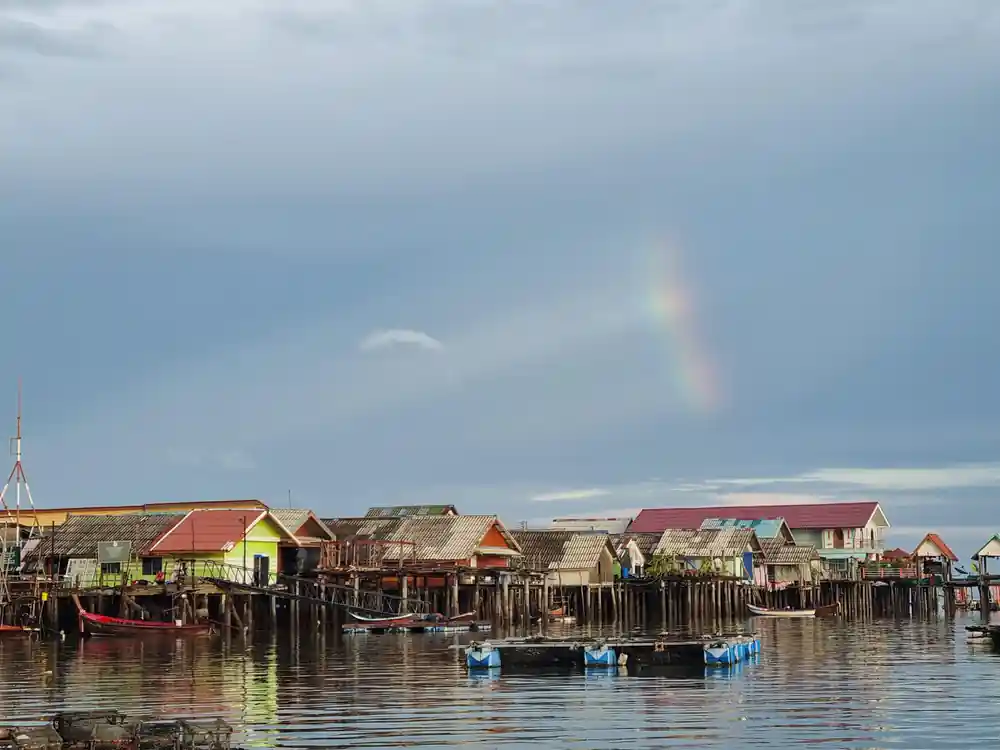
Koh Panyee is a floating village in Phang Nga Bay, built entirely on stilts by Indonesian fishermen and sitting at the foot of a towering limestone cliff.[11] It is the stop where you step off the boat onto planks instead of sand, eat something, and watch a whole community carried on above the water.
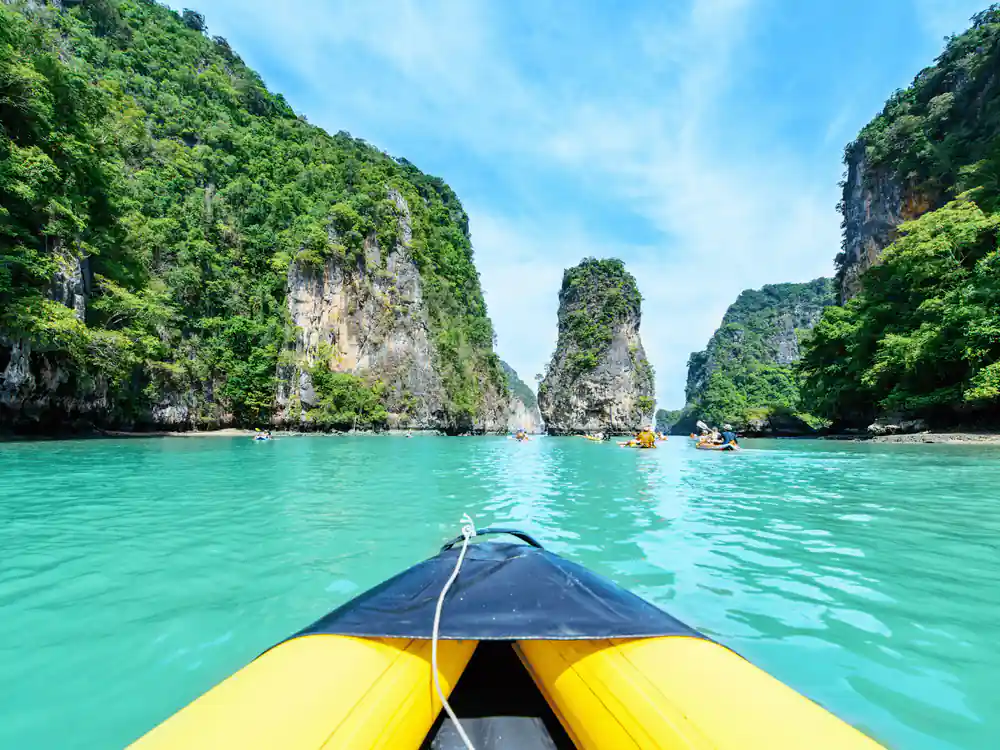
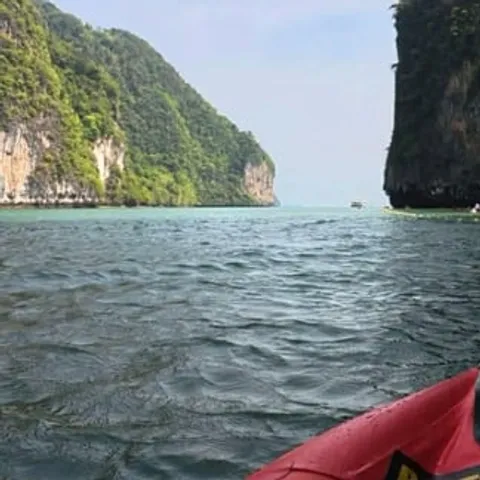
Then come the hongs. In Thai the word means room, and that is exactly what they are, enclosed lagoons that exist like secret chambers inside towering limestone cliffs and can only be reached by lying flat in a kayak and paddling through dark, narrow cave passages that open into hidden worlds.[12] Your guide steers, you duck, and the noise of the bay disappears behind you.
Bioluminescent plankton: why the water glows after dark
The glow on a night paddle is not magic and not a trick of the light. Bioluminescent plankton in Phuket are caused by dinoflagellates, microscopic single celled organisms that emit blue-green light when they are disturbed, creating a glowing ocean effect that shows best in dark, calm waters.[3] Every stroke of a paddle or sweep of a hand leaves a brief trail of light behind it.
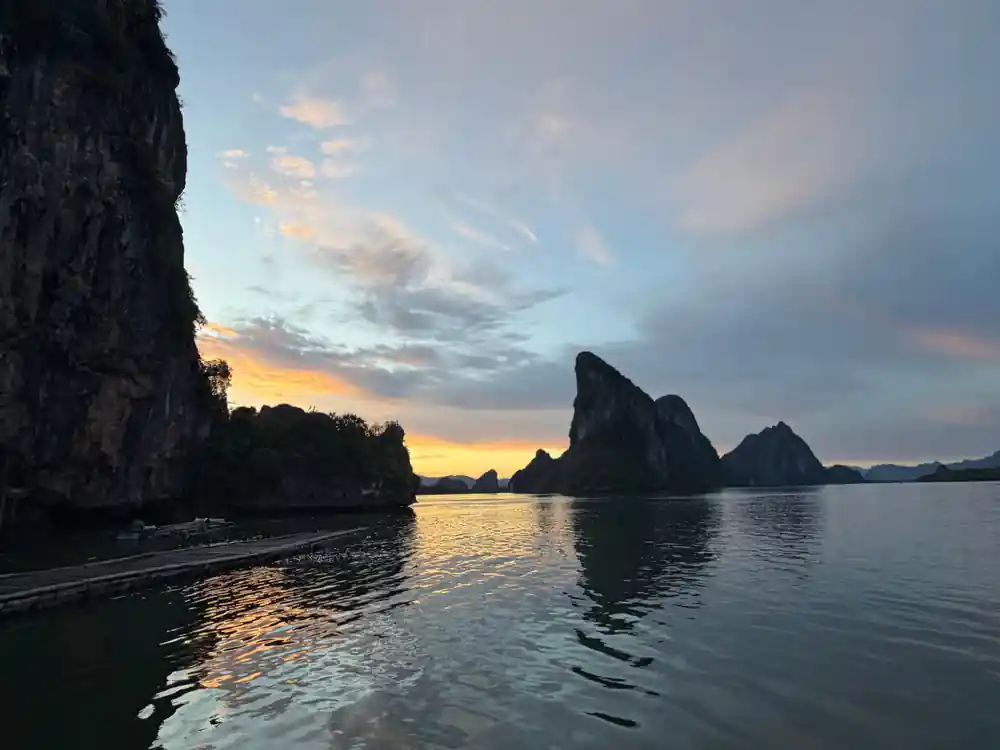
Some tours offer a sunset kayaking experience where you paddle under the evening sky and watch bioluminescent plankton glowing in the water.[13] The Phang Nga Bay bioluminescent plankton and sea canoes tour runs for 8 hours, starts from US$88, and has live guides who speak English, Spanish and German.[4] It holds a rating of 4.77 from 2,619 reviews.[4]
Give your eyes time to adjust once the sun goes down, and keep bright screens out of the way. Plankton glow is a wild thing rather than a stage show, so the brightness changes with the moon, the tide and how calm the water is. Take a waterproof bag, wear clothes you do not mind getting wet, and let your guide lead the way into the cave mouths.
300 baht
The foreign adult entrance fee to enter Ao Phang Nga National Park, on Thailand's Andaman coast in Phang-nga province.
How old the park is and what the islands are made of
Ao Phang Nga National Park was established in 1981 and spans approximately 154 square miles (400 square kilometers).[2] The protected area takes in coastal mangroves, islands and the strange geology of the bay, which is why a boat trip feels less like one destination and more like a slow crossing of a drowned mountain range.
The bay also holds some of the region's oldest art. Prehistoric cave paintings at Khao Khian are estimated to be around 3,000 to 5,000 years old and depict animals, boats, and various symbols.[14] The drawings sit directly on the limestone cliffs, so look up as your boat drifts past rather than down at your phone.
Limestone does not sit still. Rain, salt and time hollow the cliffs into caves, arches and collapsed chambers, and the sea moves in to fill them. That is why so much of a Phang Nga Bay day happens at water level, in a kayak or a canoe, rather than on a beach towel.
Mangroves, park rules and what to leave behind
The green fringe you pass on the way out of the marina is mangrove forest, the nursery for much of the life in the bay. Some of the mangrove plant species found along the coast are Rhizophora apiculata, Rhizophora mucronata, Avicennia alba, Avicennia officinalis, Bruguiera cylindrica, Bruguiera parviflora, Xylocarpus granatum and Xylocarpus moluccensis.[15] You do not need the names to enjoy the root tunnels, but it is good to know what you are looking at.
One rule catches people out on the day. Alcohol is not allowed in Thailand's national parks, so leave the beers in the hotel fridge, keep the cooler in the van, and save the celebration for the mainland evening. It is a small thing, but it saves an awkward moment at the pier.[16]
The rest is comfort rather than paperwork. Cave passages are tight and dark, so take a small torch, wear clothes that dry quickly, and keep your phone and camera in a dry bag. Follow your guide's lead on when to sit still, when to duck and when to paddle, and the day tends to run smoothly from the marina to the last stop.
When to go and how to pick your tour
If you are planning a beach vacation, November to February is the ideal time to visit Phang Nga Bay, with sunny tropical weather and festivals to enjoy.[5] Outside that window the bay is greener and quieter, and the water can turn rough, which is worth factoring in if you have booked a small boat. One Phang Nga Bay tour provides full refunds if the trip is canceled due to storms.[8]
Choosing comes down to three things: how many people you want around you, how long you want to be out, and whether you want to see the glow after dark. A big boat canoeing day takes 10 hours and starts from US$48, while the plankton and sea canoe speedboat day takes 8 hours and starts from US$88.[4][7] A twilight sea canoe trip with a glowing plankton stop starts from US$106.[6]
Book ahead for the busy months, read the cancellation terms, and keep your pickup details to hand on the morning. If the language your guide speaks matters to you, check it on the listing, and remember to set aside the Ao Phang Nga National Park fee in cash for the day.
From-prices for Phang Nga Bay tours
From-prices as listed for these Phang Nga Bay tours.[4][6][7][8]
What a day in the bay costs
Adult from-prices in US dollars for these tour listings.[4][6][7][8]
When to book and when to go
Plan your Phang Nga day
Check the entrance fee
Foreign adults pay 300 baht to enter Ao Phang Nga National Park, a Category 3 national park.[1] Keep it in cash.
Decide day or night
A daytime boat trip covers the islands and the hongs, while night tours add the plankton glow.[13]
Book a tour with pickup
The plankton and sea canoe tour has pickup available and can be reserved now and paid later.[4]
Pack for water and dark
A dry bag, clothes that dry quickly, a small torch and shoes you can slip off will cover most of the day.
Keep the evening free
The tour runs for 8 hours, so plan a light schedule around it and eat before you go.[4]
Ready to see Phang Nga Bay after dark?
from US$89Reserve now & pay later