Quick summary
- On guided sea canoe trips you sit in front and the guide does the steering, so no paddling skill is needed.
- You lie flat while the canoe is pulled through a low passage in the limestone, then sit up inside a hidden lagoon.
- Water settles in the bottom of the canoe, so quick-dry clothes and a roll-top dry bag for your phone are the practical kit.
- The bioluminescent plankton and sea canoe tour booked here runs 8 hours from pickup to drop-off.[1]
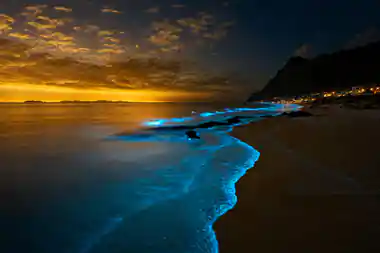
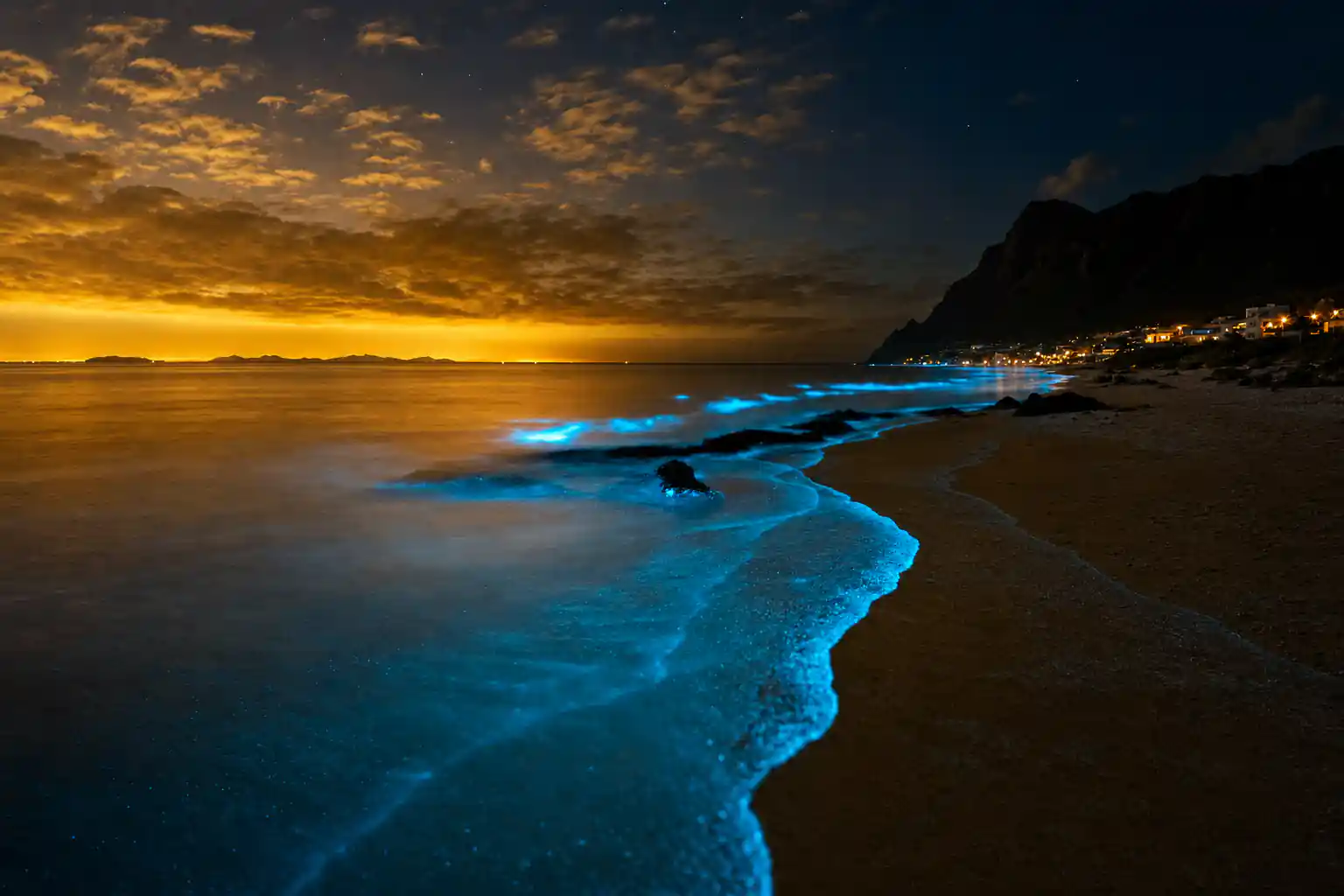
- In dark, calm water the plankton give out blue-green light when disturbed, so a hand trailed over the side leaves a glowing trail.[2]
- Top choice Bioluminescent sea canoes from US$88 Rating4.77 from 2,619 reviews[1]Duration8 hours[1]Guide languagesEnglish, Spanish, GermanPickupCheck availability for pickup optionsCancellationFree cancellation up to 24 hours[1] Check availability
- Twilight sea canoe from US$106 Rating4.90 from 1,954 reviews[3]Duration1 day[3]Guide languagesEnglishPickupCheck availability for detailsCancellationFree cancellation up to 24 hours[3] See this tour
- Big boat canoeing from US$48 Rating4.72 from 4,048 reviews[4]Duration10 hours[4]Guide languagesEnglish, ThaiPickupCheck availability for detailsCancellationFree cancellation up to 24 hours[4] See this tour
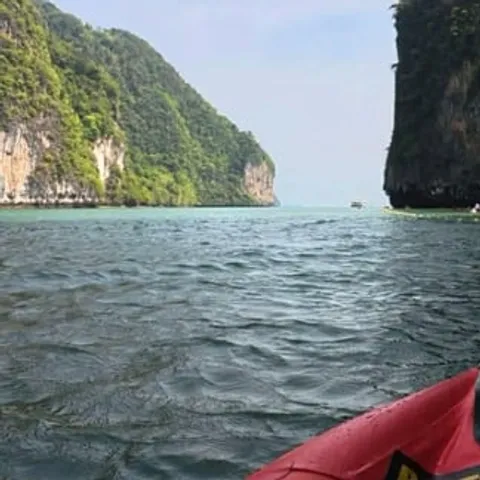
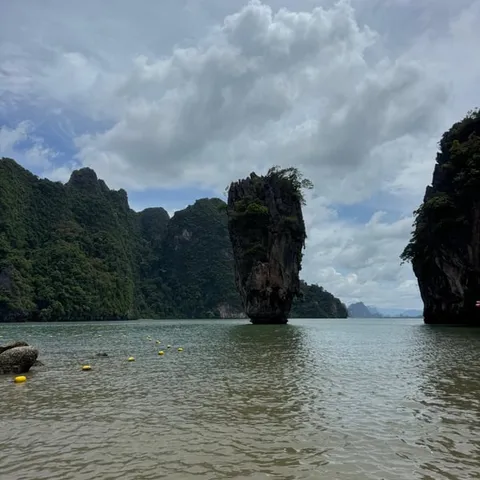
Khao Khian is considered a true "Unseen Spot" in Phang Nga Bay and fascinates visitors with prehistoric cave paintings estimated to be around 3,000 - 5,000 years old. The red and brown drawings can be seen directly on the limestone cliffs and depict animals, boats, and various symbols.
Verdict: a gentle day out in the caves
Booking tips
On the water
- Hat, long sleeves and reef-safe sunscreen, because the reflection off the water is strong
- A roll-top dry bag for your phone and a small cloth for the camera lens
- Follow the guide's duck and lean calls and keep your hands inside the canoe
- Cash for the national park fee: 300 baht for foreign adults[5]
Who Paddles: You or Your Guide
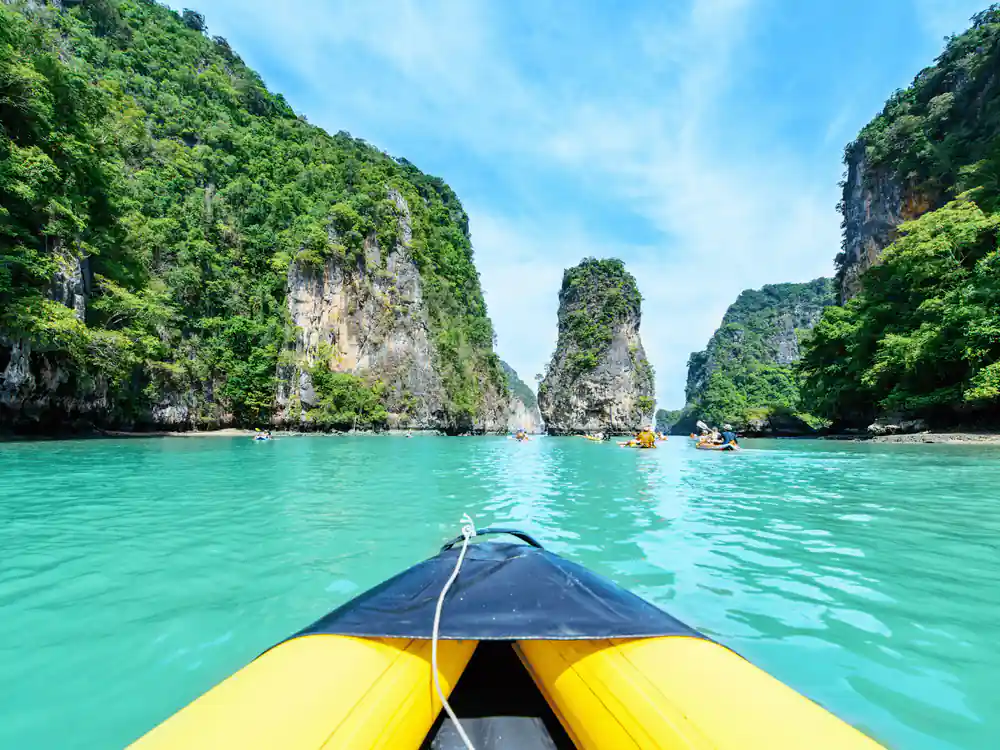
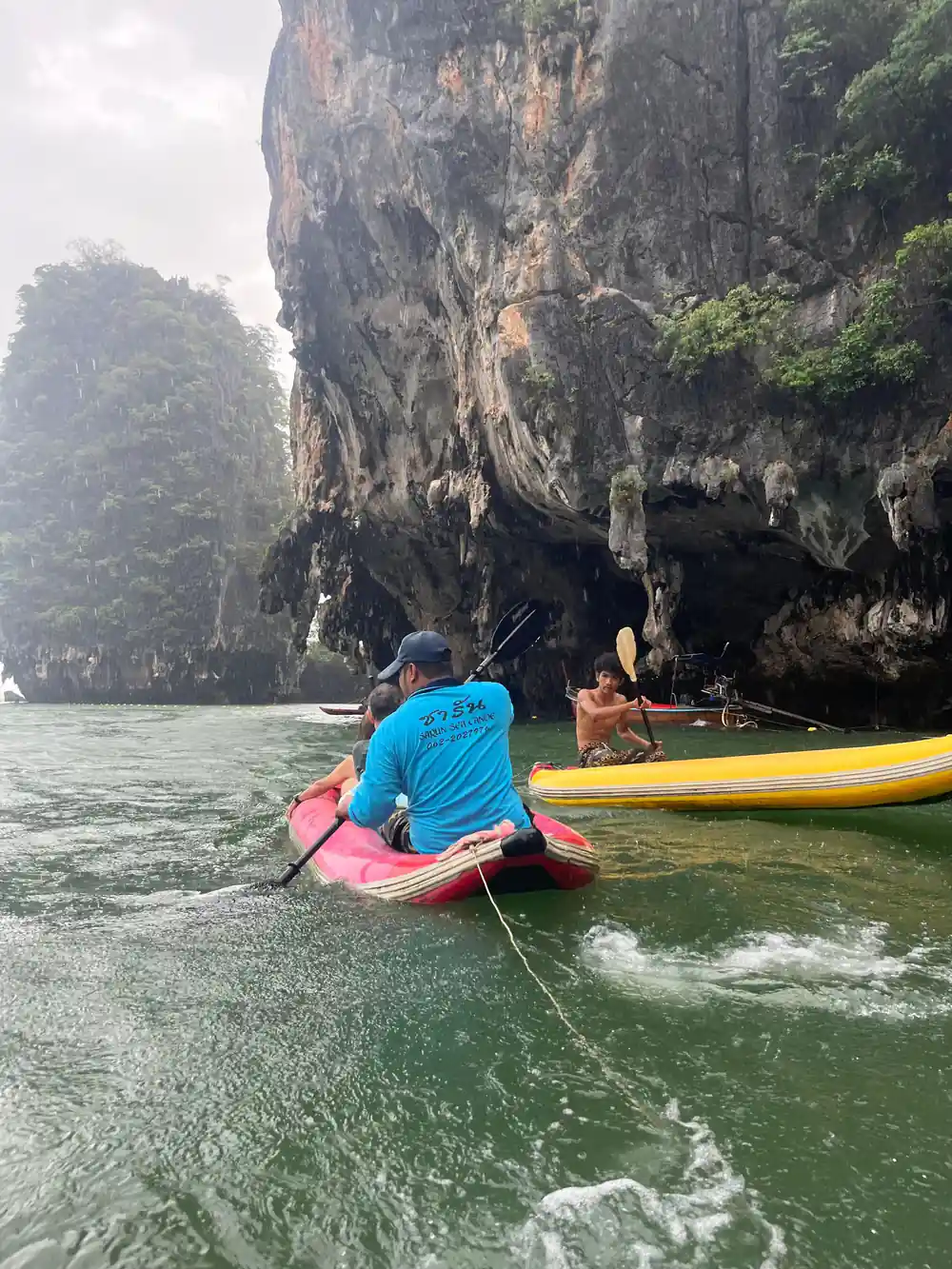
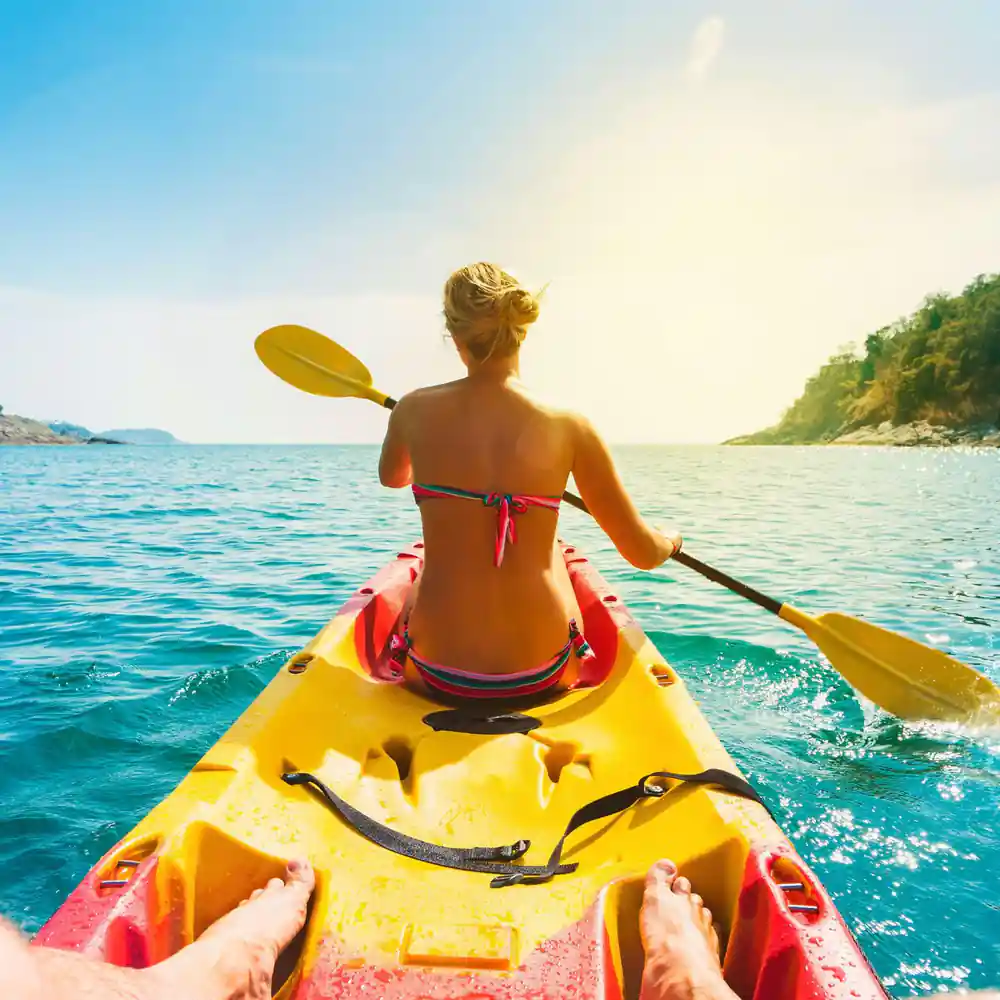
On most Phang Nga Bay canoeing trips you are not the one paddling. A guide sits behind you, working the paddle, while you sit in front with your hands free for a camera or a handrail. That is the usual arrangement on the guided sea canoe tours in this bay, and it is what makes the cave passages realistic for people who have never held a paddle. You still move: you shift your weight, duck when you are told, and lean with the boat. The steering, the timing and the reading of the tide stay with someone who does this every day.
If you want the paddle in your own hands, that is a different kind of day out. There are kayak trips in the region, including mangrove kayaking and quiet lagoon paddles, where you are the engine and the guide points the way. The kayak and canoe difference here is mostly shape and seating rather than skill: the open canoes used on these tours are wide and built to carry a passenger, while a kayak sits you lower with a double blade in your hands. Ask which one you are booking before you pay.
The Low Squeeze Through Cave Passages
The moment people remember is the entrance. You lie back, flat as you can, and the guide pulls the canoe through a passage so low that the limestone sits close above your face. Light goes grey, then black. There is a smell of cold rock and salt, and the paddle knocks softly against stone. Then the passage opens and you sit up inside a hong, an enclosed lagoon hidden in the cliff. Hong means room in Thai, and that is what it feels like: a secret chamber of rock with a circle of sky above, reached by lying flat in a kayak and paddling through dark, narrow cave passages.[6]
How long a passage takes depends on the cave, the tide and the traffic inside it. Some entrances are short, barely a couple of boat lengths, and some open into a wide lagoon where you can float quietly and listen to water dripping. Guides read the conditions before they commit, and they will not push a group into a passage that is tight or busy. If you are claustrophobic, say so before you leave the pier. There is no shame in sitting out one cave and joining everyone at the next stop.
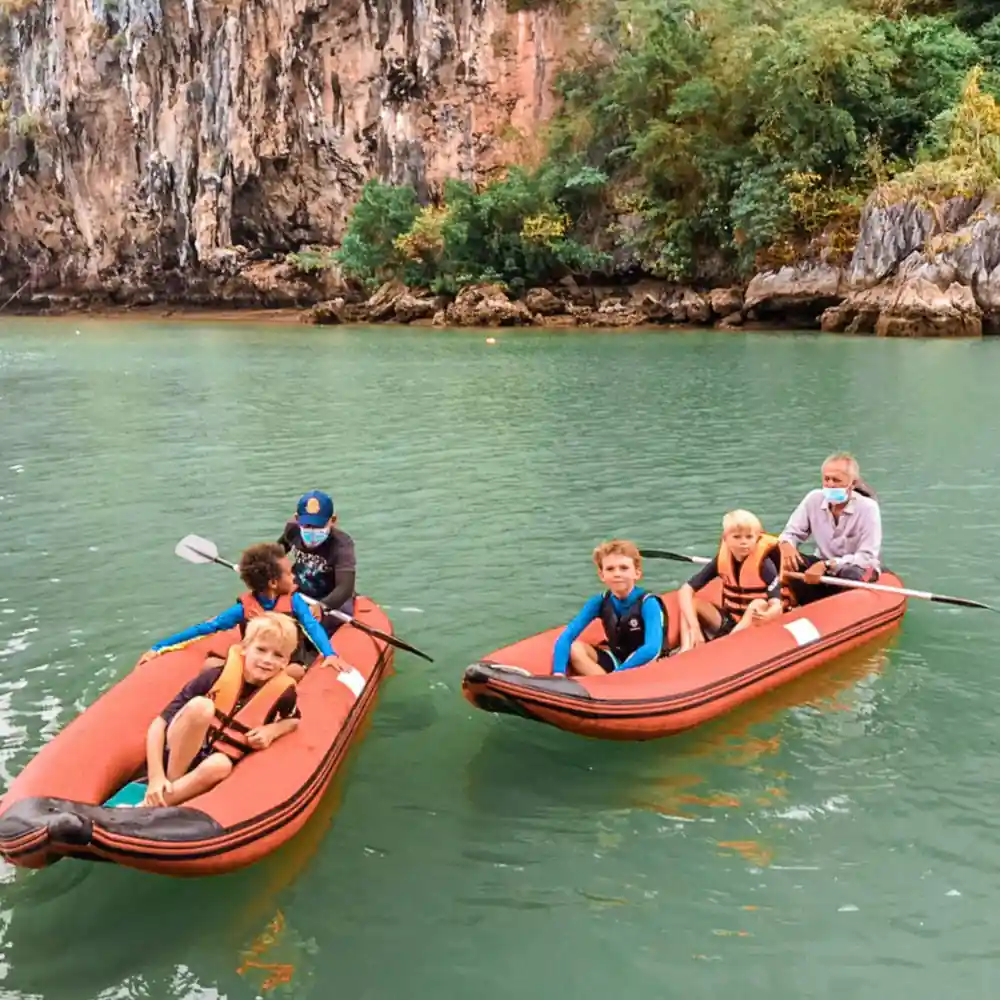
A canoe slides into the low mouth of a limestone cave, with turquoise water behind.
Stability and Nerves: What First-Timers Should Know
Sea canoes used on these trips are inflated, wide and hard to tip. You sit low, close to the floor, with your weight spread along the middle of the boat. The bay itself is sheltered by islands and cliffs, so the water is usually flat and calm. If you have ever wondered whether you can kayak in the ocean, this is a soft way to find out: still water, a guide behind you and land always in sight. No previous experience is needed, and nobody will ask you to perform.
Is it hard to kayak, then? On a guided sea canoe, no. You are not asked to hold a line, fight a current or paddle for hours on end. The work is balance and trust: keep your weight centred, keep your hands inside the boat, and follow short instructions about when to duck. The genuinely awkward part for a beginner is not the paddling but the waiting, sitting still while someone else does the work and remembering to lean when the boat turns.
How Wet You'll Actually Get
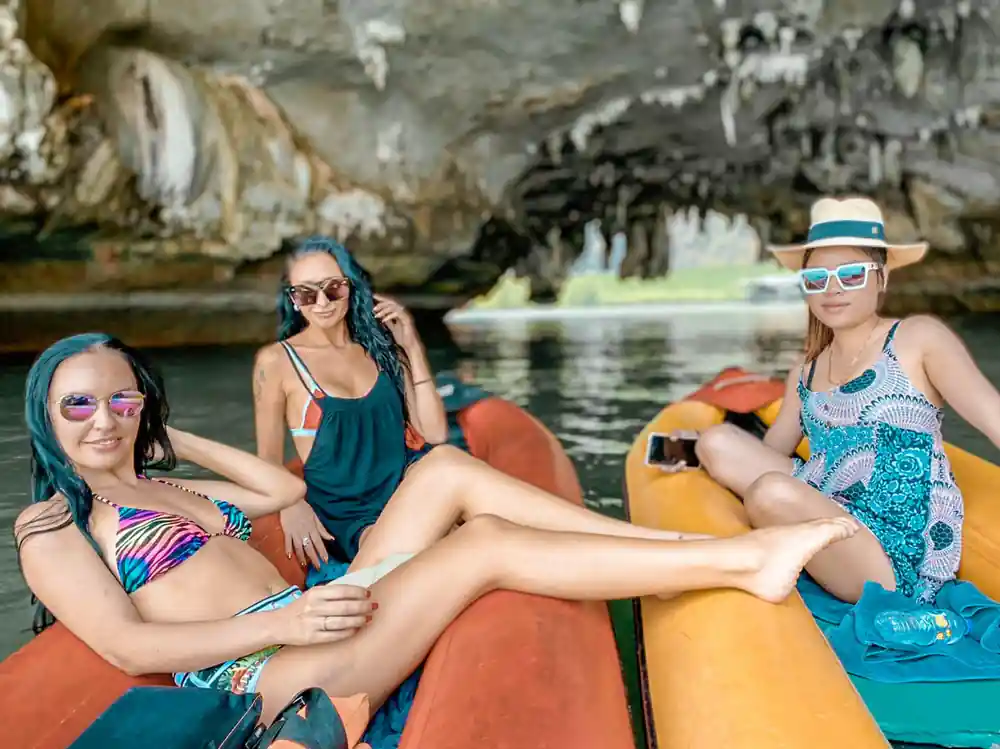
You will get wet, mostly from the waist down. Water collects in the bottom of the canoe from paddles, drips and the damp floor of cave passages, so quick-dry shorts and a light shirt are the sensible choice. Wear shoes you do not mind soaking, because you often step out into shallow water or onto a wet pier, and floating sandals beat heavy trainers. A roll-top dry bag is the one piece of kit worth packing even if you own nothing else for the water.
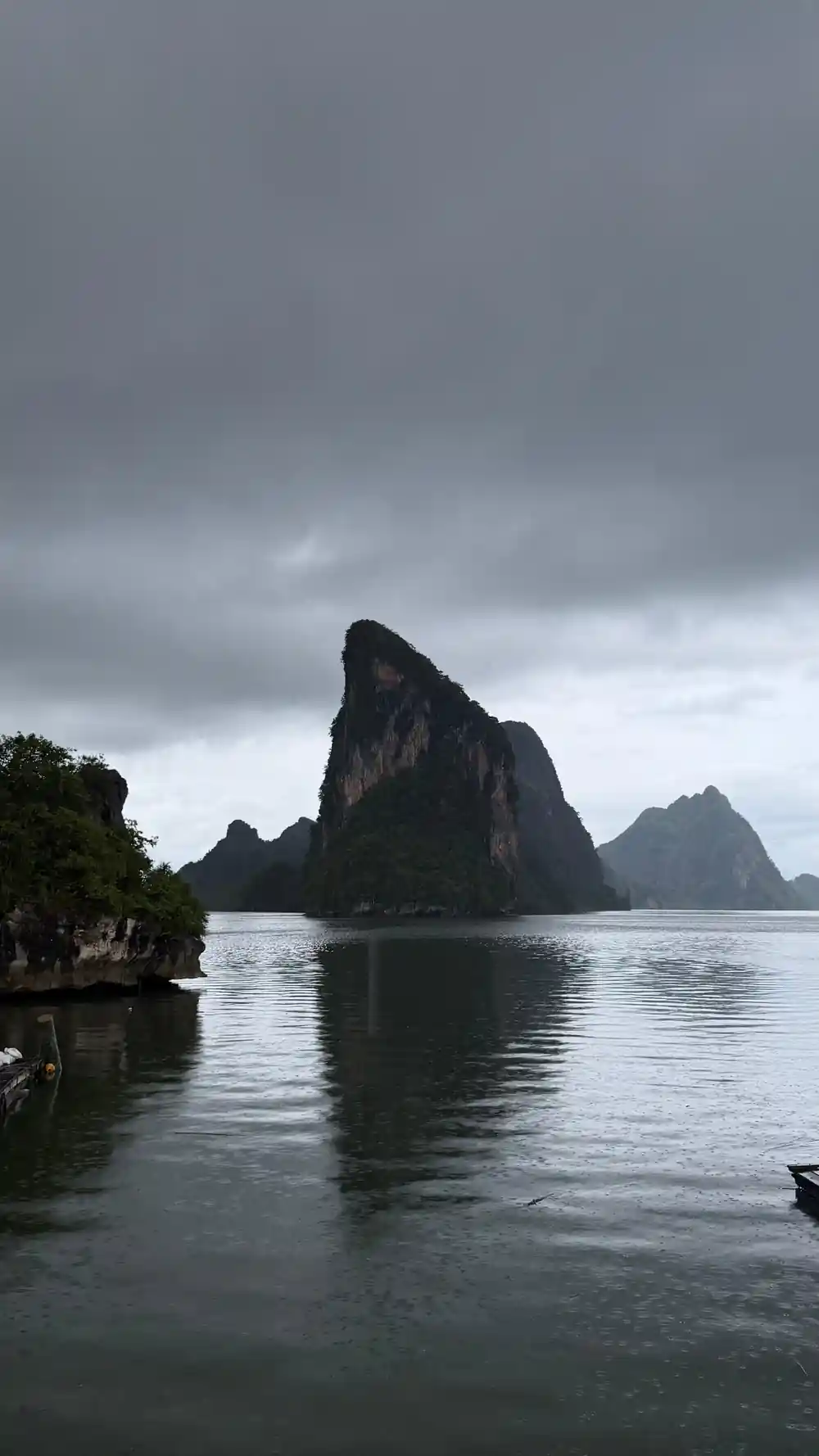
Sun works even when you are wet. On open crossings between islands the reflection off the water is strong, so a hat, a long-sleeved top and reef-safe sunscreen earn their place in your bag. Later in the day the air cools a little over the water, and a thin layer feels good on the ride back. Short tropical showers are normal here and rarely stop a trip; you dry quickly in the warm air, and the limestone looks better with a little rain on it.
from US$88
The bioluminescent plankton and sea canoe trip runs 8 hours with pickup available and a live guide in English, Spanish or German.[1]
Keeping Your Phone and Camera Safe
Salt water and phones do not mix, and a canoe is a wet place. A simple dry bag with a roll top, clipped inside the boat, is enough for most people. If you want photographs from the water, a waterproof pouch on a lanyard lets you shoot through the plastic and keep the phone around your neck while the guide paddles. Check the seal before you leave your hotel, not in the middle of the bay with a cave coming up.
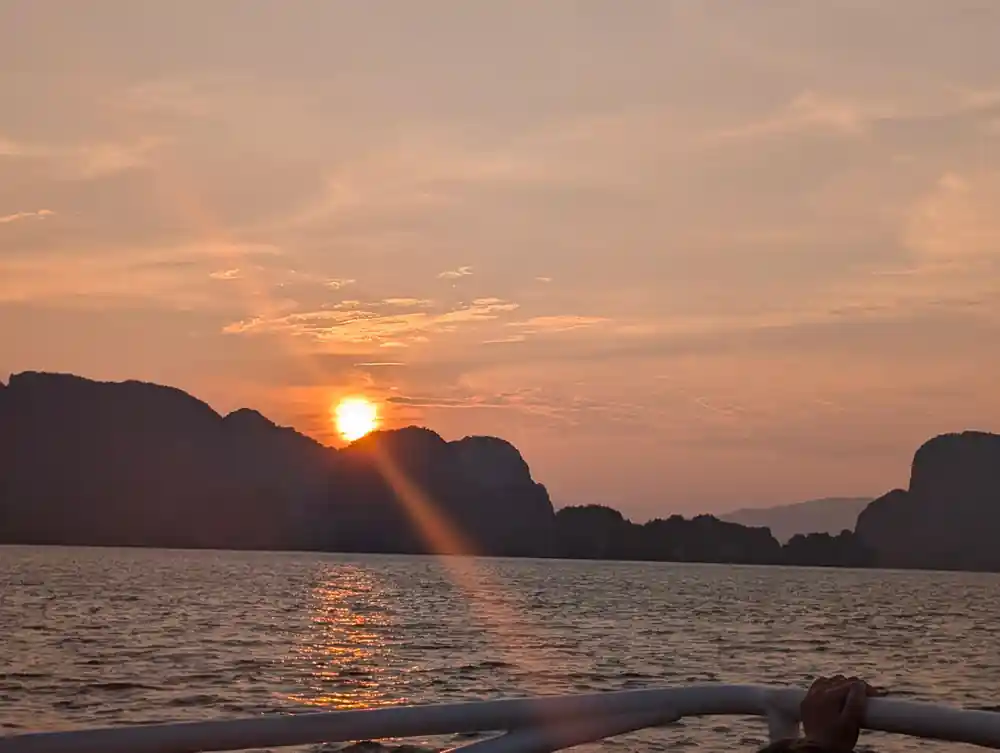
The best pictures usually come from inside a hong, where the light falls in a shaft and the water is green and still, and from the last minutes of the day when the bay turns gold. A small cloth for wiping spray off the lens is worth the pocket space. If your camera is not waterproof, leave it in the bag for the cave passage and bring it out once you are inside, where the boat is steady and the guide holds position against the rock.
What to Do If Someone Panics
It happens, usually at the cave entrance, and the guides have seen it many times before. The fix is quick: tell the guide you want to come out, sit up as soon as the passage allows, and breathe slowly. Canoes turn easily in open water, and a second boat is normally close by. Nobody is left lying in a dark passage to work it out alone, and nobody is embarrassed for asking to go back.
If you know tight spaces bother you, mention it at the briefing on the pier. You can stay with the boat crew, swim, or join the group again at the next stop. Families often split this way, with one adult waiting on the mother boat with a nervous child. A full day has several stops, so missing a single cave costs you very little and you still see the bay from the water, which is the point of the trip.
Eight Hours on the Water: Pacing and Endurance
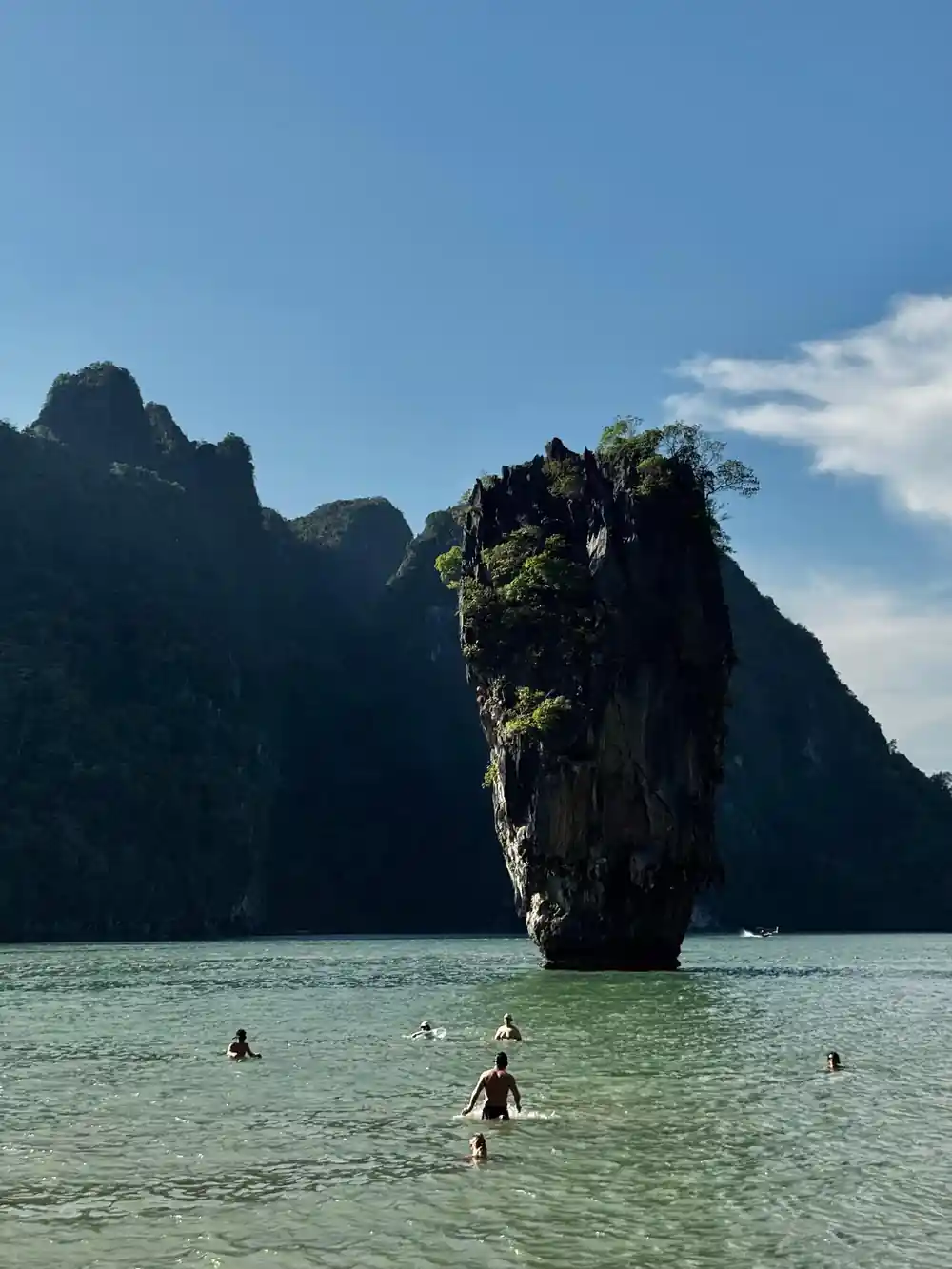
A sea canoe day here is a long one. The tour booked from this site runs 8 hours and strings together a van, a speedboat, stops at Panak Island, Ko Hong and James Bond Island, and the ride home again.[1] That is a lot of sitting, a lot of sun and a lot of new things to look at, so pace yourself. Drink water at every stop even when you are not thirsty, eat when food is offered, and use the flat crossings to rest your eyes.
The reward for a long day is often the water after dark. In dark, calm conditions the plankton in this bay give out blue-green light when they are disturbed, so a paddle stroke or a hand trailed over the side leaves a glowing trail.[2] It is faint at first, then it is everywhere. Bring a light layer for the ride back, keep your camera in a dry pouch, and give your eyes a few minutes to adjust before you decide there is nothing to see.
From prices for Phang Nga Bay canoe and kayak tours
Every bar is a from-price quoted by the listings cited here:[1][3][4][7][8]
From prices per person on listed sea canoe and kayak tours
US dollar from-prices taken from these listings:[1][3][4][7]
When to book a sea canoe in Phang Nga Bay
Your first hour in the canoe
Meet the guide at the pier
The van brings you to the boat, where the guide hands out life jackets and explains the duck and lean calls you will use all day.
Sit in front, hands free
You take the front seat and the guide takes the back. The canoe is wide and stable, and you keep your weight in the middle as it slides away.
The first low passage
Lie back when the guide says so. The limestone passes close over your face, then you sit up in a hong with green water and high rock walls.[6]
Out into the open bay
Between islands the canoe crosses open water in short stretches. Watch the cliffs and the floating village at the foot of the limestone rather than your camera.
After dark, if the tour runs late
On night tours the last paddle is in darkness, and each stroke and splash can light up as the plankton in the water react.[2]
Paddle the hongs by daylight or watch the water glow after dark
from US$89Reserve now & pay later