Quick summary
- Golden hour on limestone karsts, dark cave passages, and after sundown the blue-green glow of dinoflagellates in calm water.[1]
- The route runs from Phuket Boat Lagoon by speedboat to Panak Island, Ko Hong, James Bond Island and Phang Nga Bay, 8 hours in total.[2]
- A hong is an enclosed lagoon inside the limestone cliffs, reached by lying flat in a kayak and paddling through dark, narrow cave passages.[3]
- Two ways to shoot the glow: a phone braced on something steady with the screen dimmed, or a camera on a long exposure with the shutter held open.
- Spray is constant on a speedboat, so pack a dry bag, a microfibre cloth and silica sachets, and do not open the camera until you are back on land.
- Top choice Plankton and canoes from US$88 Rating4.77 from 2,619 reviews[2]Duration8 hours[2]Guide languagesEnglish, Spanish, German[2]CancellationFree cancellation, 24 hours ahead[2]Perfect forThe glow after dark Check availability
- Twilight sea canoe from US$106 Rating4.90 from 1,954 reviews[4]Duration1 day[4]Guide languagesEnglish[4]CancellationFree cancellation, 24 hours ahead[4]Perfect forSunset and plankton See this tour
- Big boat canoeing from US$48 Rating4.72 from 4,048 reviews[5]Duration10 hours[5]Guide languagesEnglish, Thai[5]CancellationFree cancellation, 24 hours ahead[5]Perfect forA full day on the bay See this tour
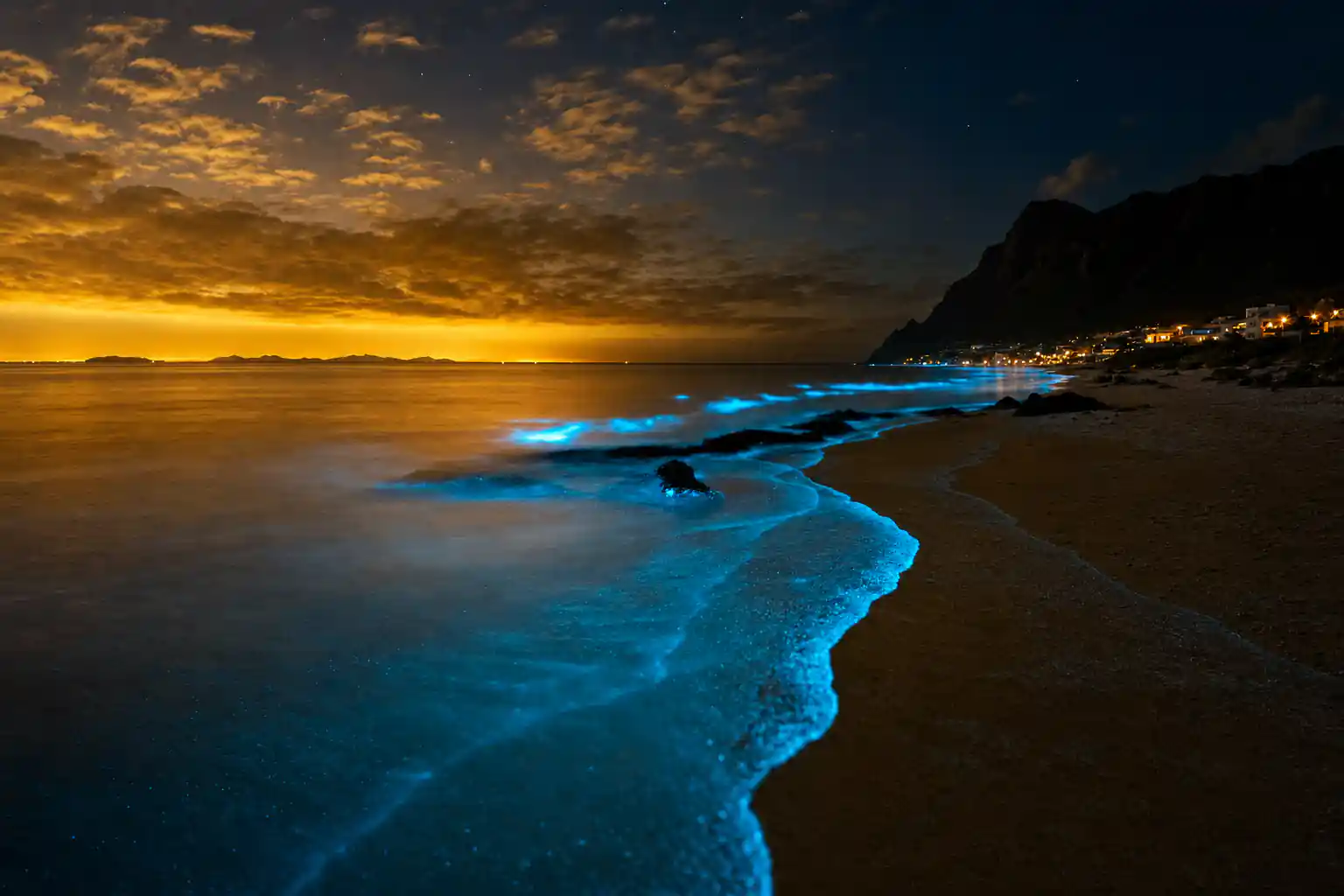
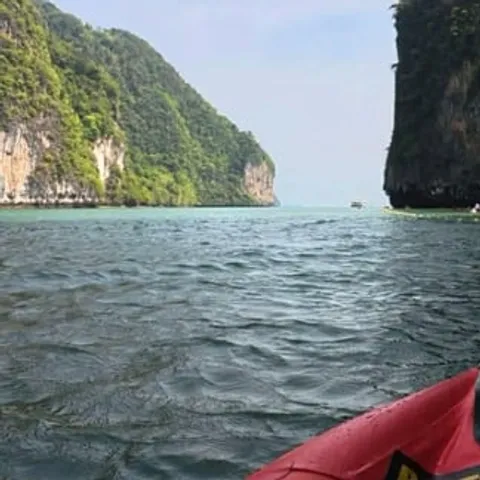
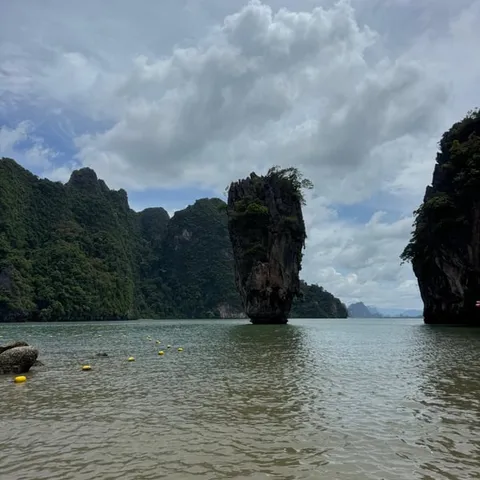
Some tours offer a sunset kayaking experience , where you paddle under the evening sky and witness bioluminescent plankton glowing in the water - a magical sight that adds a unique twist to your adventure.
Is this a good tour for photographers?
Know before you leave
On the water
- Shoot the karsts in low sun, then keep the camera dry when the spray starts.
- Ask your guide where the boat can pause, and ask before you fly a drone.
- Pack a light layer for the evening ride home, the sea air cools quickly after dark.
- Dry bag, microfibre cloth and silica sachets: salt spray reaches every corner of a bag.
Golden hour at the limestone cliffs
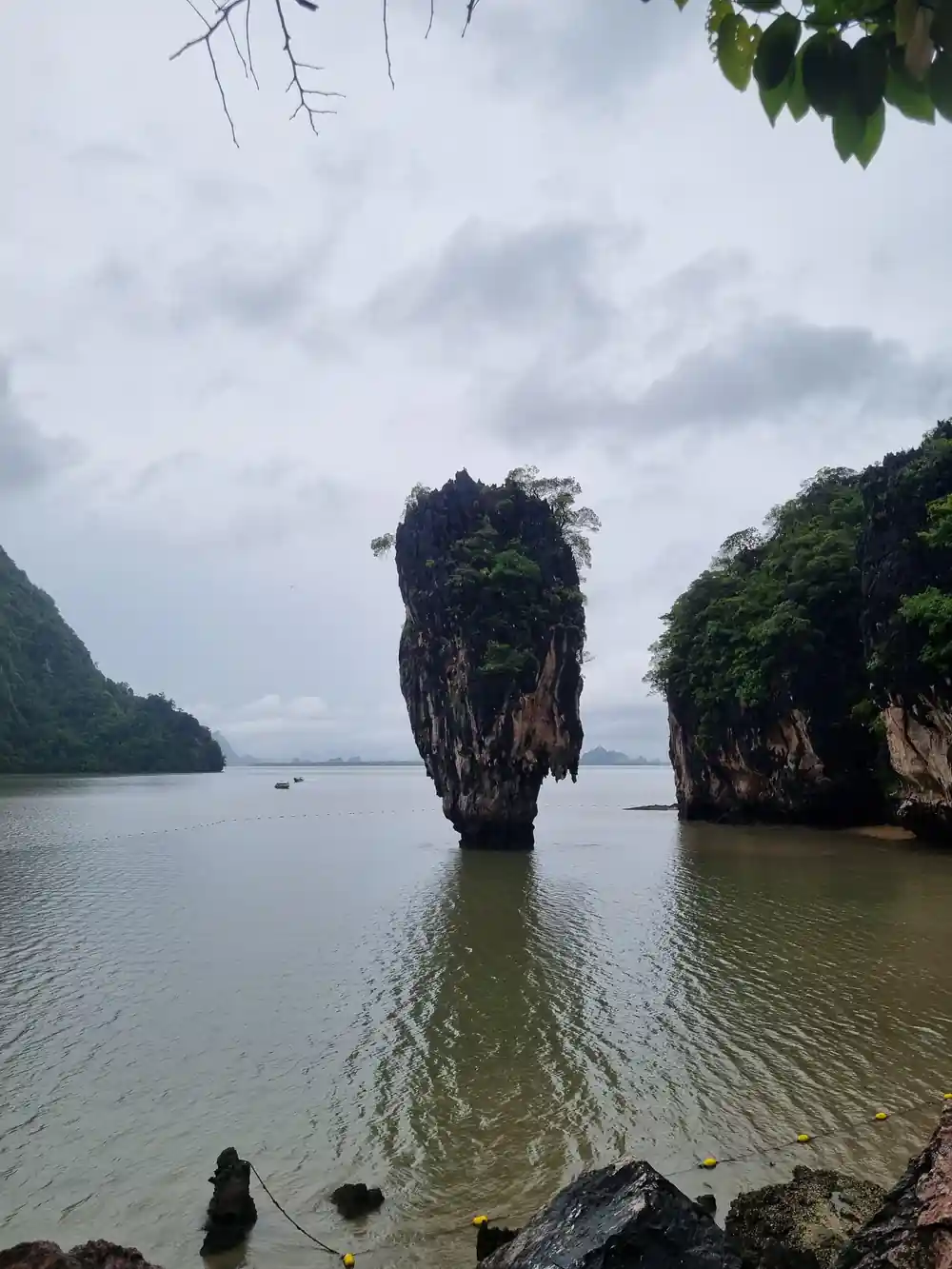
Phang Nga Bay is a drowned limestone landscape of vertical cliffs, undercut bases and green water, and the light does most of the work for you. The national park was established in 1981 and spans approximately 154 square miles (400 square kilometers), so a single day on the water only touches a handful of its islands.[7] Late afternoon turns the rock gold and throws long shadows across the shallows. James Bond Island, properly Ko Tapu on the twin-peaked islet of Khao Phing Kan, is the spire everyone photographs. Shoot it early in your slot and let the crowd move on.[8]
A polarising filter cuts glare on the water and deepens the sky, and a lens hood keeps stray light off the front element when the sun slips behind a karst. Shoot wide for scale, long for boats and birds, and remember that a moving deck is never steady, so keep the shutter speed up and shoot in bursts. The last hour before sunset is when the rock glows and the water goes smooth and oily. Look behind you as well: the wake, the longtail boats and the silhouettes of other canoes often make better pictures than the cliff everyone is facing.
Getting there shapes the shoot. The crossing runs north east into the bay from the east coast of Phuket, so you are often shooting into the light on the way out and with the sun behind you on the way home. Keep your bag zipped between stops, keep a cloth in your pocket, and be ready the moment the engine slows. Good angles pass quickly.
Shooting sunset from a sea canoe
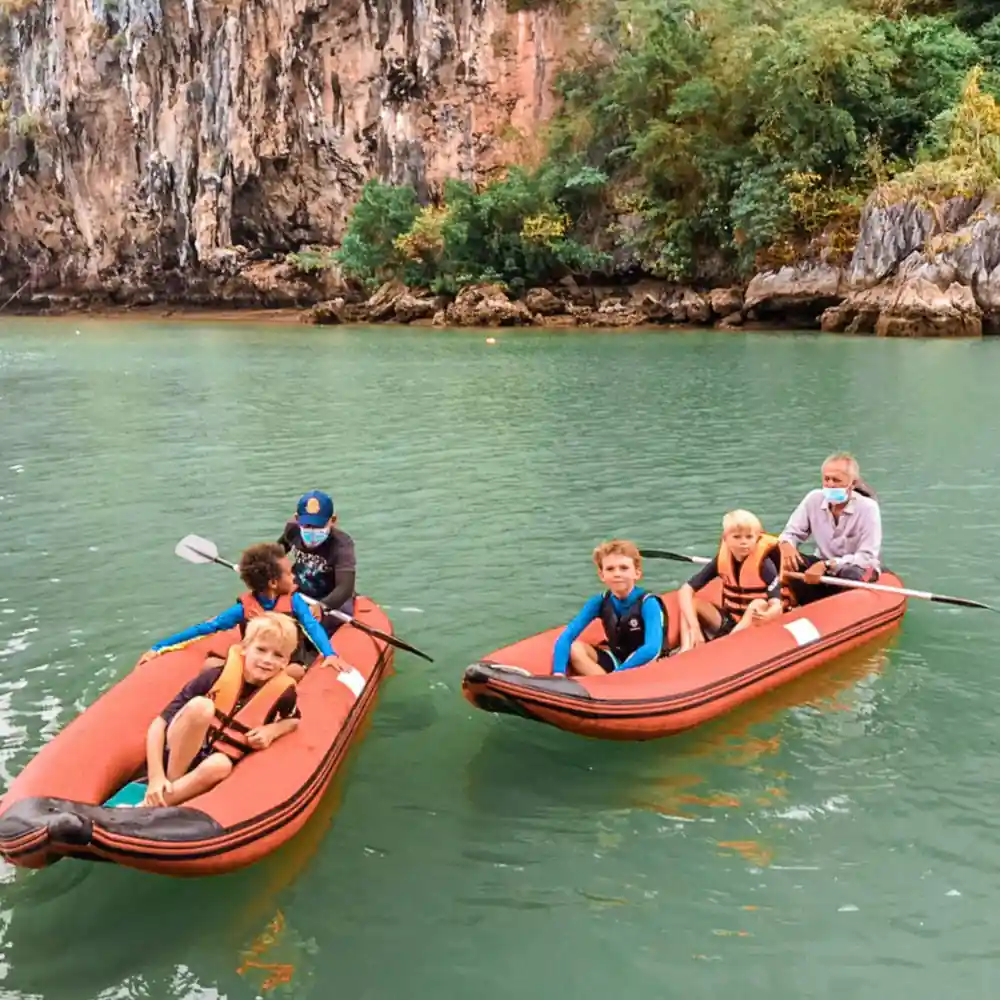
Paddling low in a sea canoe puts your lens at water level, which changes the feel of a place: cliffs stretch upward, reflections fill the frame, and you can slide under a limestone overhang that no bigger boat could reach. The Phuket: Phang Nga Bay Bioluminescent Plankton and Sea Canoes tour runs 8 hours, from pickup by van to Phuket Boat Lagoon and out by speedboat to Panak Island, Ko Hong, James Bond Island and Phang Nga Bay.[2]
Koh Panyee, the floating village built entirely on stilts by Indonesian fishermen at the foot of a towering limestone cliff, is one of the bay's landmarks and a fine subject from the water.[9] Keep a cloth in your pocket and a dry bag under your knees. Where the sun is behind you, the canoe's bow makes a steady rest. Where the sun is in front, expose for the sky and let the water go dark, which is often the stronger picture.
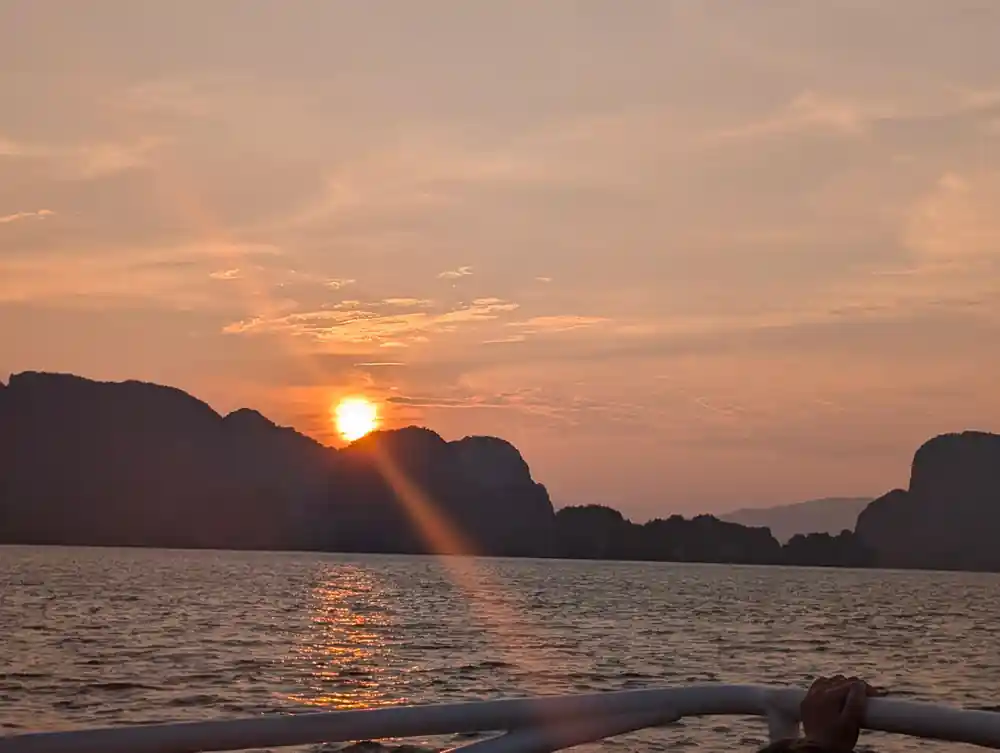
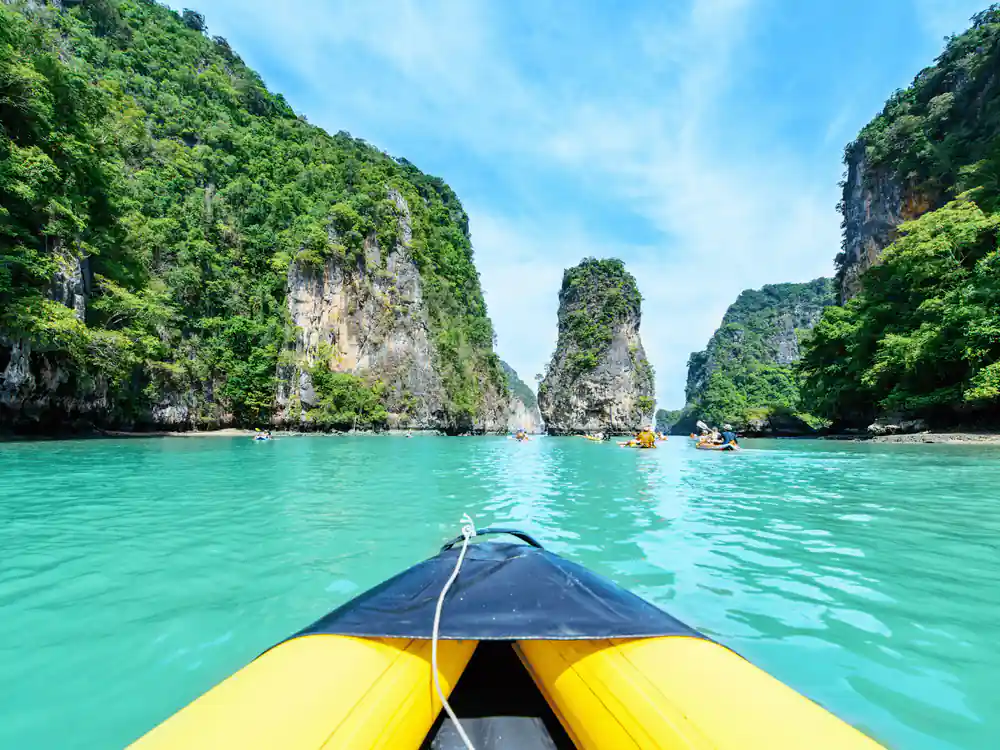
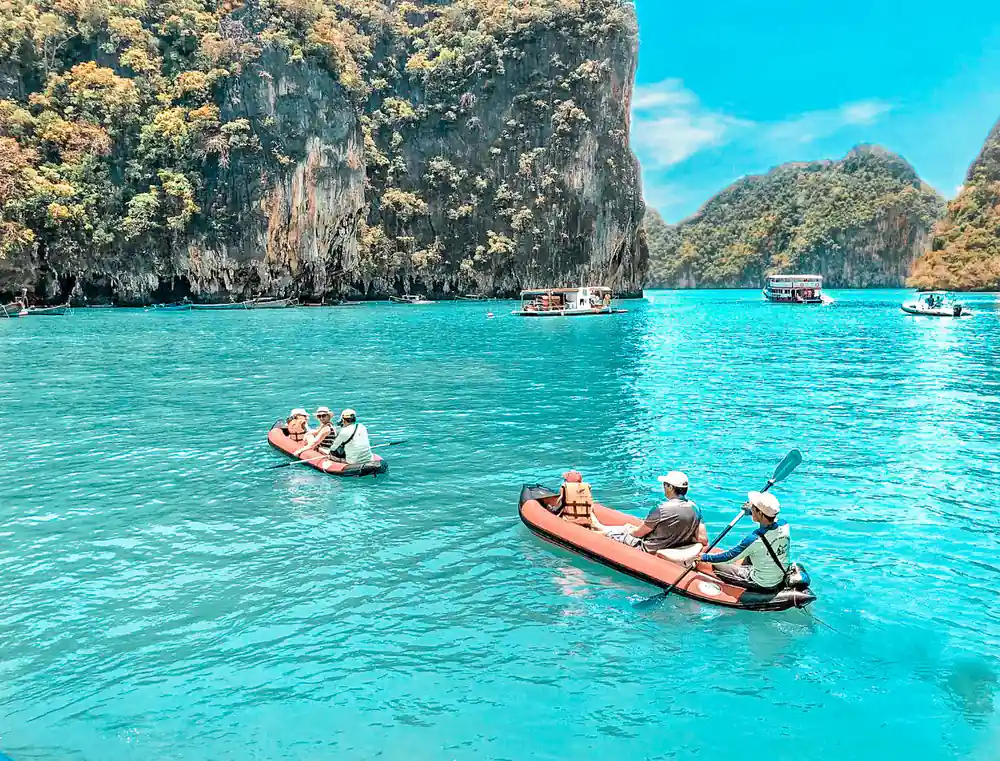
Limestone spires and shallow turquoise water along the Phang Nga Bay route.
Bioluminescence on a phone or a camera
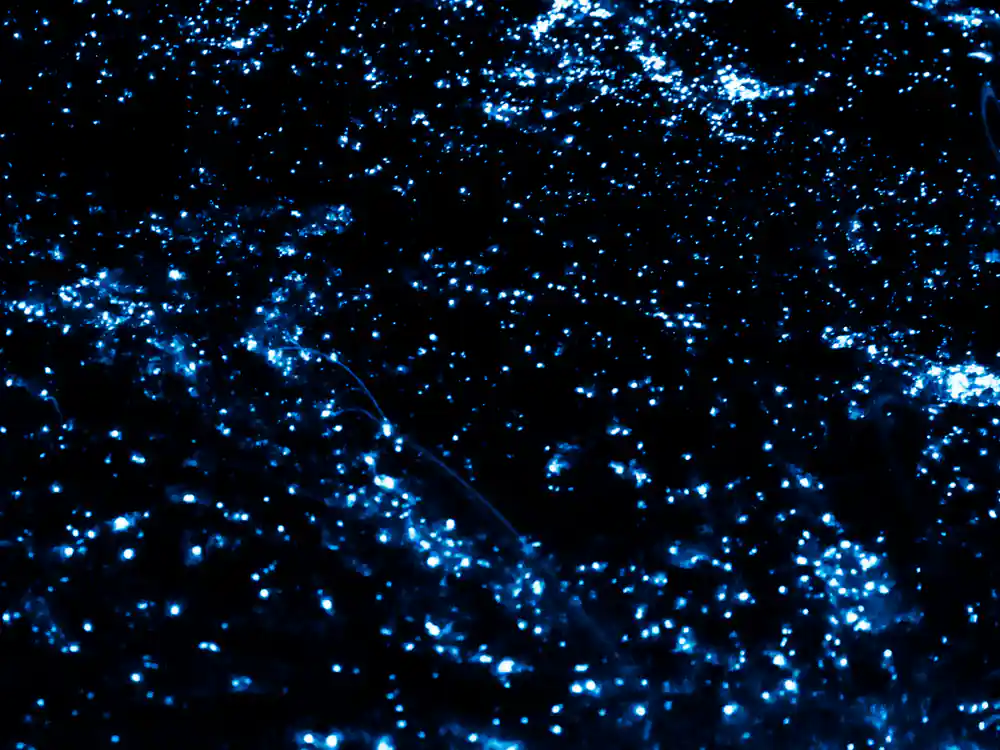
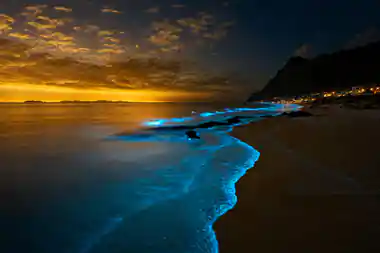
The glow is biology rather than a trick of the camera. Bioluminescent plankton in these waters are dinoflagellates, microscopic single-celled organisms that emit blue-green light when disturbed.[1] A hand trailed over the side leaves a bright trail, and a paddle stroke lights up like a slow spark. The effect reads best in dark, calm water with little wind and no bright moon, which is worth remembering when you choose your night.
Some night kayak tours in the bay include a sunset paddling session under the evening sky, where you can watch bioluminescent plankton glowing in the water.[10] On the Phuket: Phang Nga Bay Bioluminescent Plankton and Sea Canoes tour there are live guides who speak English, Spanish and German, pickup is available with options to check when you book, and cancellation is free up to 24 hours in advance for a full refund.[2]
Phones handle this better than you might expect. A night mode stacks several frames, and if you can prop the phone against a dry bag or a rail and hold it still, the blue trail will come through. Turn the screen brightness down, switch off the flash, and take a bulky case off. In a pro mode, slow the shutter and keep the ISO as low as the picture allows.
Working in caves: flash and available light
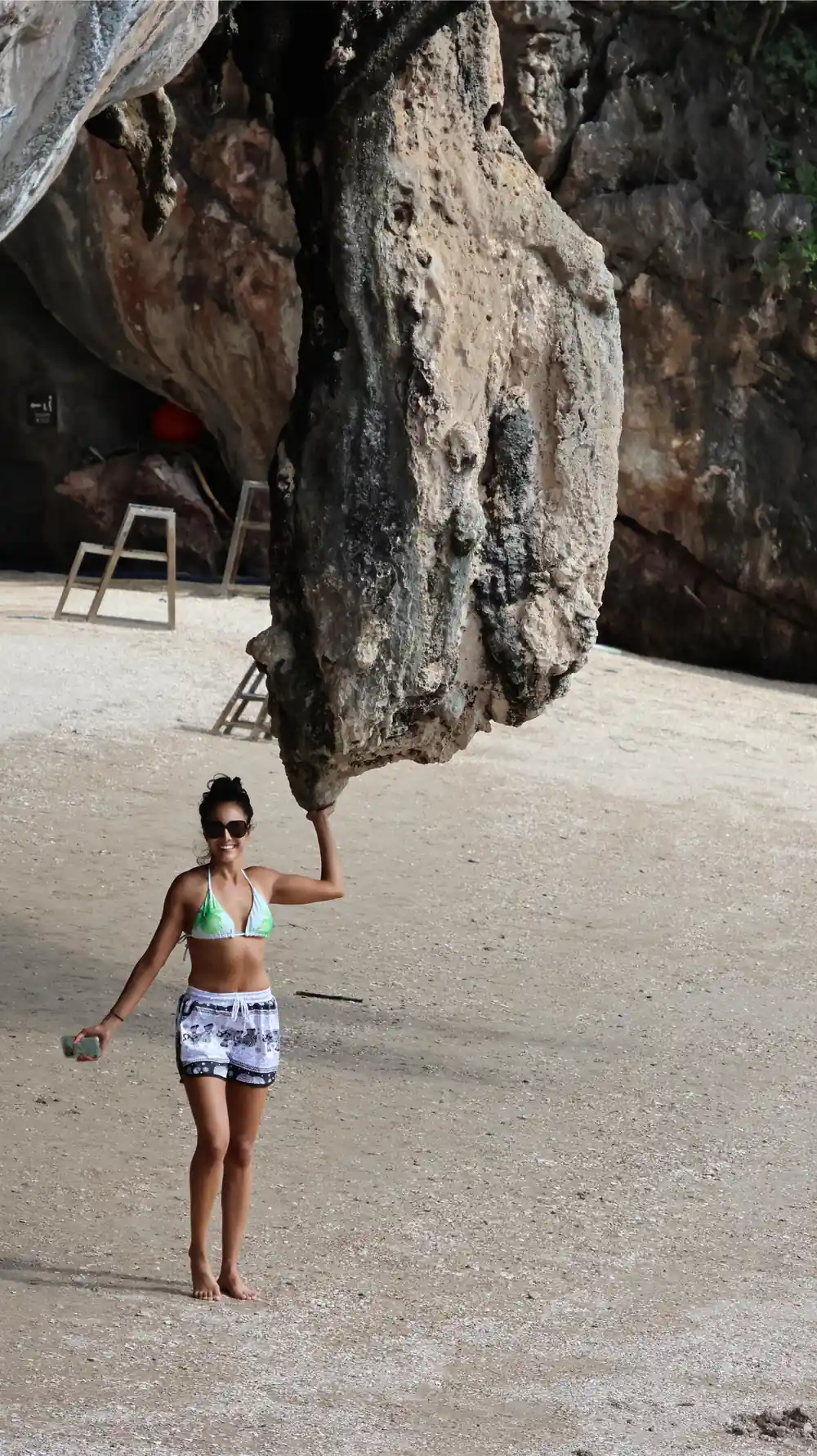
Caves are where good photographers put the camera away and look instead. The hongs, the enclosed lagoons that sit like secret chambers inside the limestone, can only be reached by lying flat in a kayak and paddling through dark, narrow cave passages that open into hidden worlds.[3] There is rarely enough light for a sharp hand-held frame, and a flash fires straight back off wet rock and bleached shell, flattening the very depth you came for.
Where rock art survives, the subject is worth patience. The prehistoric paintings at Khao Khian in Phang Nga Bay are estimated to be around 3,000 to 5,000 years old and show animals, boats and various symbols in red and brown pigment.[11] Work with the daylight that filters in, brace against the canoe, and try a few frames at a high ISO before committing to a long exposure. A guide's torch, held to one side rather than pointed at the wall, can lift a shadow without wiping out the surface.
from US$88
The plankton and sea canoe tour from Phuket runs 8 hours, with pickup available and live guides in English, Spanish and German.[2]
Protecting your gear from seawater and spray
Salt is the enemy of every camera. Spray arrives without warning on a speedboat and dries into a fine, sticky film that finds its way into dials, lens barrels and ports. A roll-top dry bag, a microfibre cloth and a small bag of silica gel cost almost nothing and live happily in a day pack. Wipe the outside of the camera with a damp cloth once you are back on land, and resist changing lenses while the boat is moving.
The coast you are photographing is green for a reason. Mangrove species recorded along the Phang-Nga coast include Rhizophora apiculata, Rhizophora mucronata, Avicennia alba, Avicennia officinalis, Bruguiera cylindrica, Bruguiera parviflora, Xylocarpus granatum and Xylocarpus moluccensis, and their roots are what hold the shoreline together.[12] Photograph them at low tide, when the roots stand clear of the water, and again at high tide, when the same trees close into a dark wall.
Think about what you actually carry. One body, one mid-range zoom and a fast prime is plenty for a day on the water, and every extra lens is another surface to keep dry. Put a strip of tape over the ports you never use, tuck a spare battery in a sealed pocket, and leave the tripod at the hotel if the boat has no room for it.
Drones and the national park
Permissions matter more than gear when you fly. Park staff and your tour operator are the people who can tell you what is possible on the day, so ask before you travel rather than on the pier, and be ready to leave the drone in the hotel safe. Two things catch visitors out in this part of Thailand: Ao Phang Nga National Park is a Category 3 national park with a foreign adult entrance fee of 300 baht, and alcohol is not allowed in Thailand's national parks.[13][14]
If you do fly, the bay is busy with speedboats, longtails and small aircraft, so keep your distance and never launch from a moving vessel. The region has other protected places worth planning around, including Khao Sok, established as Thailand's 22nd national park in 1980 by the Royal Forest Department.[15] Aerial frames of the karsts work well in flat, early light, before the haze builds and while the water still shows its colour. Keep the drone away from people, boats and wildlife.
Composing in low light: settings and tips
Low light is a system rather than a single setting. Set the camera to manual, open the aperture as wide as the lens allows, raise the ISO until the noise is tolerable, then slow the shutter until the frame is bright enough. Brace the body against the gunwale, or fit a kayak mount if you have one, and use a two second delay so your own hand does not shake the shot. Take three frames of everything; the moment rarely comes back.
Focus is the hard part. Autofocus will hunt on black water, so switch to manual and set focus at infinity, or lock onto a distant boat light while it is still visible. Keep your screen dim, cup a hand around it, and give your eyes a full minute in the dark before you judge a frame. The pictures people keep from a night like this usually have a story in them: a paddle lifted clear of the water, a trail of blue light behind the canoe, a friend's face lit by the glow.
Traveller ratings for Phang Nga Bay tours
From-prices for Phang Nga Bay trips
From-prices per person from GetYourGuide tour listings; child rates are not listed separately.[2][4][5][16]
When to go and when to shoot
Shooting the plankton glow
Plan the dark hours
Charge every battery, clear your card and decide which camera you will use after dark, so you are not digging through a bag on a moving boat.
Brace against the hull
Clamp the camera to a rail if you can, and use the gunwale, a dry bag or your own knee as a rest when the water is choppy.
Focus before it is black
Autofocus hunts on dark water. Lock focus on a distant boat light or set manual focus to infinity while there is still something to see.
Take three frames
Open the aperture, raise the ISO and slow the shutter, then shoot in bursts. Check one image on the screen and adjust before you settle in.
Keep white light low
Torches and bright screens wash out the faint blue-green glow of plankton, so let your eyes adapt and use a dim red light for your settings.[1]
Photograph the plankton glow from a sea canoe
from US$89Reserve now & pay later