Quick summary
- For a beach holiday, November to February is the ideal window in Phang Nga Bay, with sunny tropical weather and festivals.[1]
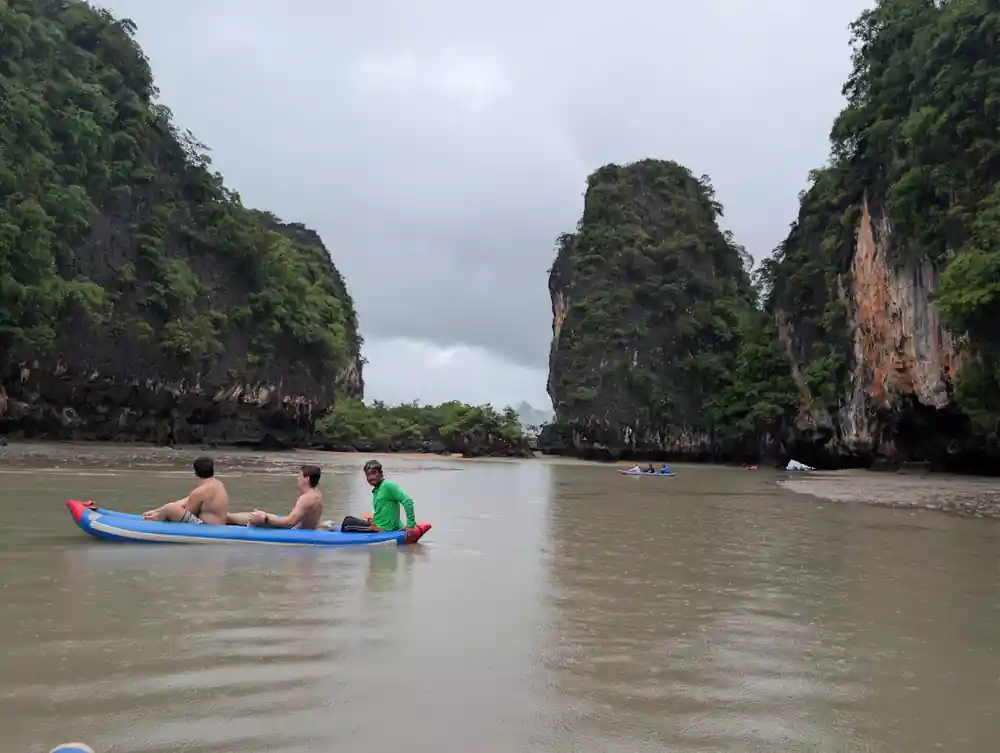
- The bay is sheltered by limestone islands and mangroves, so paddling inside it is often gentler than the open Andaman Sea.
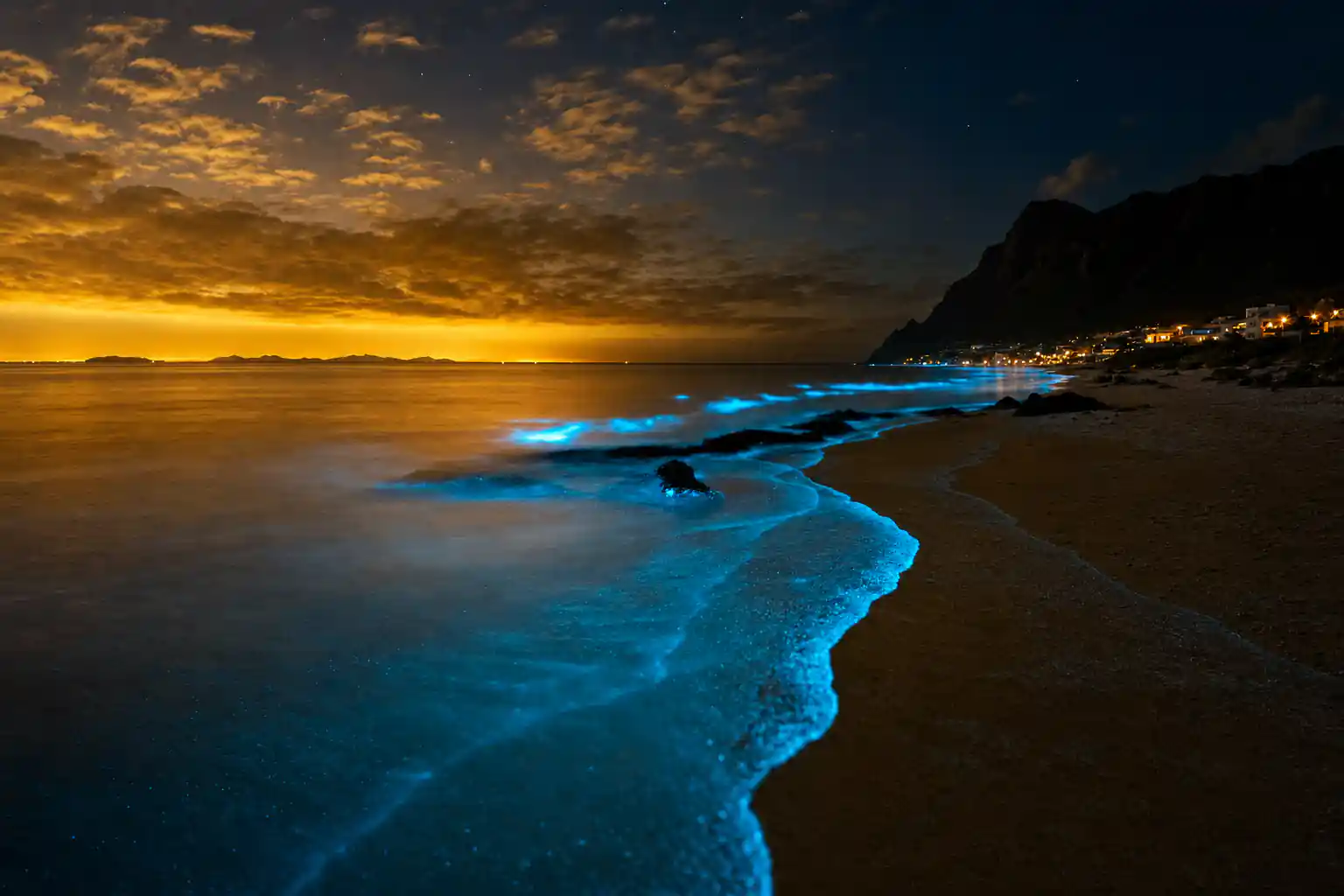
- Bioluminescent plankton are dinoflagellates that emit blue-green light when disturbed, and the glow reads best in dark, calm water.[2]
- Hongs are enclosed lagoons inside towering limestone cliffs, reached by lying flat in a kayak and paddling through narrow cave passages.[3]
- The bioluminescent plankton and sea canoe trip from Phuket runs 8 hours, with free cancellation up to 24 hours in advance.[4]
- Top choice Plankton and sea canoes from US$88 Rating4.77 from 2,619 reviews[4]Duration8 hours[4]GuideEnglish, Spanish, German[4]CancellationFree up to 24 hours in advance[4] Check availability
- Twilight sea canoe from US$106 Rating4.90 from 1,954 reviews[5]Duration1 day[5]GuideEnglish[5]CancellationFree up to 24 hours in advance[5] See this tour
- Big boat canoeing from US$48 Rating4.72 from 4,048 reviews[6]Duration10 hours[6]GuideEnglish, Thai[6]CancellationFree up to 24 hours in advance[6] See this tour
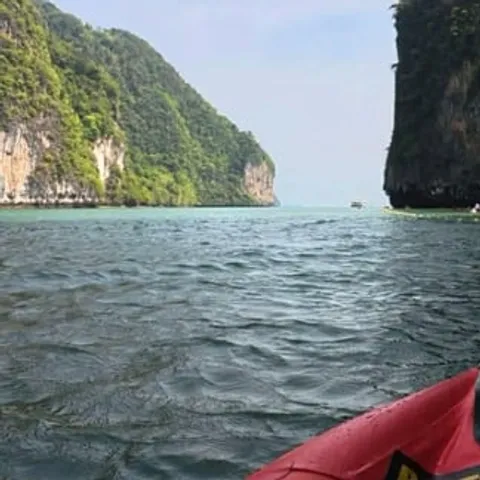
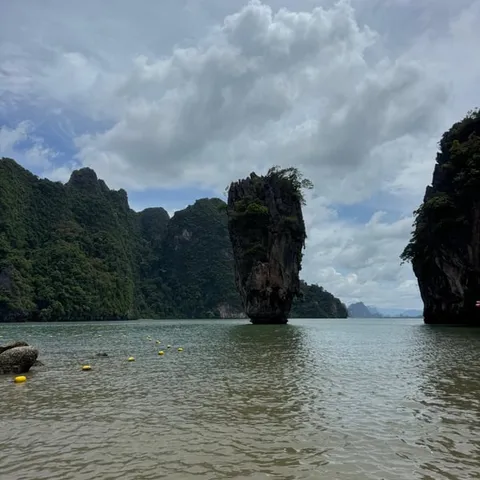
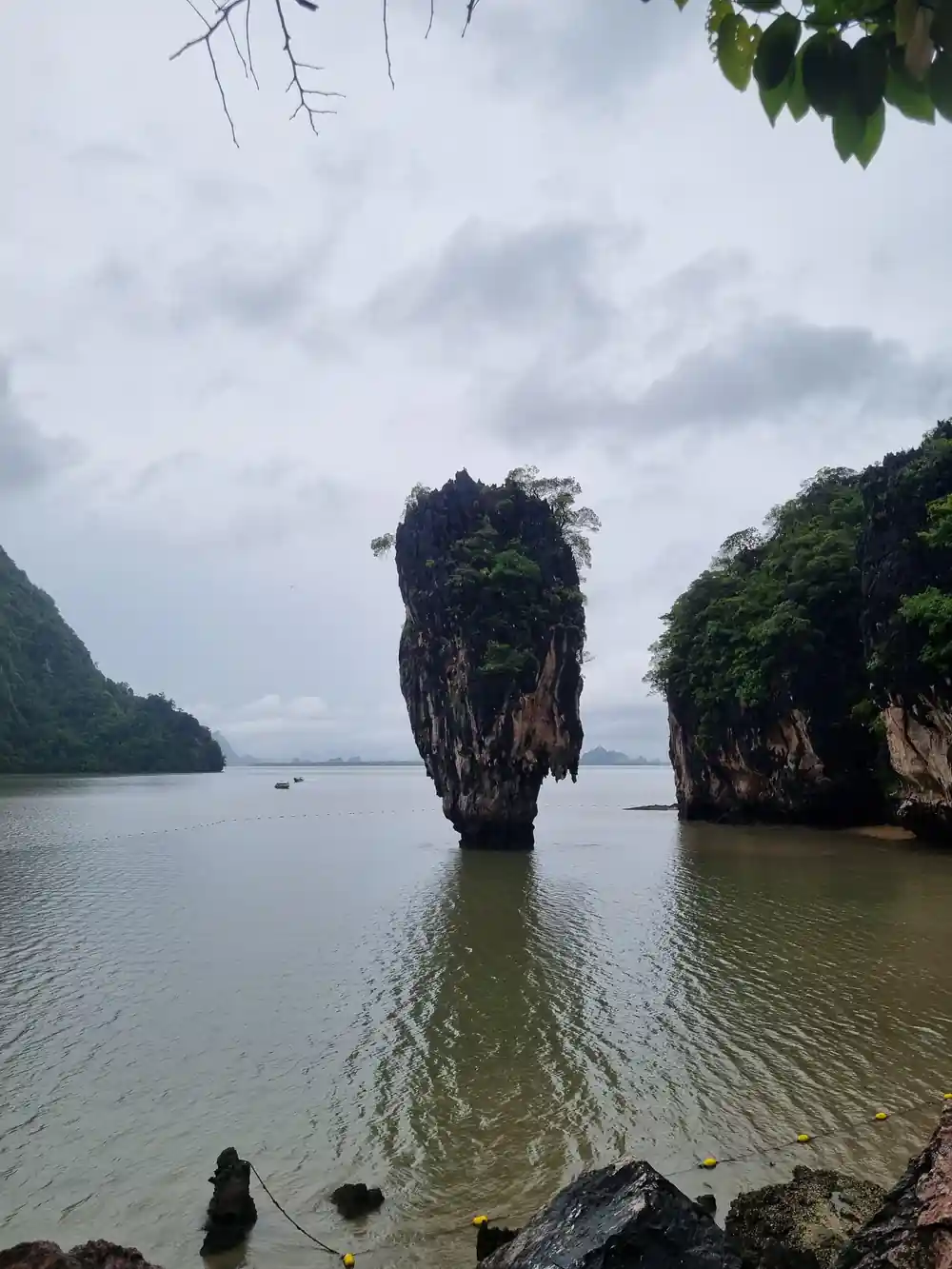
James Bond Island - officially Ko Tapu , on the twin-peaked islet of Khao Phing Kan - is the limestone spire in Phang Nga Bay that was made world-famous by the 1974 James Bond film The Man with the Golden Gun .
The right night for a glowing paddle
Booking tips
- Pick dates in the calmer months if you want the best odds of flat water
- The plankton and sea canoe trip is from US$88, free cancellation up to 24 hours in advance[4]
- Live guide in English, Spanish and German on the plankton and sea canoe trip[4]
- Bring cash for the national park entrance fee: 300 baht for a foreign adult[7]
On the water
- A hat, reef-safe sunscreen and a dry bag for the speedboat legs
- Light, quick-drying clothes, because the evening air stays mild after dark
- Follow your guide when you lie flat to enter a dark cave passage in the canoe
- Night trips finish late, so keep the following morning easy
Monsoon and Dry Season: When the Bay Turns Calm
Phang Nga Bay sits on Thailand's Andaman coast, where the year splits into a wetter, windier stretch and a calmer one. For a beach holiday, November to February is the ideal window, with sunny tropical weather and festivals.[1] Ao Phang Nga National Park, the protected area that covers the bay, was established in 1981 and spans about 154 square miles (400 square kilometres) of islands, mangroves and shallow sea.[8]
The park is a sheltered, island-studded sea rather than open ocean. Limestone karsts, mangrove channels and mudflats break up whatever swell rolls in from the Andaman, so the water between the islands can stay glassy while the outer sea is choppy. Mangroves fringe much of the Phang-Nga coast, with species including Rhizophora apiculata, Rhizophora mucronata, Avicennia alba, Avicennia officinalis, Bruguiera cylindrica, Bruguiera parviflora, Xylocarpus granatum and Xylocarpus moluccensis.[9]
That shelter shapes your planning more than any single forecast. The calmer half of the year gives you the best odds of flat, bright days, when boat rides feel smooth and canoes glide. In the windier stretch, rain and gusts arrive more often, the sea state changes quickly, and operators watch conditions closely before they commit to a route out of the harbour and into the bay.
Wind and Its Effect on Sea Canoe Paddling
Wind is the biggest single variable in whether a day on the water feels easy or like hard work. Sea canoes sit low and paddle at a relaxed pace, so chop that barely troubles a speedboat still slaps the hull and pushes you off course. Inside the bay, islands and cliffs create lee, and a good guide steers the group to the sheltered side of a karst when the wind gets up. On a calm morning you can cross open water between islands; on a breezy one you hug the cliffs and slip into the mangroves instead.
This is why travellers planning a canoe trip ask whether their dates will bring good kayaking weather, and why there is no tidy answer. Mornings are usually the gentlest part of the day, and afternoons can build as the land heats up, but squalls move through fast and a still day can turn breezy within an hour. Building in a spare day, and staying flexible about which islands you visit, is worth more than any long-range forecast.
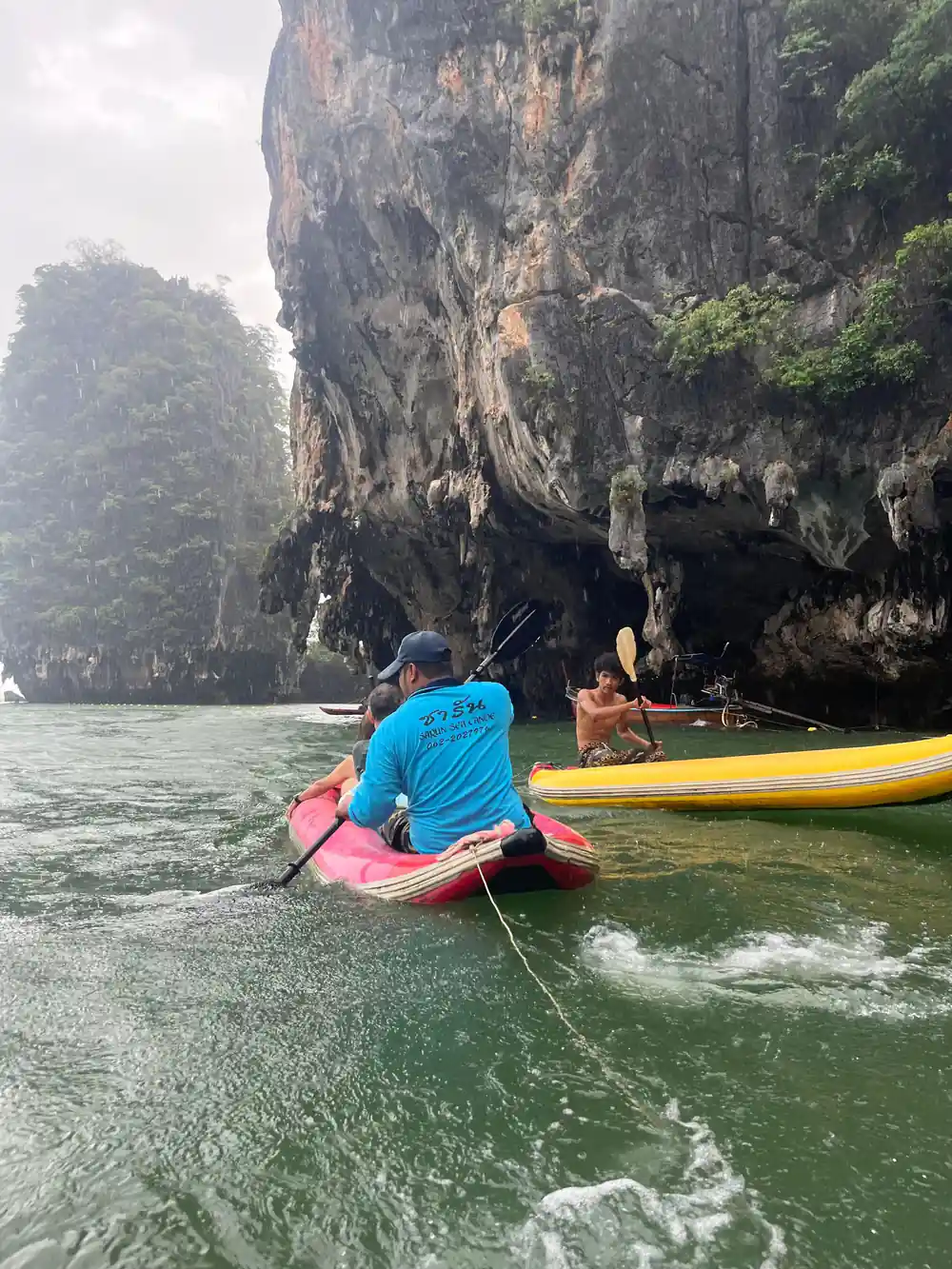
The trip booked from this site is built around canoes and a speedboat, with stops at Panak Island, Ko Hong, James Bond Island and the wider bay.[4] Big boats, longtails and speedboats cover parts of the same water, so the boat you choose shapes how much the wind touches your day and how wet you get between stops.
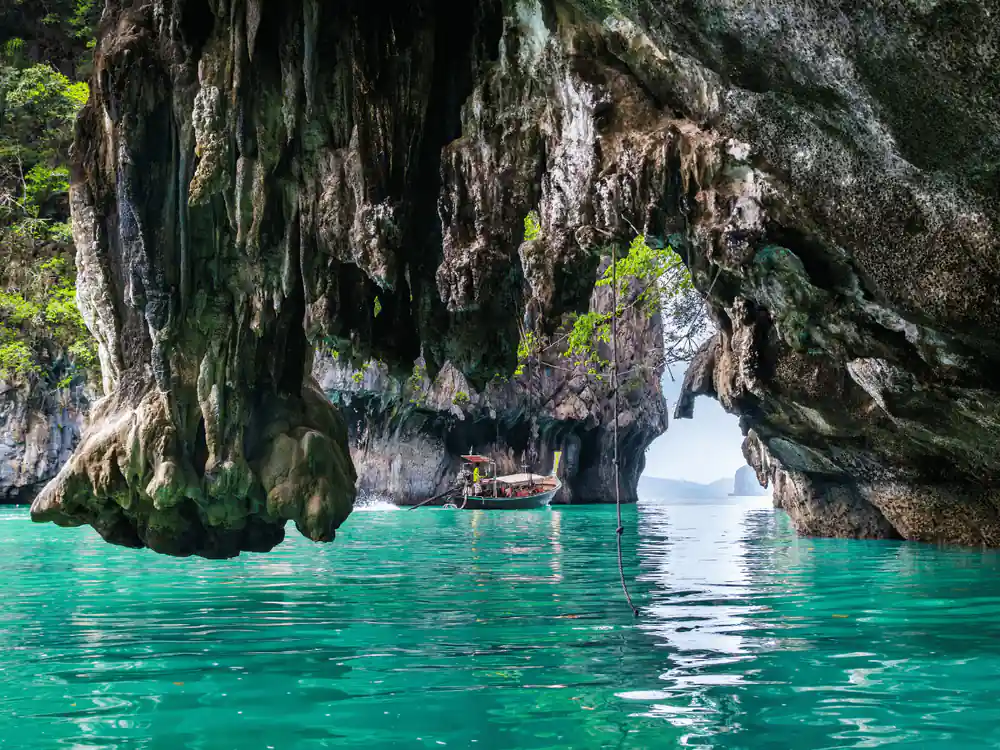
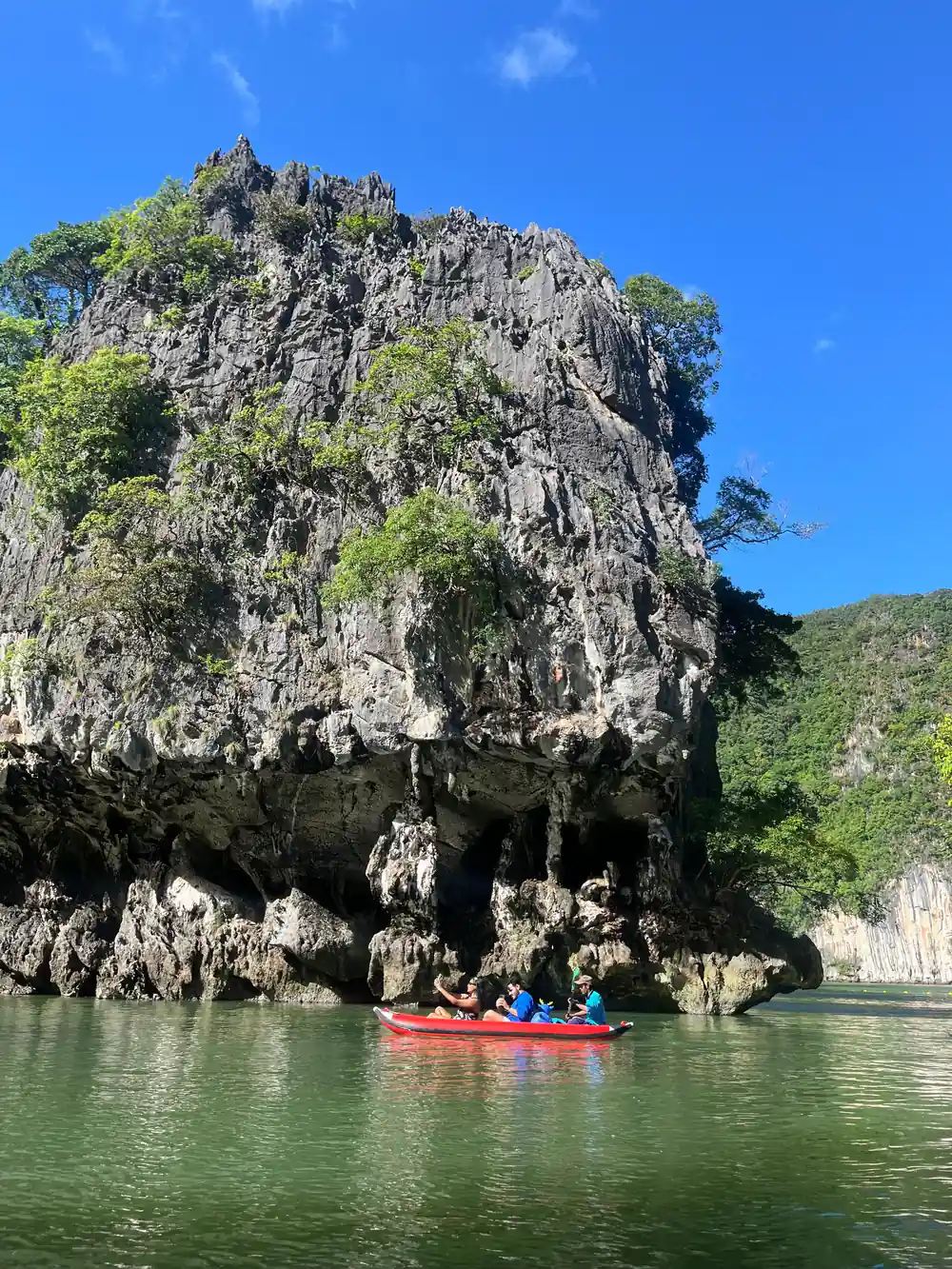
Limestone towers and shallow green water on the edge of Ao Phang Nga National Park.
Moon Phase and Bioluminescent Plankton Brightness
The glow in the water comes from living things. Bioluminescent plankton in Phuket and Phang Nga Bay are dinoflagellates, microscopic single-celled organisms that emit blue-green light when disturbed, and the effect is best seen in dark, calm water.[2] Moonlight dulls the contrast. A bright moon washes the surface, while a thin crescent, or a moon that rises late, leaves the water dark enough for every paddle stroke and every swirl of your hand to light up.
Some night kayak tours in Phang Nga Bay include a sunset paddling experience under the evening sky, where participants can see bioluminescent plankton glowing in the water.[10] It is a quiet, slow way to end a day on the bay, and it depends on the sea being calm enough for canoes to be out after dark.
The Phuket: Phang Nga Bay Bioluminescent Plankton and Sea Canoes trip takes 8 hours and runs with a live guide in English, Spanish and German.[4] If the glow is your main reason for going, aim for the darker half of the lunar cycle, keep phone screens off in the canoe, and give your eyes a few minutes to adjust once the light has gone.
Tides and Access to Hidden Caves and Hong
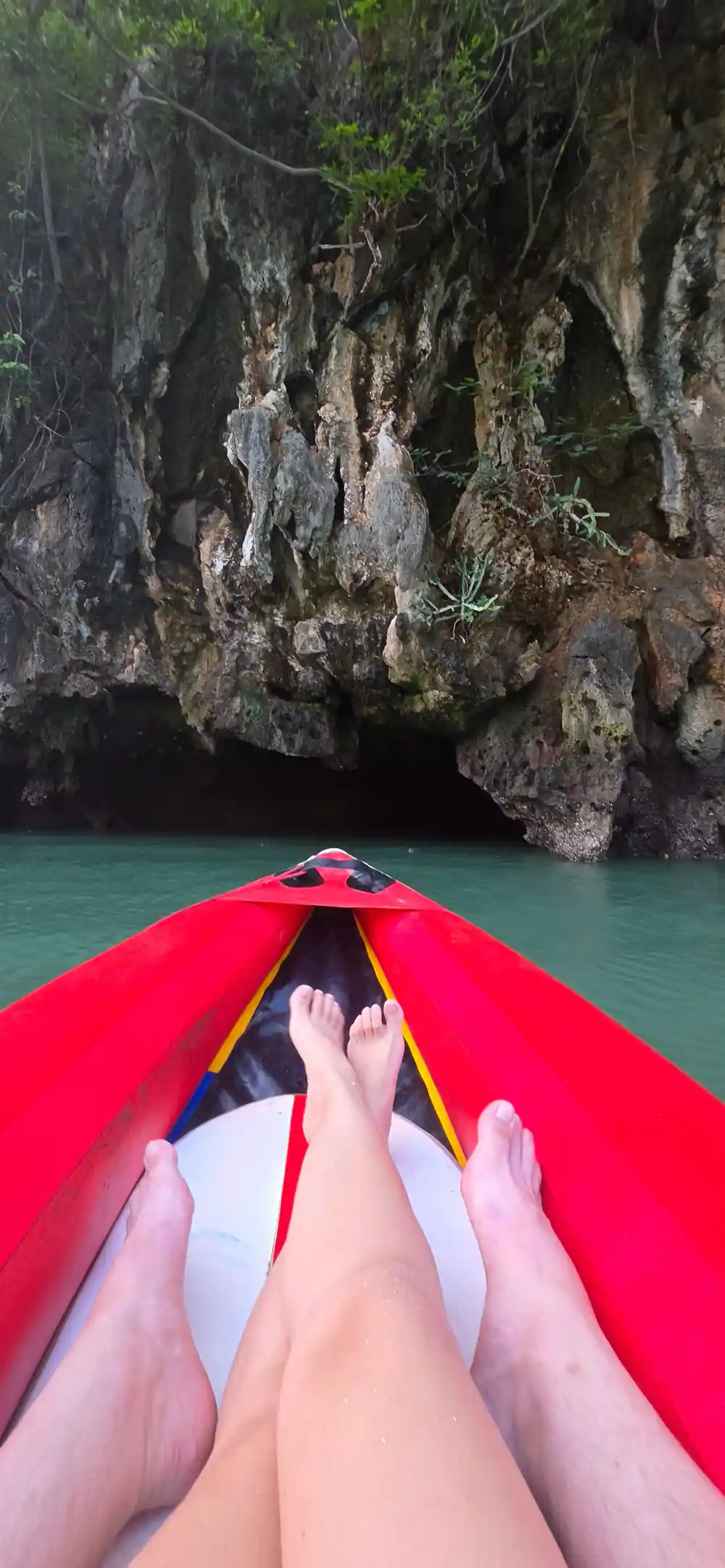
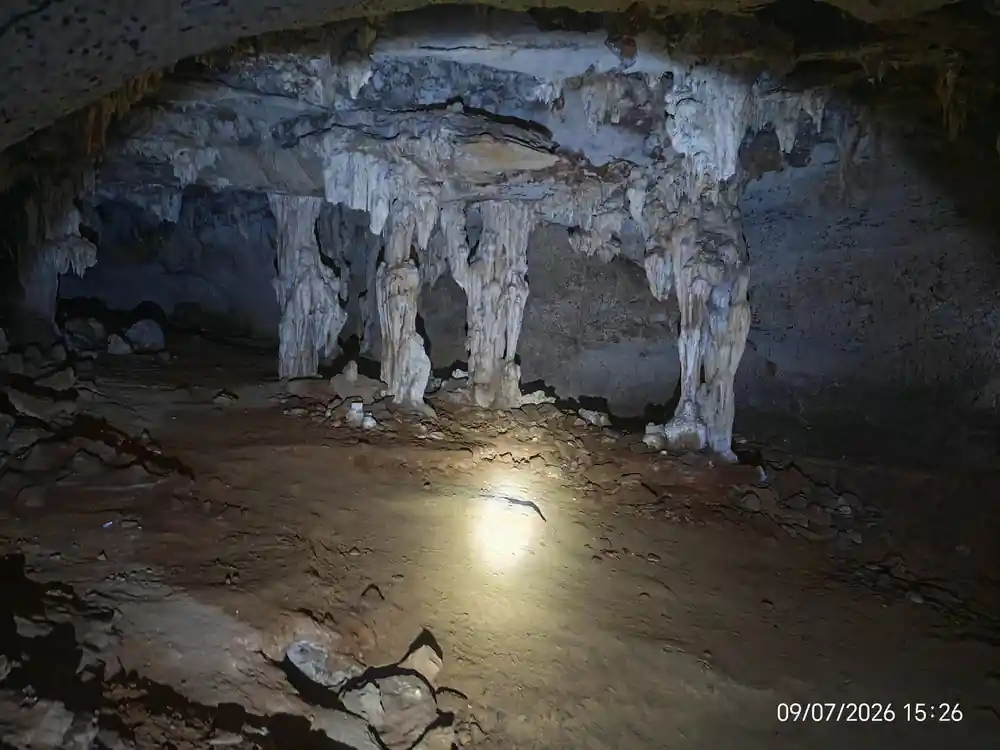
Hong means room in Thai, and that is exactly what these places are: enclosed lagoons that sit like secret chambers within towering limestone cliffs, reached only by lying flat in a kayak and paddling through dark, narrow cave passages that open into hidden worlds.[3]
Because those entrances are low and narrow, the height of the water decides whether a passage is usable, and guides time each entry around the tide rather than a fixed clock. A cave that is a gentle float-through at mid water can become a tight squeeze as the tide fills it. Keep loose items zipped away, follow the canoe in front, and let your guide set the pace through the dark stretch; the lagoon beyond is the reward, with cliffs all around and a circle of sky overhead.
Canoe routes around the bay also pass famous landmarks. James Bond Island, officially Ko Tapu on the twin-peaked islet of Khao Phing Kan, is the limestone spire made world-famous by the 1974 James Bond film The Man with the Golden Gun.[11] Nearby Koh Panyee is a floating village built entirely on stilts by Indonesian fishermen, sitting at the foot of a towering limestone cliff.[12]
from US$88
The Phuket bioluminescent plankton and sea canoe trip runs 8 hours, with pickup and free cancellation up to 24 hours in advance.[4]
Sunset Times and Evening Light Through the Year
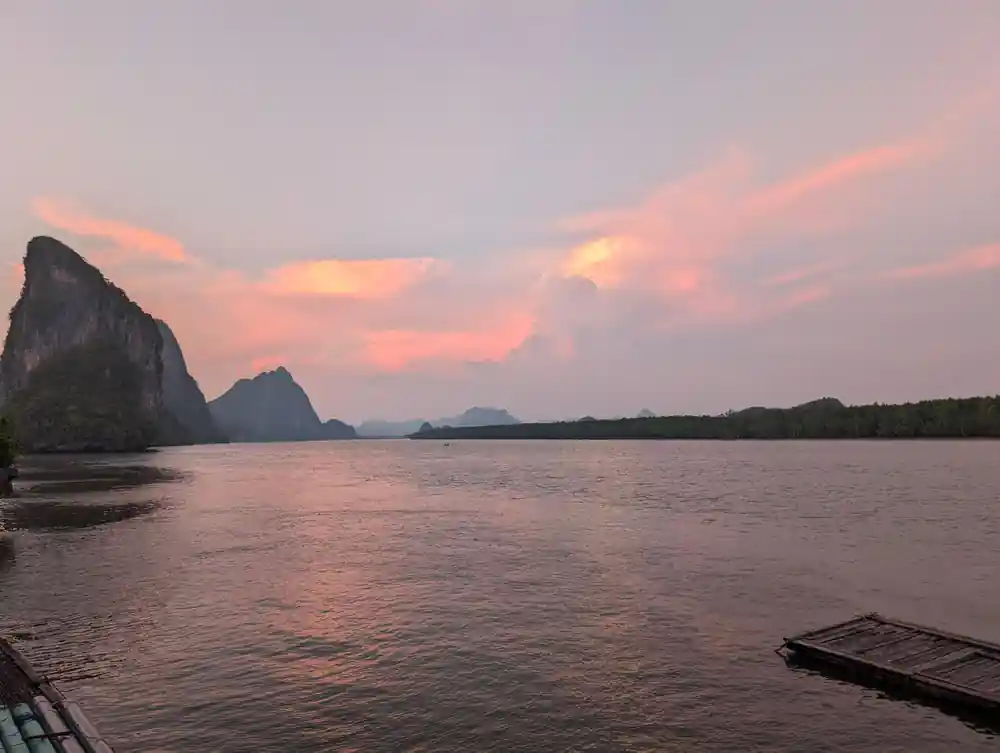
Evening light is one of the reasons Phang Nga Bay suits late trips. Sunset comes earlier in the cooler months and later in the warmer ones, but on this coast the light always fades quickly, with a short burst of colour before the water turns black. That brief window, halfway between daylight and full dark, is a lovely time to be out among the towers, with the cliffs turning gold and then grey.
Timings shift through the year, and operators set their starts to match. The bioluminescent plankton and sea canoe trip runs 8 hours, and the listing gives starting times to check when you book.[4] Because the trip finishes after dark, plan a relaxed next morning rather than an early flight or a long drive.
There are alternatives if you want a different shape of evening. A twilight sea canoe and glowing plankton trip is listed from US$106,[5] and at Railay an illuminated clear kayak night tour with bioluminescence is listed from US$55 and runs 2 hours.[13] A starlight sea cave kayak trip in Phang Nga Bay is listed from US$118.[14] Whichever you pick, the darker the night, the clearer the sparkle.
Water Temperature and Night Swimming Conditions
Andaman Sea water stays warm enough for most people to swim comfortably, day or night, and a rash vest or quick-dry shirt is usually plenty after dark. What changes is the light. Once the sun is gone you are working by torchlight and by your guide's knowledge of the bay, so keep your hands free when you climb in and out of the canoe, and move slowly on wet decks and ladders.
Swimming stops are often the highlight of a night trip, especially when the plankton are active and the water lights up as you move. Stay inside the area your guide marks out, and remember that a canoe tips easily if everyone leans the same way at once. Sit low, keep your weight centred, and let the crew steady the boat before you stand up.
A few park rules are worth knowing before you go. Alcohol is not allowed in Thailand's national parks,[15] and Ao Phang Nga National Park charges a foreign adult entrance fee of 300 baht.[7] Carry a dry bag for phones and cameras, wear clothes you do not mind getting soaked, and expect to be barefoot or in wet shoes once you are on the boat.
Who Decides Go or No-Go, and When
On the day, the decision rests with the boat captain, the guide and park staff, not with the forecast app on your phone. They read the wind, the swell at the harbour mouth and the water inside the caves, and they can reorder stops or swap an exposed crossing for a sheltered one without cancelling anything. If a storm does close the bay, some listings state that full refunds are provided if the tour is cancelled due to storms.[16]
Booking terms hand some of the control back to you. The plankton and sea canoe trip has free cancellation up to 24 hours in advance for a full refund, and you can reserve now and pay later.[4] That makes it easy to hold a date, watch the weather, and change plans if the sea looks rough. Pickup is available, so check the options that match your hotel when you book.[4]
A sensible approach is to book early for the calmer months, keep the first and last days of your trip free of tight connections, and accept that the bay sets its own schedule. Guides who work this water every day know which islands suit which wind, and their judgement usually beats anything you can refresh on the pier.
GetYourGuide scores: Phang Nga Bay canoe and plankton tours
Phang Nga Bay canoe and plankton trips: from prices
From prices from GetYourGuide listings[4],[5],[6] and[14].
When to aim for in Phang Nga Bay
Plan your Phang Nga trip
Pick your season
For a beach holiday, November to February is the ideal window in Phang Nga Bay.[1]
Aim for a dark night
The plankton glow is best seen in dark, calm water, so a moonless evening gives you the strongest effect.[2]
Let the tide decide
Hongs are reached by lying flat in a kayak and paddling through narrow cave passages, and guides pick the moment to enter.[3]
Book a flexible date
The plankton and sea canoe trip is from US$88 with free cancellation up to 24 hours in advance.[4]
Check your pickup
Pickup is available on the bioluminescent plankton and sea canoe trip, with options shown when you book.[4]
Ready for a night of glowing water and limestone caves?
from US$89Reserve now & pay later