Quick summary
- Ao Phang Nga National Park was established in 1981 and spans approximately 154 square miles (400 square kilometers).[1]
- Boat tours run Panak Island, Ko Hong, James Bond Island and Phang Nga Bay, and the tour this site books takes 8 hours.[2]
- Bioluminescent plankton emit blue-green light when the water is disturbed, and the effect is best seen in dark, calm water.[3]
- Foreign adults pay 300 baht to enter the park, and alcohol is not allowed in Thailand's national parks.[4][5]
- For a beach vacation, November to February is the ideal time to visit Phang Nga Bay.[6]
- Top choice Plankton & Sea Canoes from US$88 Duration8 hours[2]Rating4.77 from 2,619 reviews[2]Guide languagesEnglish, Spanish, German[2]Free cancellationUp to 24 hours before, full refund[2] Check availability
- Phang Nga Bay Canoeing from US$48 Duration10 hours[7]Rating4.72 from 4,048 reviews[7]Guide languagesEnglish, Thai[7]Free cancellationUp to 24 hours before, full refund[7] See this tour
- 7 Wonders, 6 Islands from US$67 Duration8 hours[8]Rating4.78 from 2,575 reviews[8]Guide languagesEnglish[8]Free cancellationUp to 24 hours before, full refund[8] See this tour
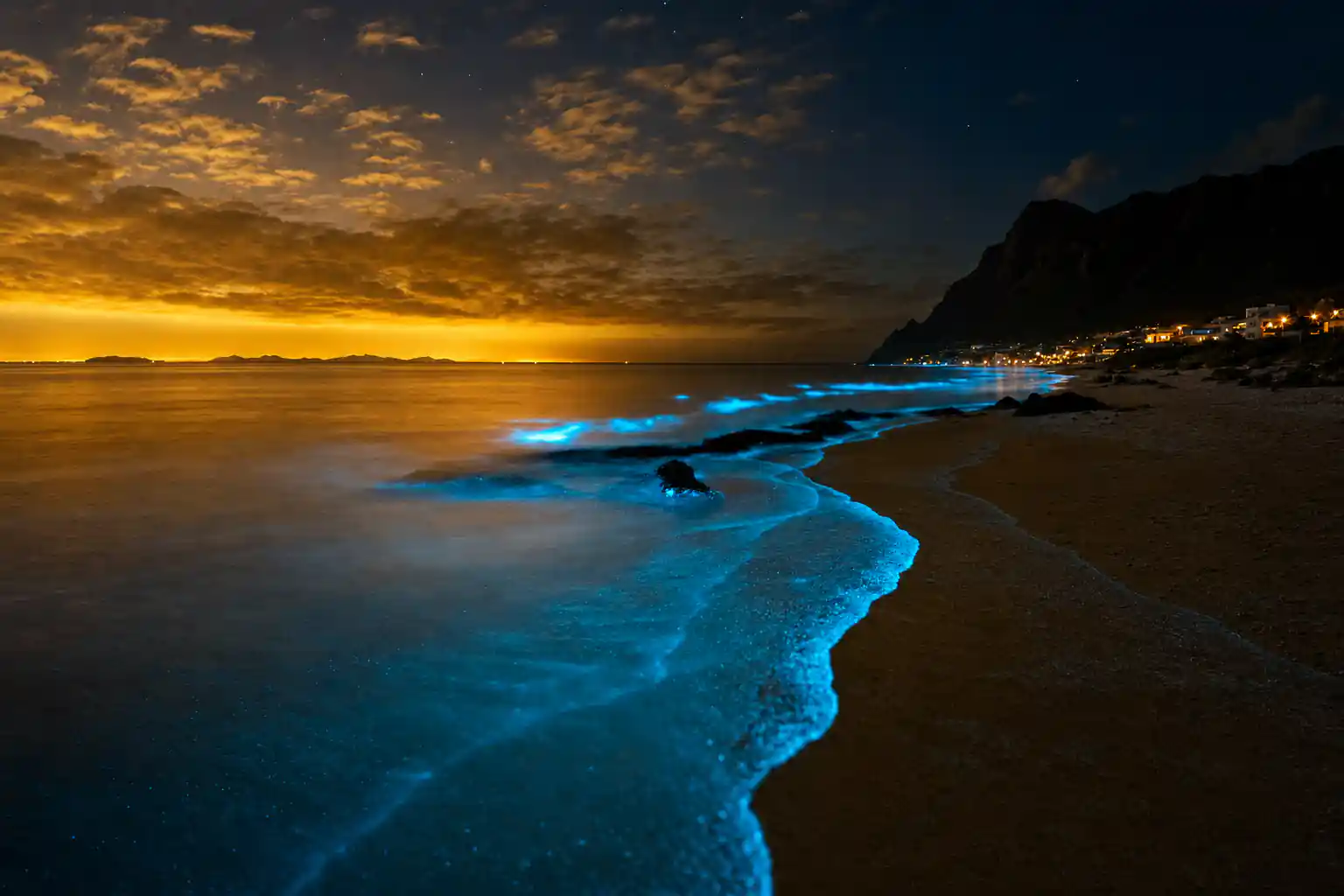
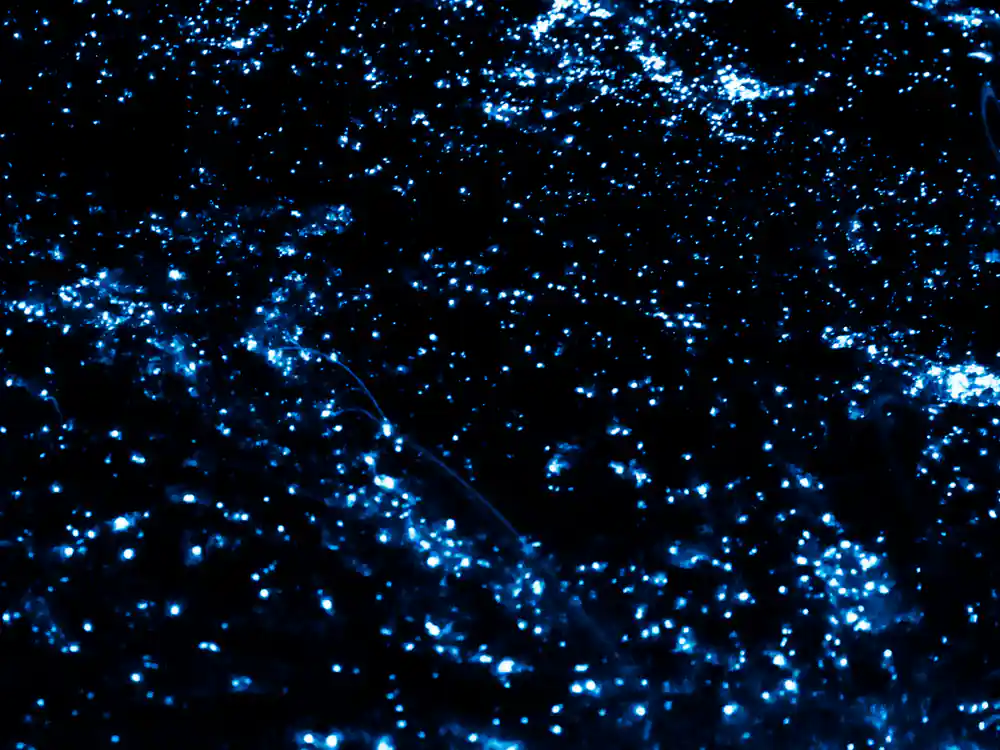
Bioluminescent plankton in Phuket are caused by dinoflagellates that emit blue-green light when disturbed, creating a glowing ocean effect best seen in dark, calm waters.
Which Phang Nga Bay tour should you book?
Know before you go
What Ao Phang Nga National Park actually is
Ao Phang Nga National Park spreads across Thailand's Andaman coast, a drowned landscape of limestone towers, sea caves, tidal channels and mangrove forest. The park was established in 1981 and spans approximately 154 square miles (400 square kilometers).[1] A large share of that area is open water and tidal flat rather than dry land, and the scenery shifts noticeably between high and low tide. At low water the karsts seem to grow taller and the mudflats open up; at high water the same islands look like floating cliffs.
The park is protected, so a few rules apply once you are inside it. The foreign adult entrance fee is 300 baht.[4] Alcohol is not allowed in Thailand's national parks.[5] In practice that means a soft drink on the boat rather than a beer, and it is worth keeping your rubbish with you until you are back at the pier. Bring a hat, reef-safe sunscreen and a dry bag for your phone, because spray comes over the gunwales even on a calm crossing, and the sun on open water is stronger than it feels.
How a Phang Nga Bay boat tour day runs
Most Ao Phang Nga National Park tours follow the same shape: a van pickup at your hotel, a drive to a pier or marina, a boat ride out into the bay, a series of island stops, and the same journey in reverse in the evening. The tour this site books runs from a starting or pickup point by van to Phuket Boat Lagoon, then by speedboat to Panak Island, Ko Hong in Phang-nga Province, James Bond Island and Phang Nga Bay, with a van at the end of the day. It takes 8 hours.[2]
If you prefer a slower, steadier day, the big boat canoeing tour leaves from Ao Po Pier and visits Panak Island, Ko Hong, Phang Nga Bay, James Bond Island and Khao Phing Kan across 10 hours.[7] A wider route covers Ko Yao Yai, Panak Island, Hong Island, Panyee Island, Khao Phing Kan, James Bond Island and the Naka Island beach in 8 hours.[8] An Ao Phang Nga National Park day trip comes down to which rhythm suits you: speedboat for distance, big boat for comfort, the long island circuit for variety.
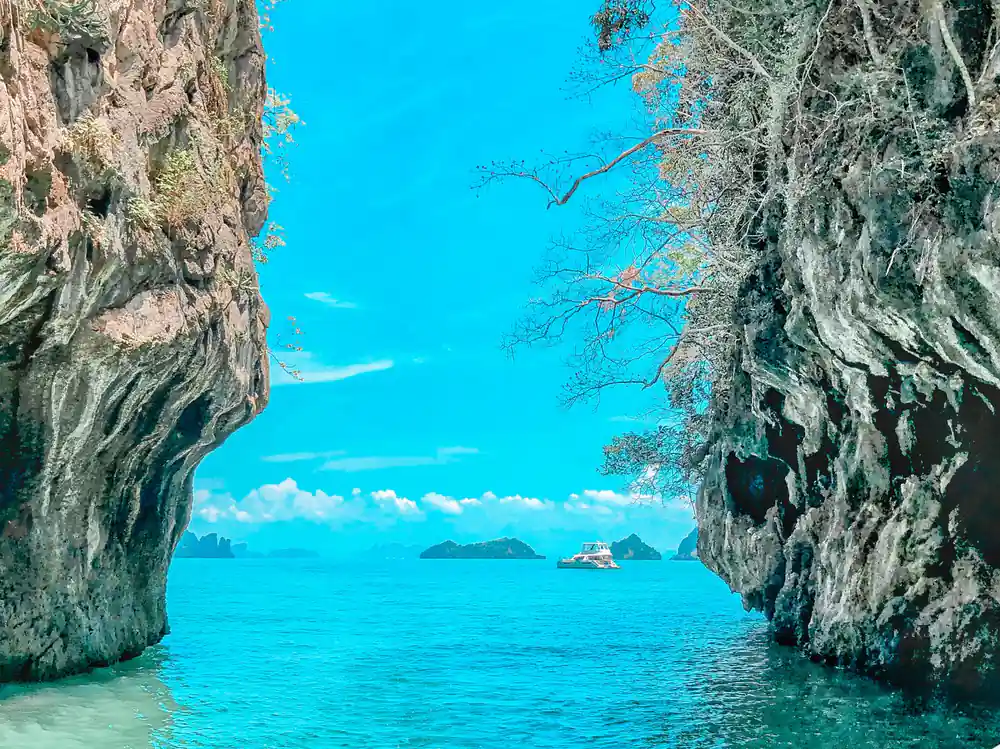
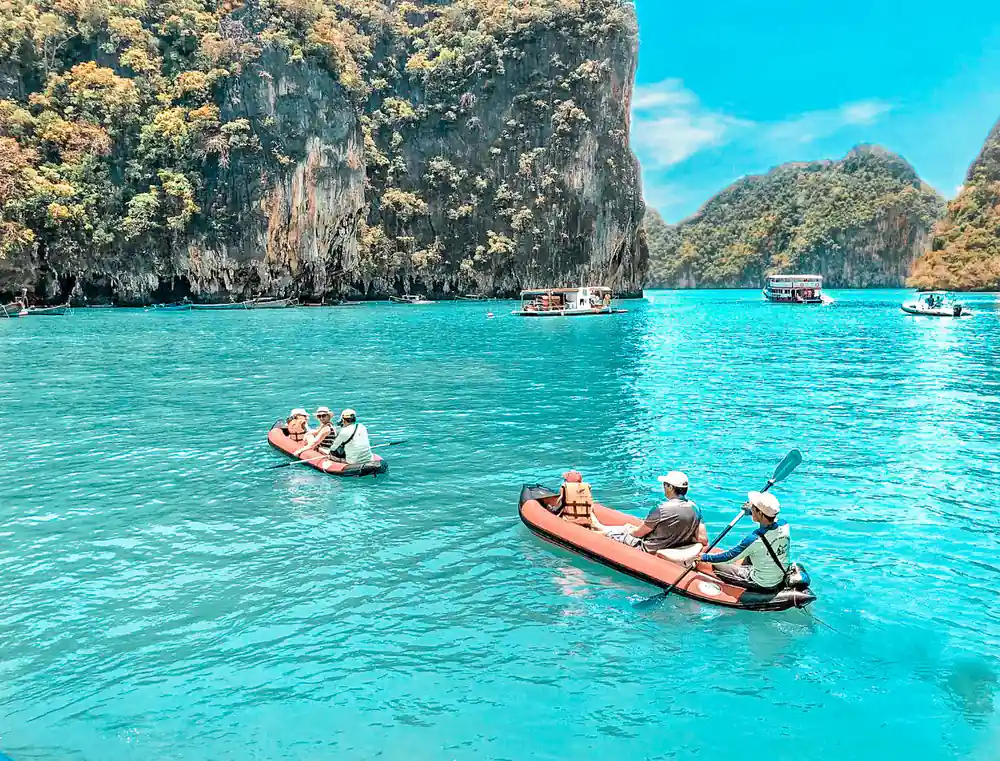
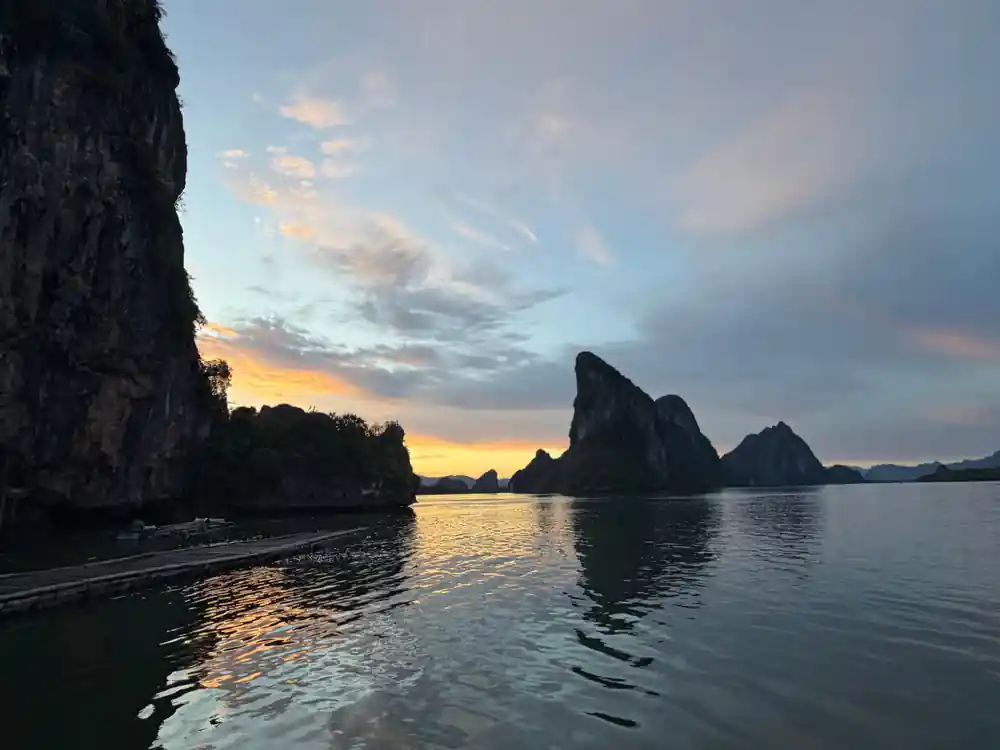
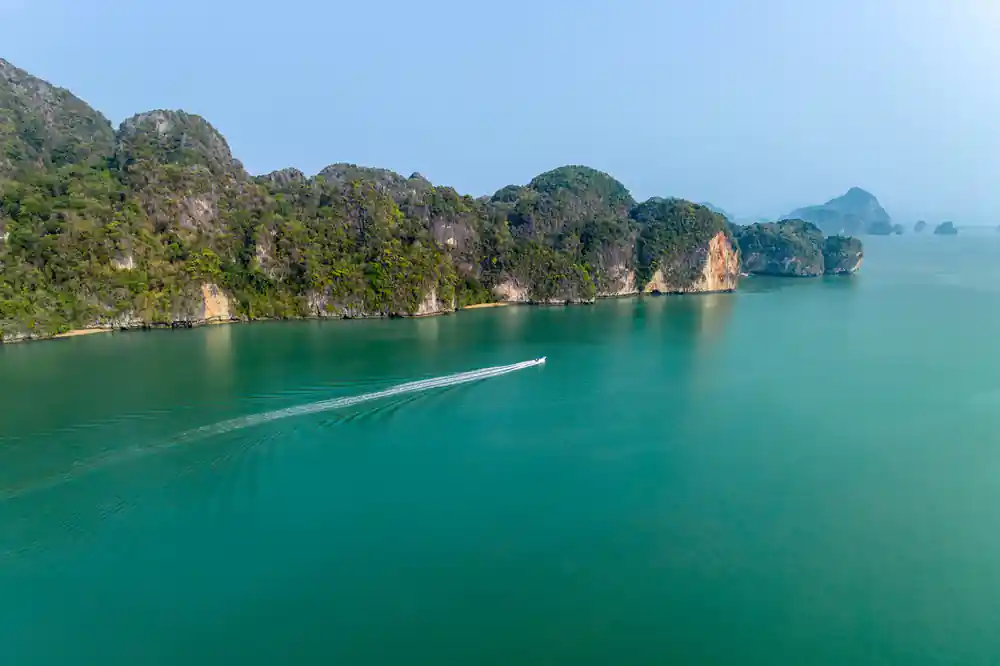
Limestone karsts stand straight out of the emerald water of Phang Nga Bay.
James Bond Island, Koh Panyee and other stops
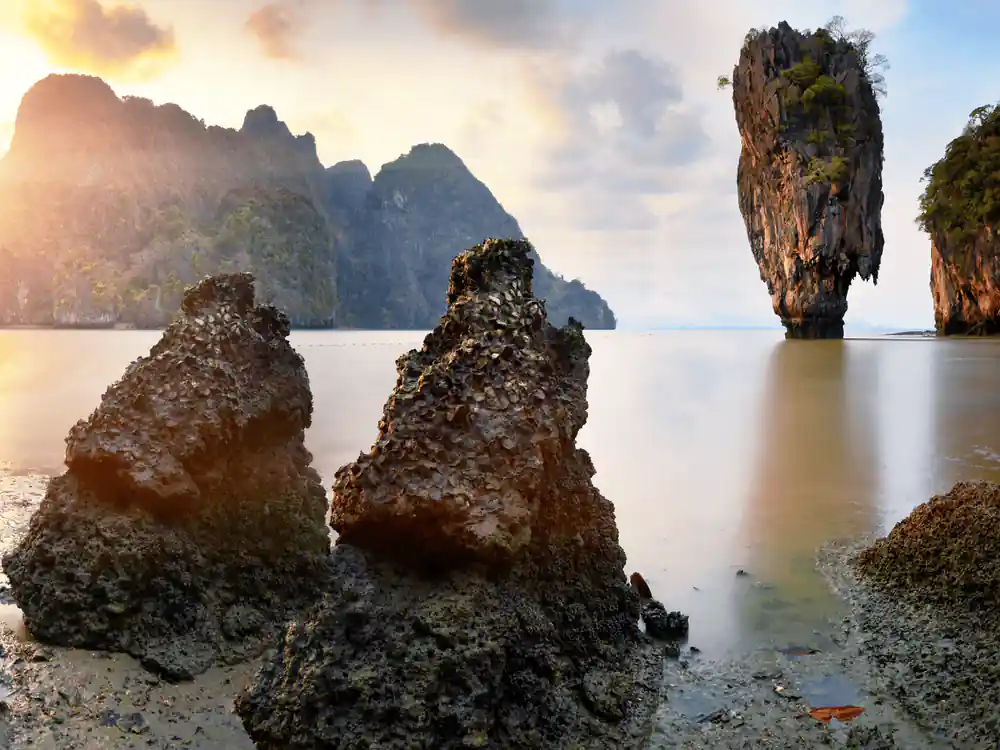
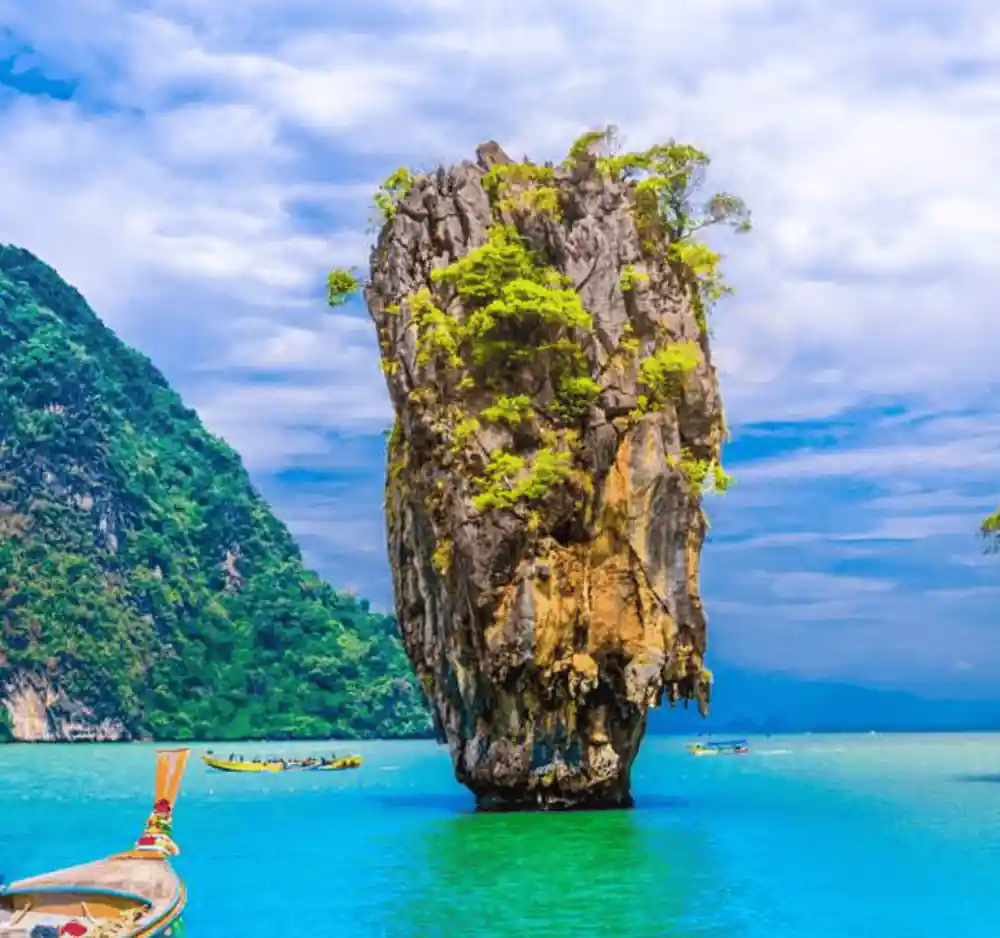
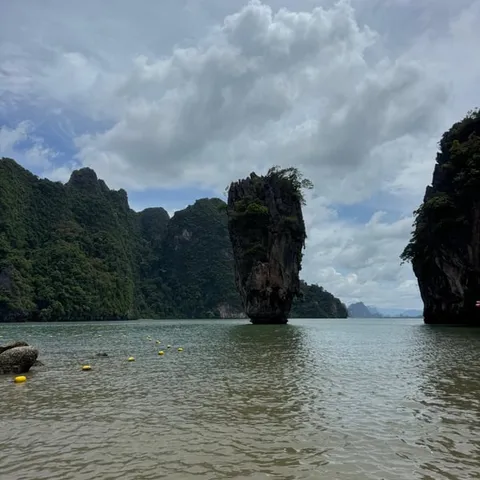
James Bond Island is officially Ko Tapu, a limestone spire that stands beside the twin-peaked islet of Khao Phing Kan. It was made world famous by the 1974 James Bond film The Man with the Golden Gun, and it is the stop most people picture when they think of a Phang Nga Bay boat tour.[9] Boats queue to drop visitors at the little beach beside it, so go early in the day if your itinerary allows, and be ready to share the viewpoint with plenty of other cameras.
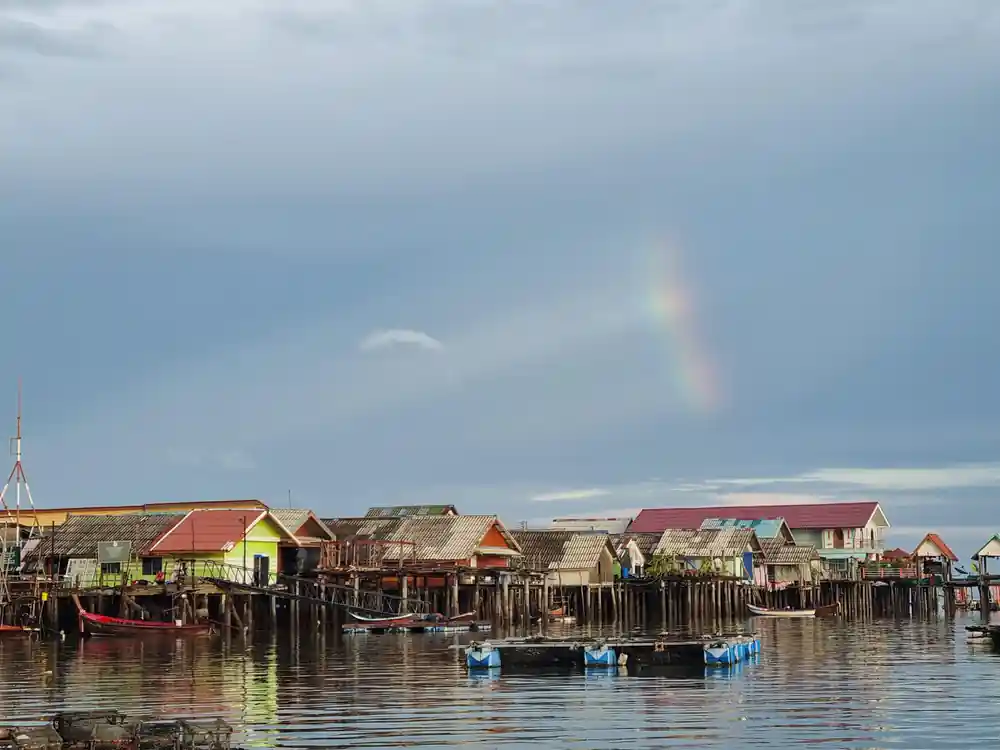
Koh Panyee is the other headline stop: a floating village in Phang Nga Bay that was built entirely on stilts by Indonesian fishermen, sitting at the foot of a towering limestone cliff.[10] It is a working community rather than a film set, with houses and food stalls on the same boards you walk across. Walk slowly, buy something small, and remember that people live behind the doors you are photographing.
Deeper in the bay, the limestone at Khao Khian carries prehistoric cave paintings estimated to be around 3,000 to 5,000 years old. The red and brown drawings show animals, boats and various symbols.[11] They are faint, so a guide's torch and a quiet moment help far more than a zoom lens.
Canoes, caves and the hidden hongs
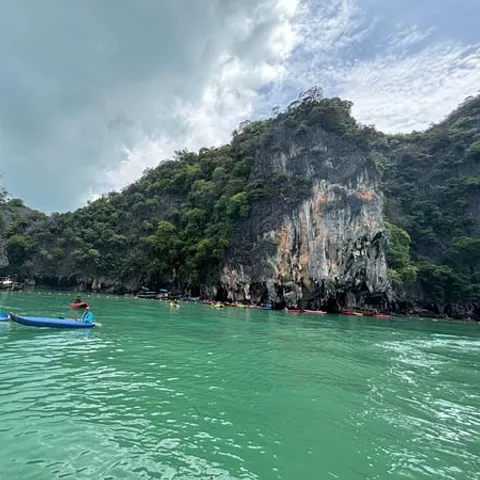
In Thai, hong means room, and in Phang Nga Bay the word describes enclosed lagoons that exist like secret chambers within towering limestone cliffs. They can only be reached by lying flat in a kayak and paddling through dark, narrow cave passages that open into hidden worlds.[12] That is what the canoeing part of these tours is really for, and it feels completely different from admiring the cliffs from a deck. The rock closes over your head, the engine noise disappears, and you are suddenly inside a ring of green water and hanging plants.
You do not need kayaking experience. You sit low and still while the canoe slides through the cave mouth, keep your hands inside the hull where the rock is close, and duck when the paddler tells you to. Wear something you do not mind getting wet, take off your shoes or accept that they will be soaked, and leave anything valuable in the dry bag rather than in a pocket. Cameras survive the trip far better when they are on a wrist strap.
Mangroves fringe much of the coast, and the species recorded along the Phang-Nga coast include Rhizophora apiculata, Rhizophora mucronata, Avicennia alba, Avicennia officinalis, Bruguiera cylindrica, Bruguiera parviflora, Xylocarpus granatum and Xylocarpus moluccensis.[13] From a canoe the roots look like a wall of stilts. The shade underneath them is one of the few genuinely cool places on a hot afternoon, and the channels are calm enough for a first-time paddler.
from US$88
The tour this site books pairs sea canoes with the bioluminescent plankton of Phang Nga Bay, with a live guide and pickup on the same evening.
Why the water glows after dark
The glow is alive. Bioluminescent plankton in Phuket and Phang Nga Bay are caused by dinoflagellates, microscopic single-celled organisms that emit blue-green light when disturbed, creating a glowing ocean effect that is best seen in dark, calm water.[3] Trailing a hand off the side of a canoe leaves a brief blue smear, and a paddle stroke can light the whole hull for a second before it fades.
Some night kayak tours in Phang Nga Bay include a sunset paddling experience under the evening sky, where you can watch bioluminescent plankton glowing in the water.[14] The tour this site books pairs sea canoes with the plankton, running 8 hours from pickup to drop-off with a live guide in English, Spanish or German.[2]
A few small habits make the glow easier to see. Pick a night with as little moonlight as possible, switch off torches and phone screens, and give your eyes several minutes to adapt to the dark. Stir the water gently rather than slapping it, watch the wake behind the boat as well as the surface beside you, and remember that even a distant deck light will wash the effect out.
Comparing the Phang Nga Bay tours
Prices spread widely across the boats, the group sizes and the length of the day. The big boat canoeing tour starts from US$48 and runs 10 hours, rated 4.72 from 4,048 reviews.[7] The seven wonders six islands day starts from US$67 and runs 8 hours, rated 4.78 from 2,575 reviews.[8] The bioluminescent plankton and sea canoe tour starts from US$88, runs 8 hours and is rated 4.77 from 2,619 reviews.[2]
Other options are worth weighing up. The twilight sea canoe and glowing plankton tour starts from US$106.[15] A James Bond and Phang Nga Bay speedboat day starts from US$60 and runs 7 hours.[16] The luxury sunset yacht cruise along the same bay starts from US$147.[17] The early bird James Bond and beyond tour starts from US$117 and runs 8 hours.[18] Choose by what you want from the day: fast and busy, slow and comfortable, or quiet and dark.
When to go and what to pack
For a beach vacation, November to February is the ideal time to visit Phang Nga Bay, with sunny tropical weather and festivals.[6] Those weeks are popular, so book early and expect company at the famous stops. If the glow is the reason for your trip, keep in mind that it shows best in dark, calm water.[3] Rain comes and goes quickly on this coast, and a shower rarely lasts long enough to ruin a day among the islands.
Budget for the park fee as well as the tour, since foreign adults pay 300 baht to enter Ao Phang Nga National Park.[4] Leave alcohol at the hotel: it is not allowed in Thailand's national parks.[5] Pack a dry bag, a quick-dry towel, sandals you can kick off on a wet beach, and a light long-sleeved top for the ride home after dark. Sun cream, a refillable bottle and a little cash for drinks at the island stalls round it off.
From-prices for Phang Nga Bay tours
From-prices in US dollars for the big boat canoeing tour[7], the wider island wonders tour[8], the plankton and sea canoe tour[2] and the twilight sea canoe tour[15].
From-prices per person in US dollars
From-prices in US dollars for the listings[2],[7],[8] and[15].
When to plan your Phang Nga Bay trip
Plan your Phang Nga Bay day
Choose your boat
Big boat, speedboat or longtail changes the pace of the day more than the stops do.
Book the evening tour
If the plankton is the draw, lock in a night departure and keep the afternoon free for the pool.
Sort your pickup
Check the pickup notes for your hotel before you book, and be waiting in the lobby ahead of time.
Pack for water
Dry bag, quick-dry clothes, sandals, sun cream and a light layer for the ride home after dark.
Paddle the hongs
Lie back, keep your hands inside the canoe and let the paddler time the cave entrance with the tide.
Watch the glow
Once the engine stops, switch off every light and stir the water gently with your hand.
Book the bioluminescent plankton and sea canoe tour
from US$89Reserve now & pay later