Quick summary
- Ko Tapu stands off Khao Phing Kan, the twin-peaked islet the 1974 Bond film made famous.[1]
- Ao Phang Nga National Park was established in 1981 and spans approximately 154 square miles (400 square kilometers).[2]
- Koh Panyee was built entirely on stilts by Indonesian fishermen, tucked at the foot of a limestone cliff.[3]
- Hongs are enclosed lagoons reached by lying flat in a kayak and paddling through dark, narrow cave passages.[4]
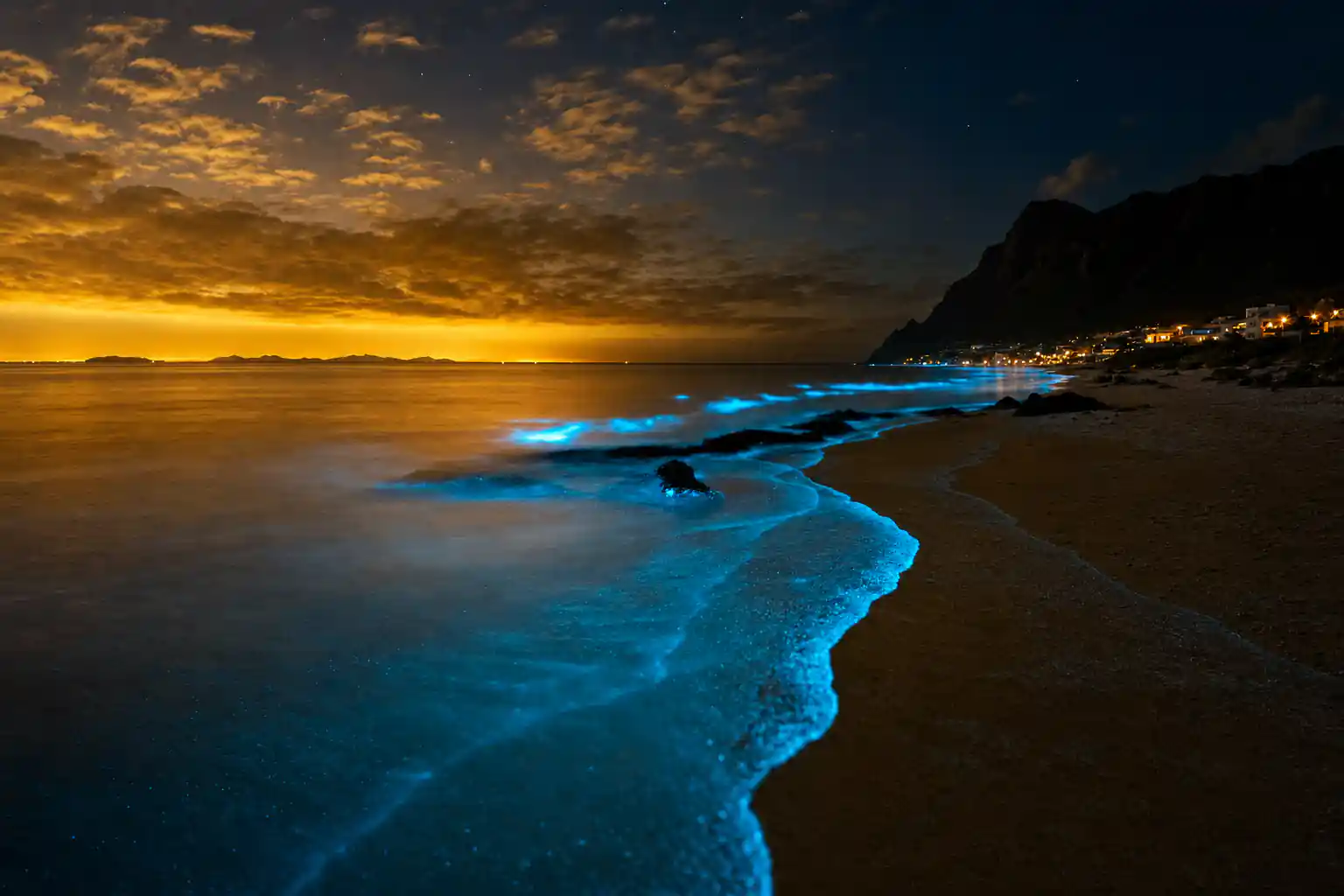
- The glow comes from dinoflagellates, which emit blue-green light when the water around them is disturbed.[5]
- Top choice Plankton and sea canoes from US$88 Duration8 hours[6]Rating4.77 from 2,619 reviews[6]GuideEnglish, Spanish, German[6]CancellationFree cancellation up to 24 hours[6]RoutePanak Island, Ko Hong, James Bond Island Check availability
- Twilight sea canoe from US$106 Duration1 day[7]Rating4.90 from 1,954 reviews[7]GuideEnglish[7]CancellationFree cancellation up to 24 hours[7]RoutePhang Nga Bay, James Bond Island, Panak See this tour
- Big boat canoeing from US$48 Duration10 hours[8]Rating4.72 from 4,048 reviews[8]GuideEnglish, Thai[8]CancellationFree cancellation up to 24 hours[8]RouteAo Po Pier, Panak, Ko Hong, Khao Phing Kan See this tour
Built entirely on stilts by Indonesian fishermen, this floating village sits at the foot of a towering limestone cliff in Phang Nga Bay.
Ko Tapu, the hongs and the glow: our verdict
Know before you leave
- Pick a date when the glowing water is the point, and check the moon phase before you book
- Set cash aside for the park, where the foreign adult entrance fee is 300 baht[9]
- Check that your hotel sits inside the pickup area for the tour you choose
- Free cancellation up to 24 hours in advance on the plankton and canoe day[6]
On the water
- Keep low in the canoe through the cave passages and follow your guide's hand signals
- Days are hot and humid, while the boat ride back feels cooler, so pack a light layer
- Sun cream, a hat and a dry bag for the speedboat crossings between islands
- Stepping down into a canoe takes a little balance, so tell your guide if you want a hand
James Bond Island: Ko Tapu, Khao Phing Kan and 1974
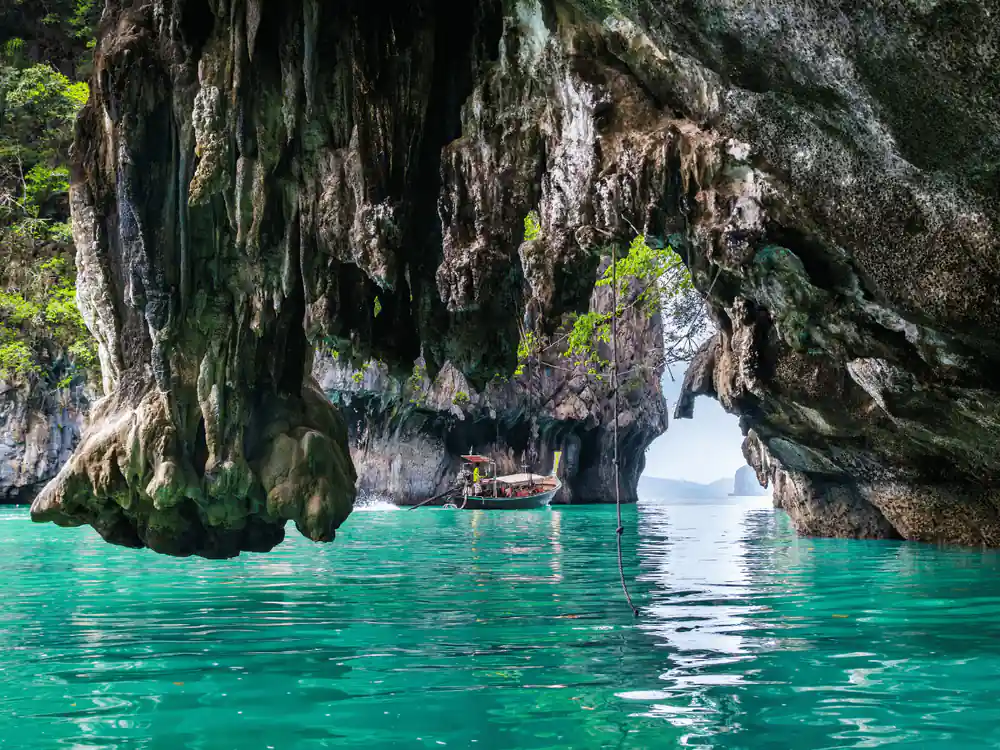
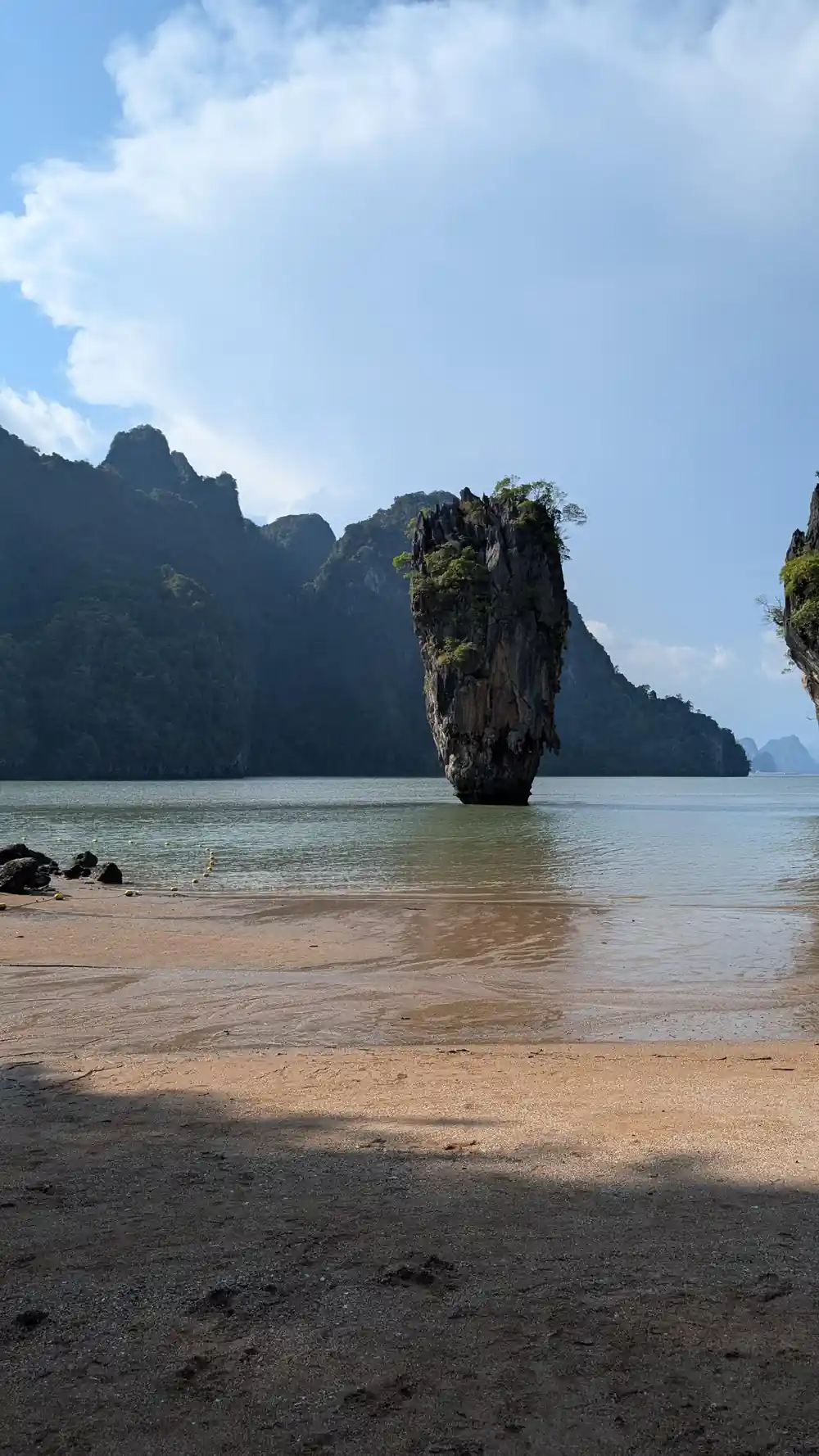
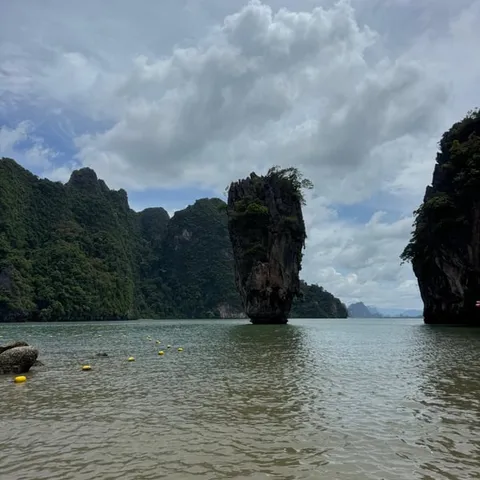
James Bond Island is the name on the signposts, but the official one is Ko Tapu, the limestone spire that stands off the twin-peaked islet of Khao Phing Kan in Phang Nga Bay.[1] The 1974 Bond film The Man with the Golden Gun made it world-famous, and the nickname stuck so firmly that boat crews and tour listings still use it.[1] Up close the spire looks too thin to stand: a pale wedge of rock lifting straight out of green water while longtails and speedboats nose around its base, cameras up, engines idling.
The first view of the bay always comes from the water. You leave the Phuket coast, cross open sea, and then the limestone begins: islands stacked like broken teeth, cliffs you could almost trail a hand along. Phang Nga Bay pronunciation is not a test anybody sets you, and getting it slightly wrong will not cost you a thing. On a fast boat the stops come quickly, and Ko Tapu arrives before you have finished your first drink.
How Ko Tapu Got Its Needle Shape
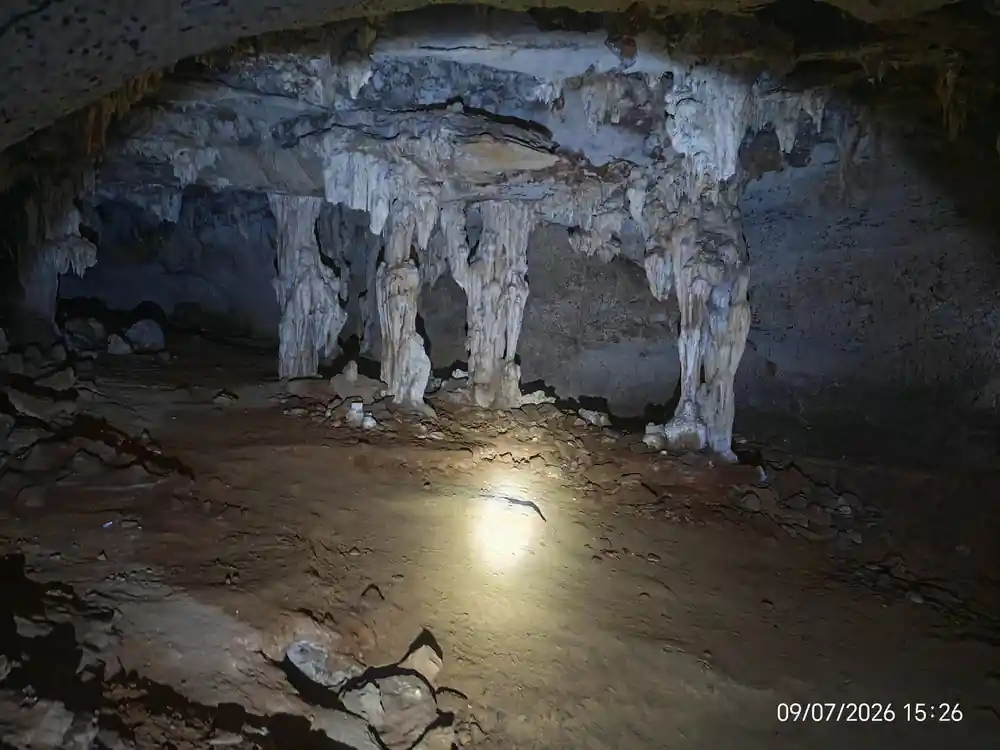
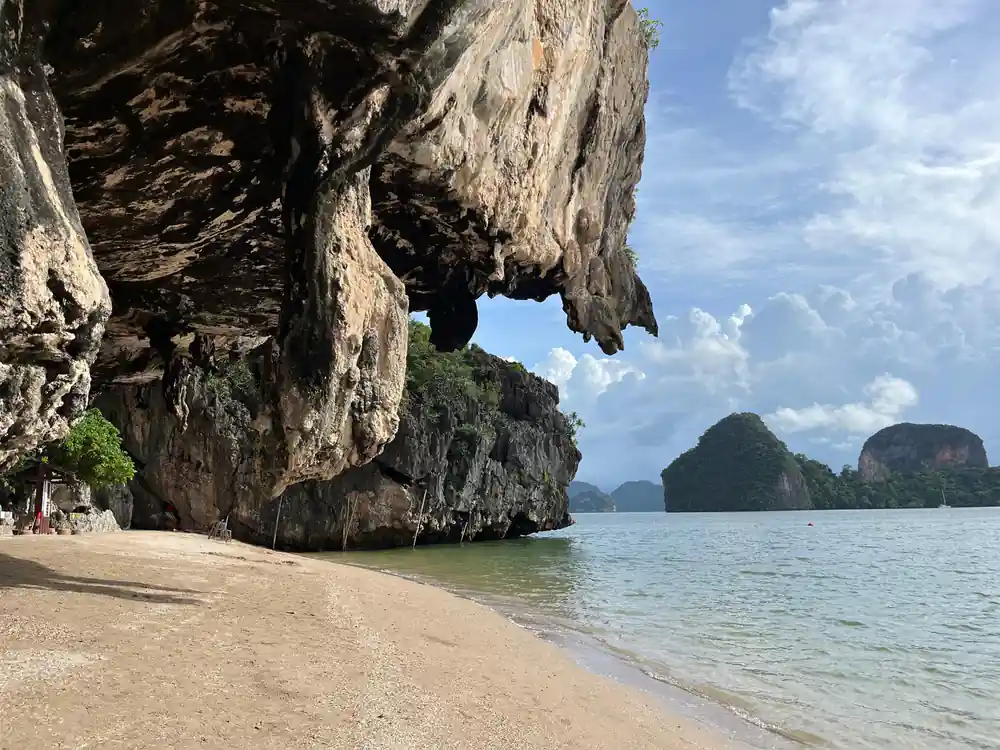
Limestone is the reason the bay looks the way it does. These cliffs began as coral and shell beds on an ancient sea floor, were lifted and folded, then left for rain, salt and tide to work on. Water dissolves limestone slowly, widening hairline cracks into caves and hollowing chambers out of solid rock. What remains is a forest of karst towers, cliffs with deep undercuts, and the occasional freestanding pillar like the one everybody comes to photograph. No single dramatic event carved Ko Tapu. It is simply what is left after everything softer has gone.
The name tells you what people saw. In Thai, tapu means nail or spike, which is exactly what the rock looks like from the water. Local storytellers have their own versions of how the pinnacle came to stand alone, and you will probably hear one on the ride out, usually with a fisherman, a storm and a lesson about greed somewhere in it. Treat those as folklore rather than geology: a good story, told by someone who has spent a life on this water, and worth listening to either way.
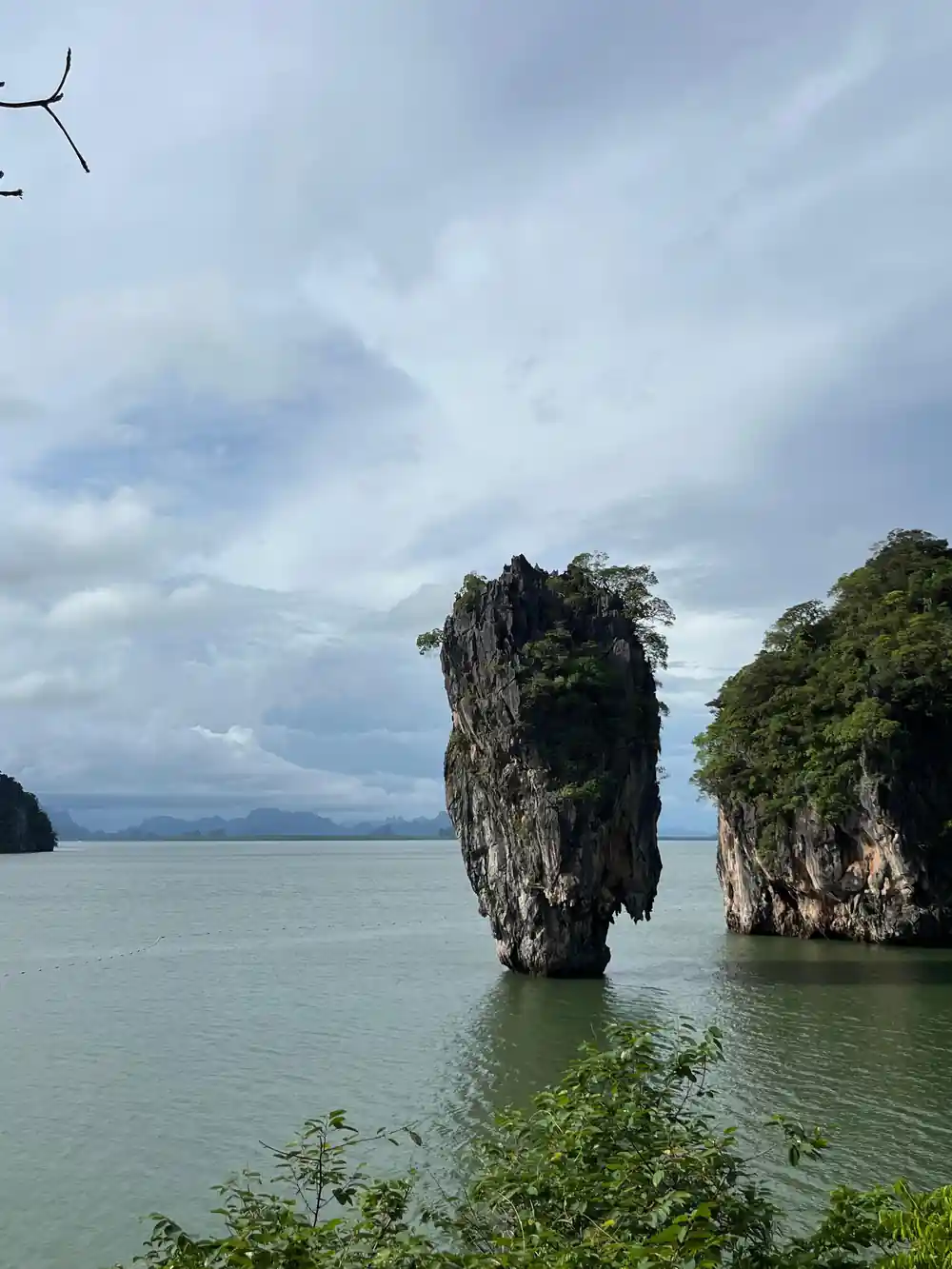
Limestone towers and green water on the run out to Ko Tapu.
What the 1974 Film Did to the Bay
Before the cameras arrived, Phang Nga Bay was a working landscape of fishing boats, mangrove and tin. The Bond film turned one rock into a destination, and the nickname has outlasted almost everything else about the production. Boats began running out from Phuket and Krabi, guesthouses followed, and a place known mainly to locals and traders became part of the standard southern Thailand itinerary. You can still see the older bay underneath the newer one: stilt houses, squid boats, and piers where the day's catch comes in.
Today the bay is a patchwork of routes. Six-island speedboat days string Ko Yao Yai, Panak Island, Hong Island, Panyee Island, Khao Phing Kan and James Bond Island together before finishing at a quiet beach.[10] Other boats go by big boat, longtail or yacht, and some do the bay in the evening light instead. If you want a quieter look at the spire, ask about early departures. Timing beats luck in this bay.
The practical side of all this fame is that the bay is busy in the middle of the day. Boats cluster at the same viewpoints, and the light is flat and hot. Going early, going late, or going by canoe with a small group changes the whole feel of the place. The rock is the same rock; the experience around it is what you choose.
National Park Status, Fees and Protection
Ao Phang Nga National Park was established in 1981 and spans approximately 154 square miles (400 square kilometers), covering coastal mangroves, islands and the sheltered water between them.[2] It is a Category 3 national park, and the entrance fee for a foreign adult is 300 baht.[9] Park rules apply to everyone, and alcohol is not allowed in Thailand's national parks, so leave the beers in the hotel fridge and enjoy a lime soda on the boat instead.[11]
The park also protects a working coast. Mangrove species along the Phang-Nga shoreline include Rhizophora apiculata, Rhizophora mucronata, Avicennia alba and Avicennia officinalis, among others in the same plant families.[12] From a canoe you see them as a green wall at the waterline, roots like fingers in the mud, herons picking along the edge. Guides often slow down here. The mangroves are where the bay feels quietest, and where the light through the leaves does most of the work.
from US$88
The Phuket: Phang Nga Bay Bioluminescent Plankton and Sea Canoes trip runs 8 hours with a live guide in English, Spanish and German.[6]
Koh Panyee: A Phang Nga Fishing Village on Stilts
The best known Phang Nga fishing village is Koh Panyee, a floating village in Phang Nga Bay built entirely on stilts by Indonesian fishermen and sitting at the foot of a towering limestone cliff.[3] It appears on several bay itineraries, including the six-island speedboat day that calls at Panyee Island on its way to James Bond Island.[10] It is the stop where you step off the boat into somebody's everyday life rather than another viewpoint.
On foot the village is a maze of plank walkways, decks and shophouses over the water, with boats tied below the floorboards and children crossing between neighbours' doors. Restaurants open onto the view, and the smell of grilled seafood follows you along the boards. Remember that this is a community rather than a set: keep your voice down near homes, buy something if you eat, and ask before photographing people at work. A slow walk will show you more than any photo stop.
Hongs, Caves and Older Marks on the Rock
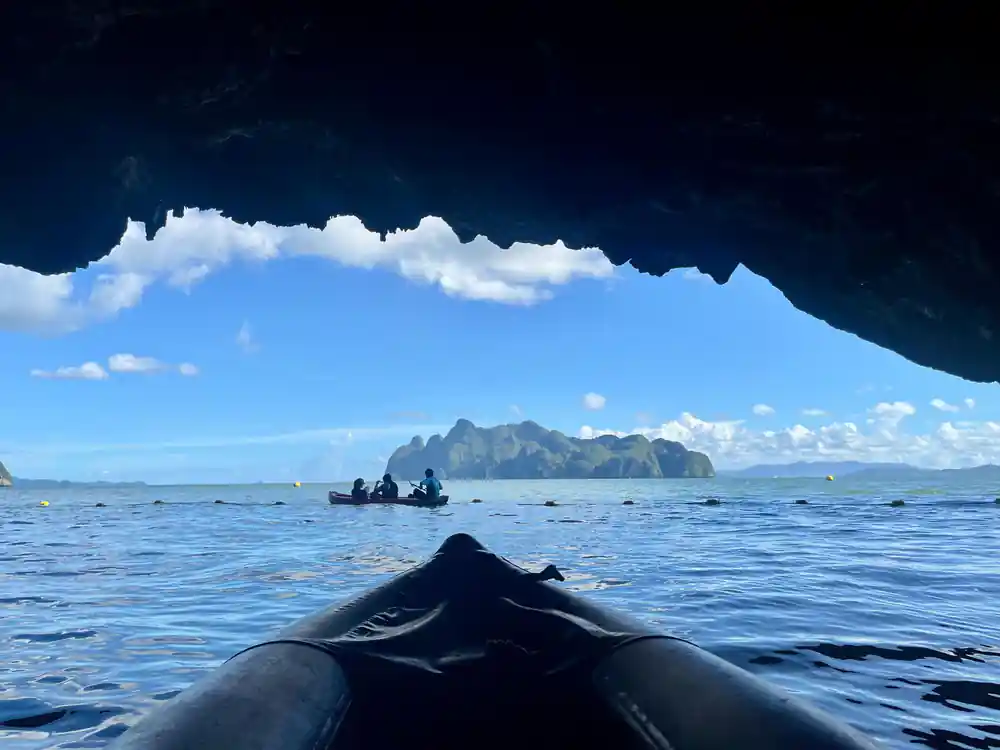
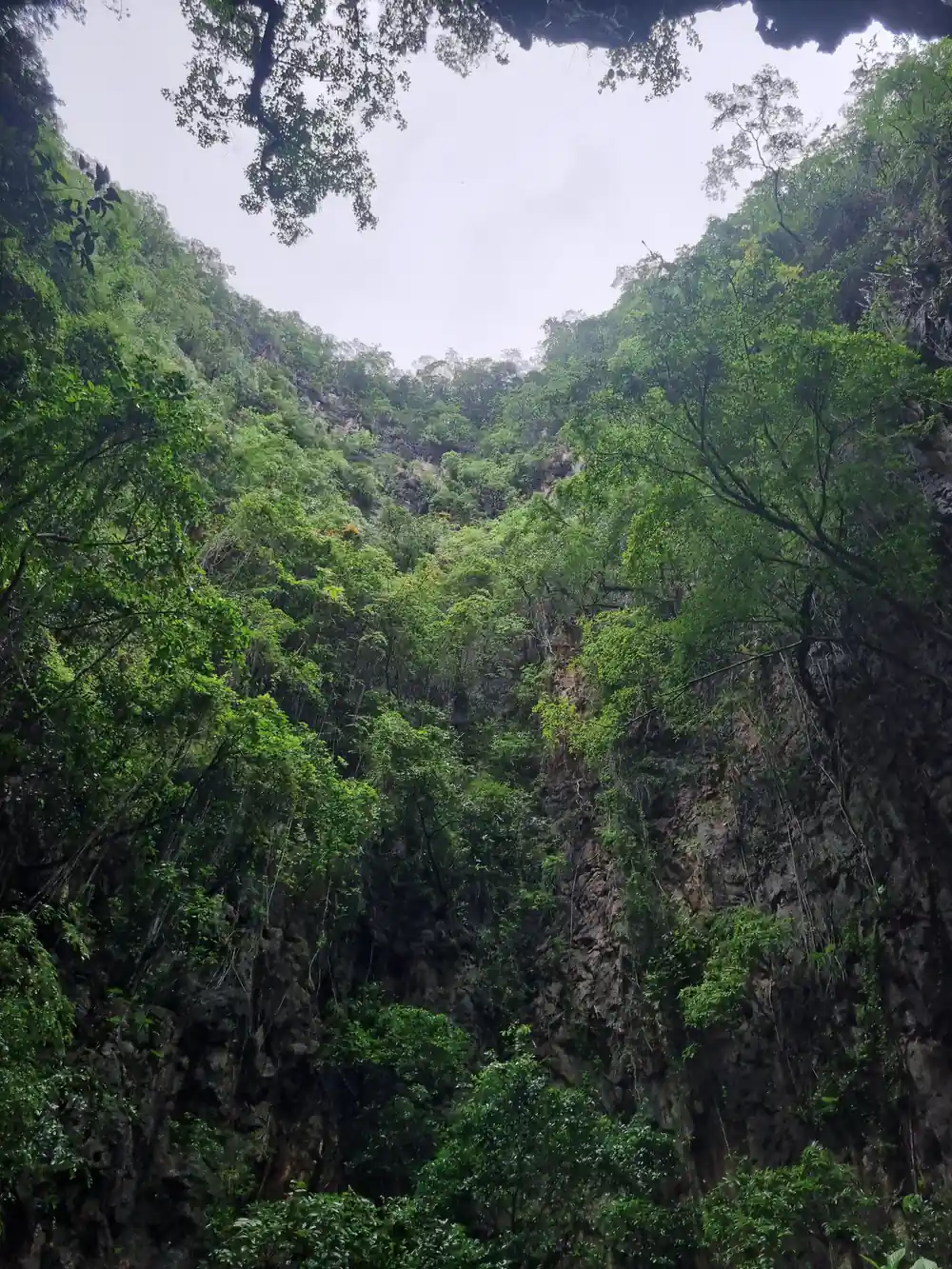
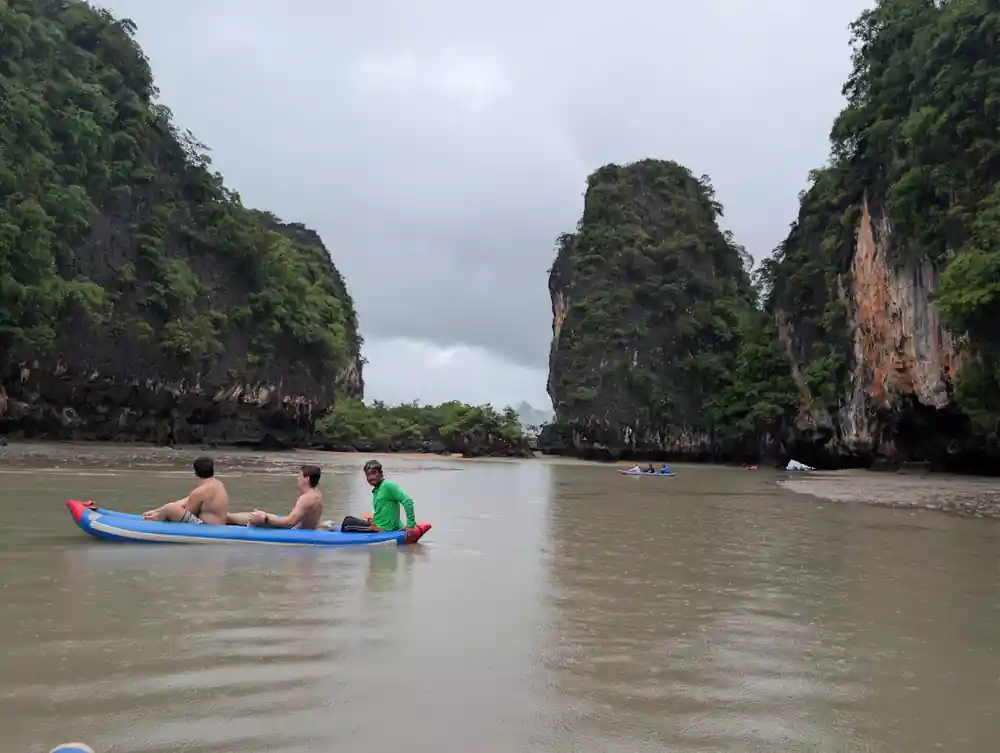
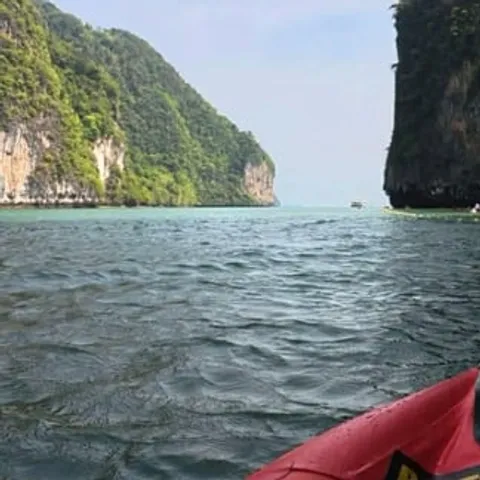
The bay's signature experience is the hong. A hong is an enclosed lagoon inside a limestone cliff, a secret chamber that can only be reached by lying flat in a kayak and paddling through a dark, narrow cave passage into a hidden world.[4] Some passages are low enough that you hear your own breathing; then the ceiling lifts, the light changes, and you are floating inside a ring of green cliffs with a circle of sky above you.
Not every mark on these cliffs is natural. Prehistoric cave paintings at Khao Khian are estimated to be around 3,000-5,000 years old and show animals, boats and various symbols drawn in red and brown on the limestone.[13] They are easy to miss from a moving boat, so ask your guide which wall to watch for. Taken together with the hongs and the karst, they are a reminder that people have been reading this coastline for a very long time.
The cave passage is usually the part people remember. Going through a gap so low that you have to lie back, then coming out into still water inside a cliff, stays with you longer than the photographs do. Wear clothes you do not mind soaking, take nothing loose into the canoe, and let the guide handle the steering while you look up.
Planning Your Day, and the Glow After Dark
For a beach vacation, November to February is the ideal time to visit Phang Nga Bay, with sunny tropical weather and festivals through the season.[14] Day trips run from Phuket by van and then by boat, and the Phuket: Phang Nga Bay Bioluminescent Plankton and Sea Canoes tour lasts 8 hours, with pickup available depending on where you are staying.[6] That same tour offers free cancellation up to 24 hours in advance for a full refund, which is worth checking before you commit.[6]
After sunset the water can light up. The glow comes from dinoflagellates, microscopic single-celled organisms that emit blue-green light when they are disturbed, and it is best seen in dark, calm water.[5] Some night kayak tours in the bay build this into the day, with a sunset paddle under the evening sky and bioluminescent plankton glowing in the water as you go.[15] The canoe tour takes in Panak Island, Ko Hong, James Bond Island and the bay itself before the ride back to Phuket.[6]
From-prices for Phang Nga Bay tours
From-prices per person from GetYourGuide listings:[6][7][8][10]
Compare from-prices per person
From-prices per person from GetYourGuide listings:[6][7][8][10]
When to go in Phang Nga Bay
Plan your Ko Tapu day
Pick your window
Weekday departures and early boats mean fewer people at the spire. If the glowing water is the point, choose a night with little moonlight.
Choose your boat
Speedboat, big boat, longtail or yacht all reach the bay. Match the ride to your stomach and your patience rather than to the pictures.
Book and check pickup
Check that your hotel is covered by pickup and note the meeting time the night before. Reserve now and pay later.[6]
Pack light and dry
Dry bag, sun cream, hat, a light layer for the boat home, and 300 baht for the park's foreign adult entrance fee.[9]
On the day
Keep low in the canoe through the cave passages and follow your guide's hand signals. Let them set the pace; the bay rewards slow looking.
See dates and pickup options for the plankton and canoe day
from US$89Reserve now & pay later