Quick summary
- Mangrove creeks, mudflats, limestone caves and open water, all inside Ao Phang Nga National Park on Thailand's Andaman coast.
- November to February is the ideal window for a beach vacation in Phang Nga Bay, with sunny tropical weather and festivals.[1]
- Mudskippers and fiddler crabs on the flats, herons and kingfishers at dusk, bats leaving the caves, macaques along the treeline and glowing plankton after dark.
- Canoes and small boats reach the creeks and hongs; the tour booked here runs 8 hours.[2]
- Foreign adults pay 300 baht to enter the park, and Phang Nga Bay boat tours are listed from US$48.[3][4]
- Top choice Plankton and sea canoes from US$88 Duration8 hours[2]Guide languagesEnglish, Spanish, German[2]Rating4.77 from 2,619 reviews[2]CancellationFree cancellation up to 24 hours[2]PaymentReserve now and pay later[2] Check availability
- Twilight sea canoe from US$106 Duration1 day[5]Guide languagesEnglish[5]Rating4.90 from 1,954 reviews[5]CancellationFree cancellation up to 24 hours[5]PaymentReserve now and pay later[5] See this tour
- Big boat canoeing from US$48 Duration10 hours[4]Guide languagesEnglish, Thai[4]Rating4.72 from 4,048 reviews[4]CancellationFree cancellation up to 24 hours[4]PaymentReserve now and pay later[4] See this tour
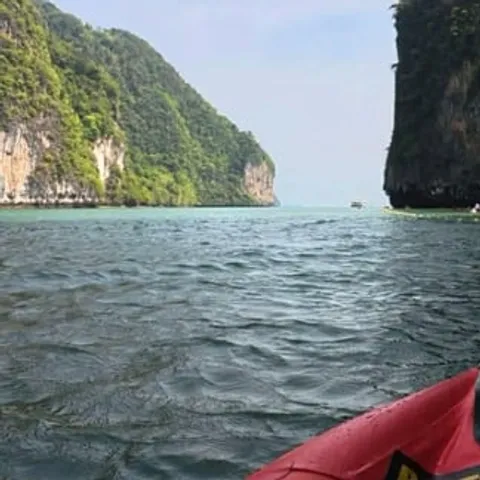
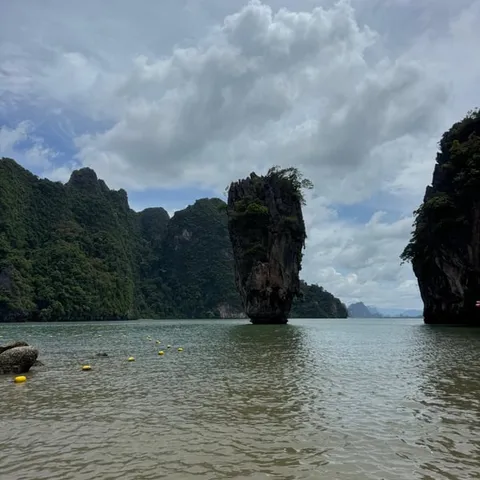
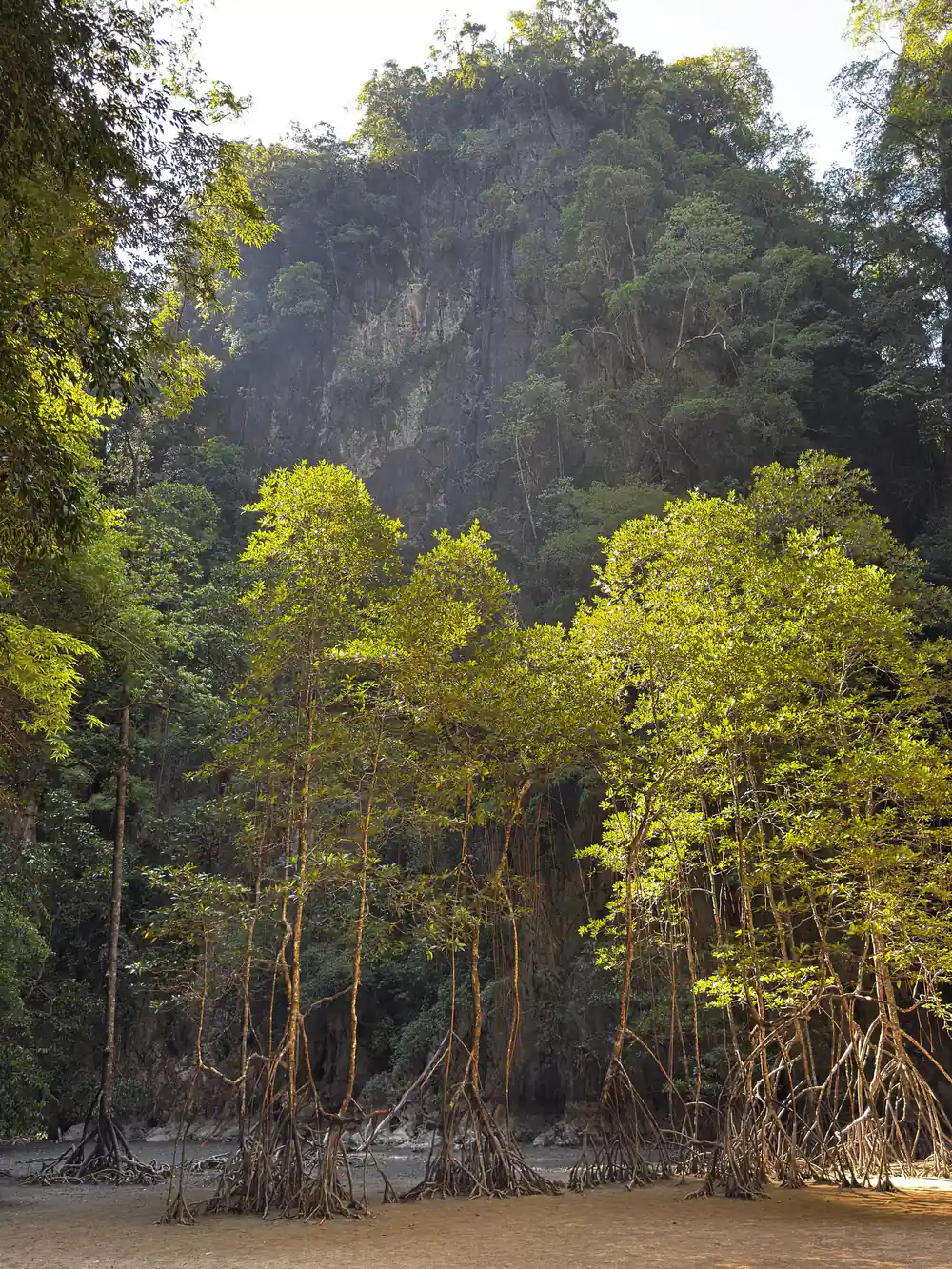
Some of the mangrove plant species found along the coast are; Rhizophora apiculata, Rhizophora mucronata, Avicennia alba, Avicennia officinalis, Bruguiera cylindrica, Bruguiera parviflora, Xylocarpus granatum and Xylocarpus moluccensis.
Canoe the mangroves and stay for the plankton
Plan and book
On the water
- Alcohol is not allowed in Thailand's national parks[6]
- A hat and sunglasses cut the glare, because the bay is bright by mid morning
- Stay on boardwalks and marked paths so roots and burrows stay intact
- Keep food sealed and never feed the macaques, birds or fish
Mangrove Forests: The Bay's Living Foundation
The mangrove belt is the first thing you see from the water and the easiest thing to overlook. Prop roots arch out of the mud at every angle, trapping sediment, slowing the waves and turning a soft shoreline into something that holds. Drift past in a canoe and the edge of the bay looks less like a forest and more like scaffolding that has been working for a very long time. Those tangled roots are the nursery for the fish, crabs and prawns that much of the bay's other life depends on.
Ao Phang Nga National Park was established in 1981 and spans approximately 154 square miles (400 square kilometers) of coast, islands and mangrove channels.[7] The tidal forest is not one tree but a mix. Species recorded along the Phang-Nga coast include Rhizophora apiculata, Rhizophora mucronata, Avicennia alba, Avicennia officinalis, Bruguiera cylindrica, Bruguiera parviflora, Xylocarpus granatum and Xylocarpus moluccensis.[8] The Rhizophora are the stilt-rooted trees you will recognise instantly; the Avicennia send up pencil-thin breathing roots from the mud. Together they build the shaded creeks a small boat can slide into.
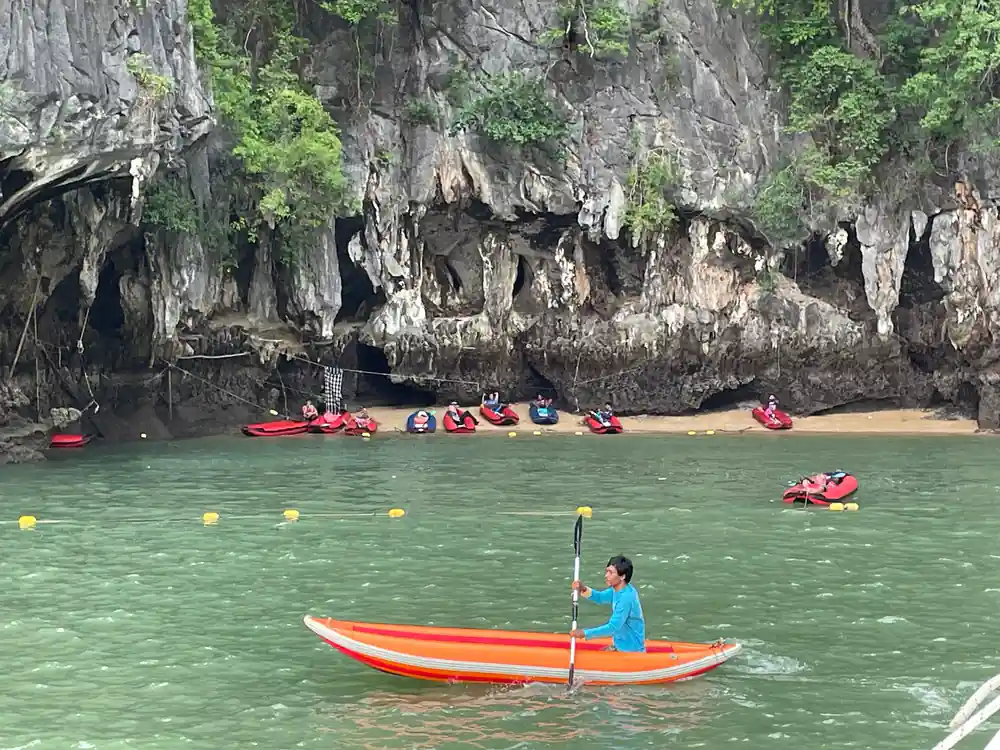
The mangrove belt rewards a slow approach. A canoe or a small boat can slip into side creeks where the roots close in overhead, and the trip booked from this site runs 8 hours with sea canoes in the bay.[2] Keep your hands off the roots as you pass, because they are the structure of the whole system and they damage easily.
Mudflat Life: Mudskippers and Fiddler Crabs
When the tide drops, the mangrove edge becomes a stage. Mudskippers haul themselves out on their front fins and skate across the grey surface, half fish, half lizard, blinking in the sun. Fiddler crabs wave their oversized claws in small semaphore signals, then vanish into burrows the moment a shadow crosses them. Stop and watch a patch of open mud closely and you will see far more movement than the flat grey surface suggests, as long as you stand still and keep your voice down.
Timing is everything on the flats, because low water is what exposes the burrows and the feeding grounds. Settle on a boardwalk or the deck of a moored boat, let the ripples calm, and let the residents forget you are there. Binoculars earn their place here, and a camera held low gets closer than one held at eye level. Wear shoes that can take mud and salt, and stay on the boards and paths wherever a trail provides them, because the mud itself is a living surface.
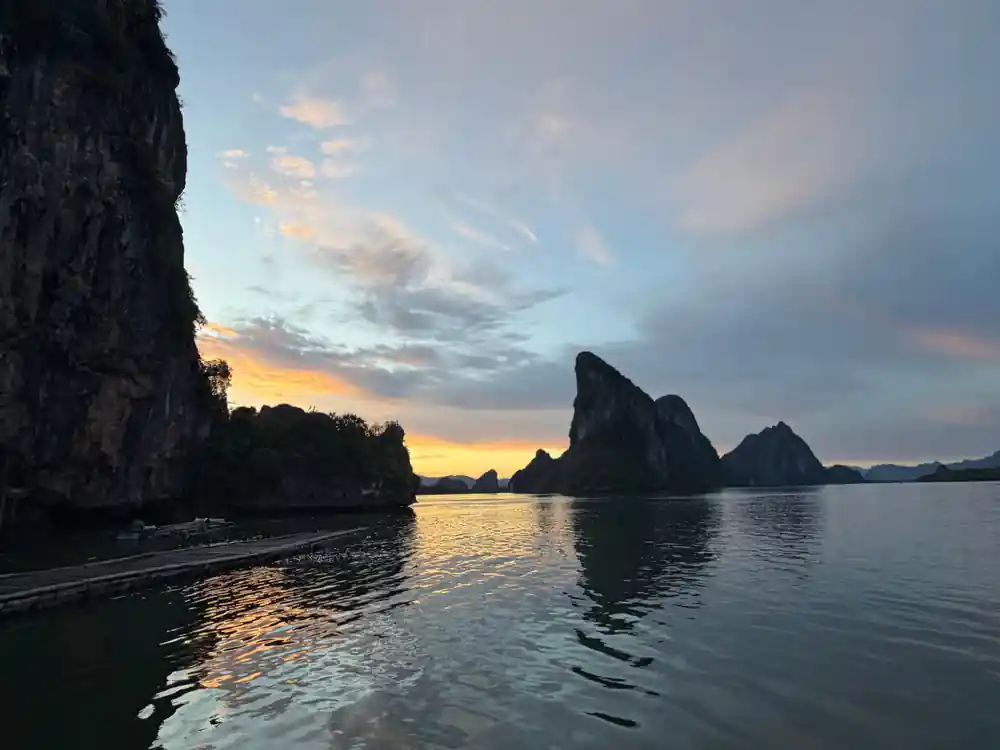
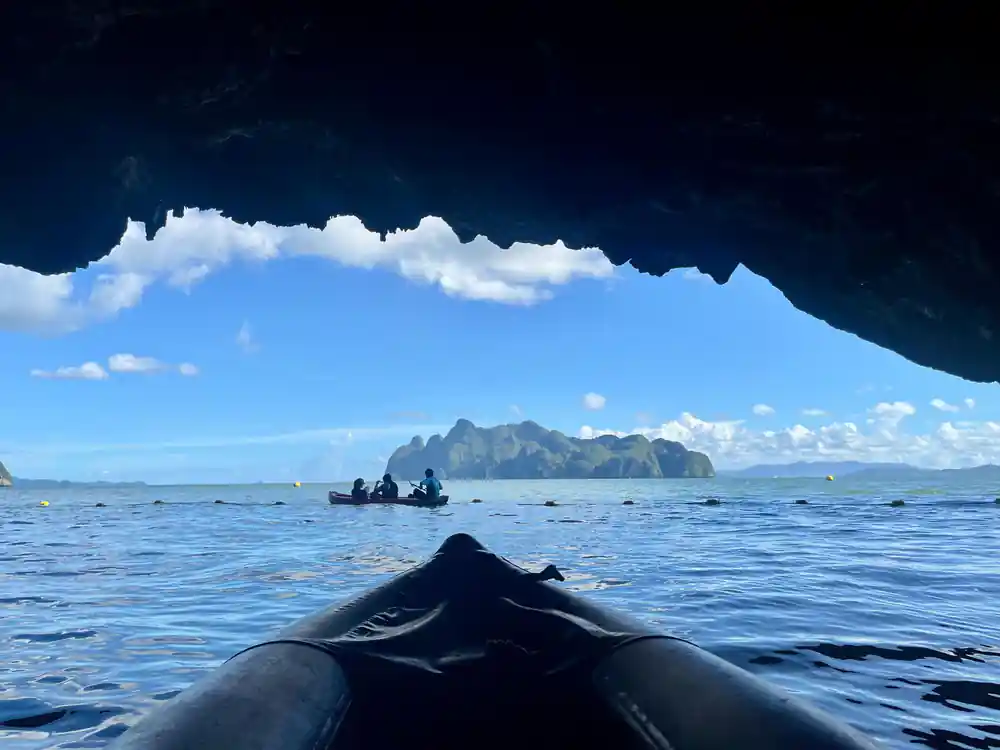
Canoes slip between limestone cliffs in the shallow water of Phang Nga Bay.
Cliff Birds at Dusk: The Evening Shift Change
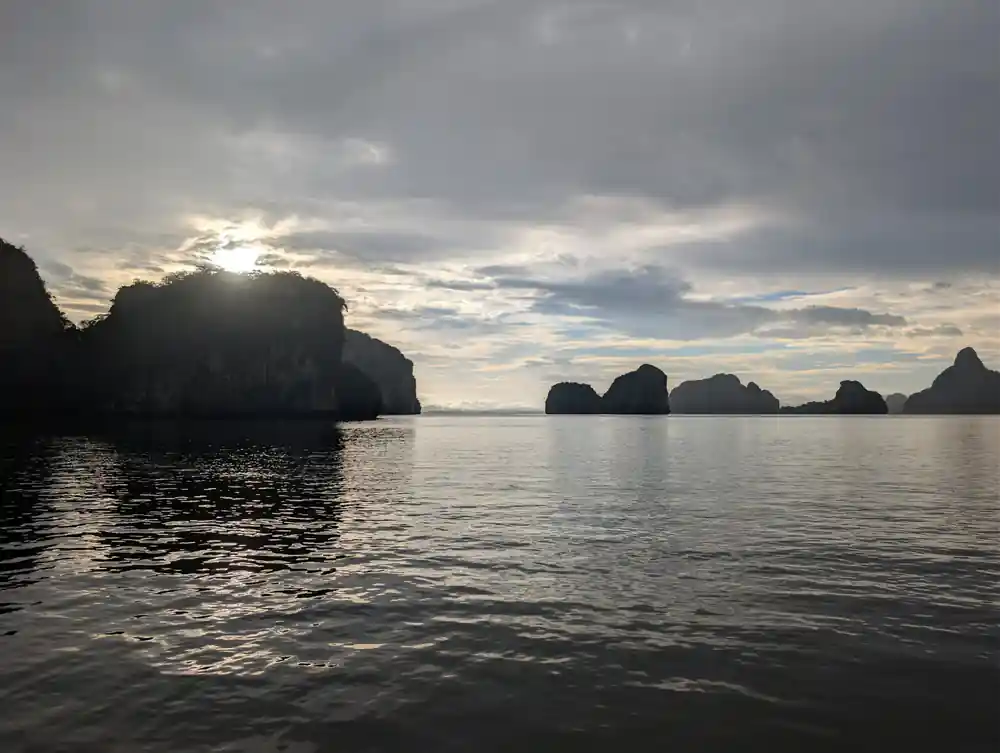
The limestone towers look bare from a distance, but they are full of ledges, crevices and overhangs, and birds use them the way city dwellers use balconies. As the heat goes out of the day, herons and kingfishers work the mangrove shallows, egrets pick along the waterline, and swifts flick around the cliff faces catching insects on the wing. Look up rather than out in the last hour of light, because birds are moving between feeding grounds and roosts and the traffic is steady.
Dusk is also the quietest time to be on the water, with the day boats turning for home. Keep your distance from any nesting ledge and use binoculars rather than approaching the rock, which is kinder to the birds and often gives a clearer view. If you are on a boat heading back through the bay, the show on the cliffs comes with the journey.
Bats Emerging at Sunset: The Night Shift Begins
As the light fades, the second shift clocks on. Bats stream out of cave mouths in the limestone and hunt insects over the water and through the mangroves for the rest of the night. A colony leaving a single cave is one of the bay's great small spectacles, and you do not need to go inside to see it. Watch the entrance from a sensible distance, keep torches pointed away from the exit, and keep your voice low.
Caves are also where the bay's most famous hidden spaces begin. In Phang Nga Bay, hongs are enclosed lagoons inside towering limestone cliffs, and the only way in is to lie flat in a kayak and paddle through dark, narrow cave passages.[9] Guides time the entry with the tide, and the change from a low, dark passage into a bright lagoon ringed by cliffs is the moment you will remember from the day.
from US$88
The tour booked from this site runs 8 hours and is rated 4.77 from 2,619 reviews.[2]
Fish Beneath the Hull: The Underwater Food Web
Under the boat, the mangroves are still doing the work. Roots and mud shelter juvenile fish, crabs and shrimp, which in turn feed the larger fish, the birds and the dolphins that sometimes work the channels. If you swim or snorkel, keep your fins off the bottom and your hands off the roots. The shallows can look empty until you stop moving, and then the small life reappears.
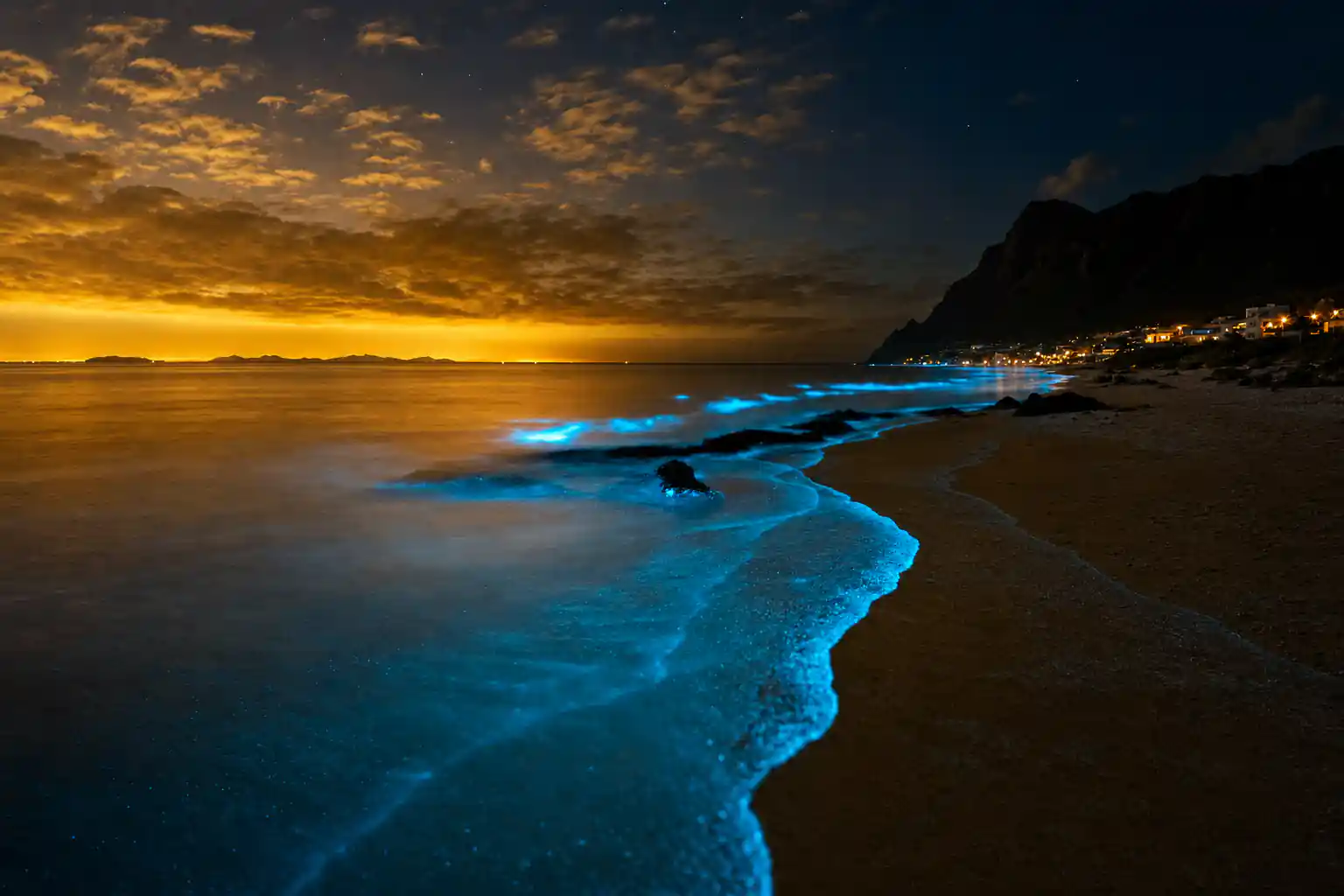
After dark, the food web puts on its light show. Bioluminescent plankton in Phang Nga Bay are caused by dinoflagellates, microscopic single-celled organisms that emit blue-green light when disturbed.[10] Move a hand through the water, or a paddle, and a trail glows behind it. Some night kayak tours in the bay include a sunset paddling experience under the evening sky where participants can see bioluminescent plankton glowing in the water.[11] Moonlight and harbour lights wash the effect out, and the darkest stretch of water usually shows it best.
Macaques in Their Habitat: Respecting Wildlife Boundaries
Long-tailed macaques live around the bay's edges and on several of the islands, moving between the trees and the tideline in family groups. They are quick, clever and completely unbothered by people, which is exactly why they need room. A macaque that has learned to link humans with food will approach, snatch and bite, and a bite means a clinic visit instead of a holiday photo.
Keep bags zipped, keep food out of sight and never hand anything over, even for a photo. Give a group space to move past and never get between an adult and a young one. It also helps to know the park rules before you go: alcohol is not allowed in Thailand's national parks.[6] A wildlife stop is worth more when the animals stay wild, so watch from a distance and let them get on with their day.
Protected Species and the National Park's Role
The bay's wildlife is only as safe as its habitat. Ao Phang Nga National Park is a Category 3 national park, and the foreign adult entrance fee is 300 baht.[3] That status protects the mangroves, seagrass beds and cliffs that dugongs, sea turtles, dolphins and a long list of birds and reptiles depend on. Feeding animals, collecting shells and taking anything living out of the park all work against the same protection, so look, photograph, and leave everything where it is.
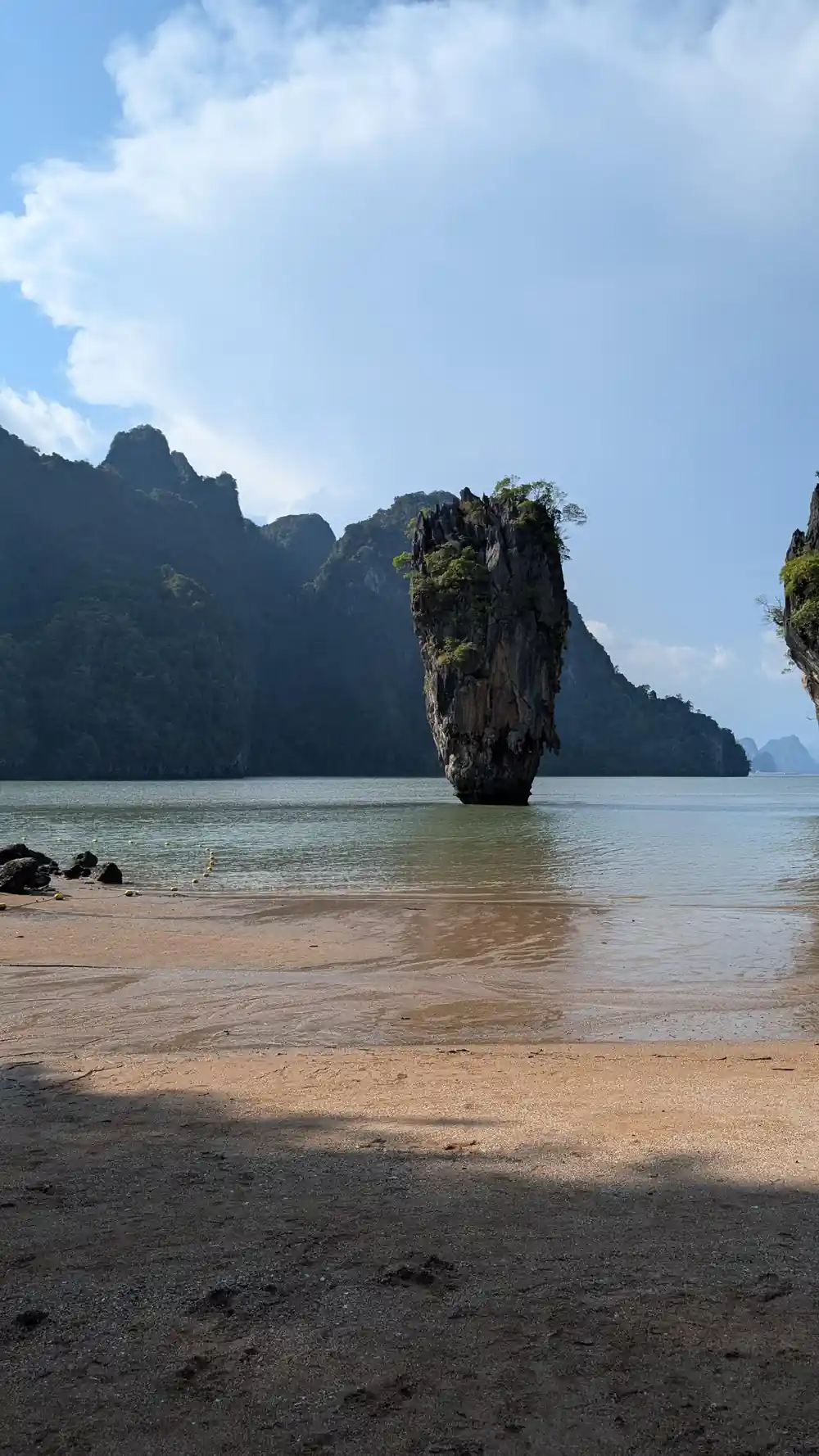
There is human history in the park too. Prehistoric cave paintings at Khao Khian in Phang Nga Bay are estimated to be around 3,000-5,000 years old and show animals, boats and symbols.[12] The bay's landmarks sit inside the same protected area: Koh Panyee is a floating village in Phang Nga Bay built entirely on stilts by Indonesian fishermen at the foot of a towering limestone cliff,[13] and James Bond Island, officially Ko Tapu on the twin-peaked islet of Khao Phing Kan, is the limestone spire made world-famous by the 1974 James Bond film The Man with the Golden Gun.[14]
None of this is scenery you can rush. The mangroves rebuild the shore, the flats feed the fish, the fish feed the birds, and the birds and bats move nutrients back into the forest. Watching that chain rather than ticking off species is what a mangrove nature trail is really for, and the slowest boat usually has the best day.
From prices for Phang Nga Bay boat tours
From prices per person for these GetYourGuide listings:[2][4][5][15].
Compare canoe and boat tour from prices
From prices in US dollars for these listings:[2][4][5][15].
When to plan your visit
How to watch bay wildlife
Pick your season
November to February is the ideal time for a beach vacation in Phang Nga Bay, with sunny tropical weather.[1]
Book the right boat
Choose a small group or canoe-based trip so you can reach the creeks; the tour booked here has pickup available.[2]
Go with the tide
Low water opens the mudflats and the crab burrows; ask your guide when the tide turns and time the mangrove stop for then.
Watch from a distance
Birds, bats and macaques all react to approach; binoculars and a quiet voice get you closer to natural behaviour than a camera does.
Stay for dusk
Dusk brings birds back to the cliffs and bats out of the caves, and some kayak tours paddle on to watch glowing plankton.[11]
Leave it as you found it
Stay on paths, take your rubbish back with you, and remember that alcohol is not allowed in Thailand's national parks.[6]
Canoe the mangroves and see the bay light up after dark
from US$89Reserve now & pay later