Quick summary
- Prehistoric cave paintings in the bay are estimated to be around 3,000 to 5,000 years old and depict animals, boats and symbols.[1]
- Ao Phang Nga National Park was established in 1981 and spans approximately 154 square miles (400 square kilometers).[2]
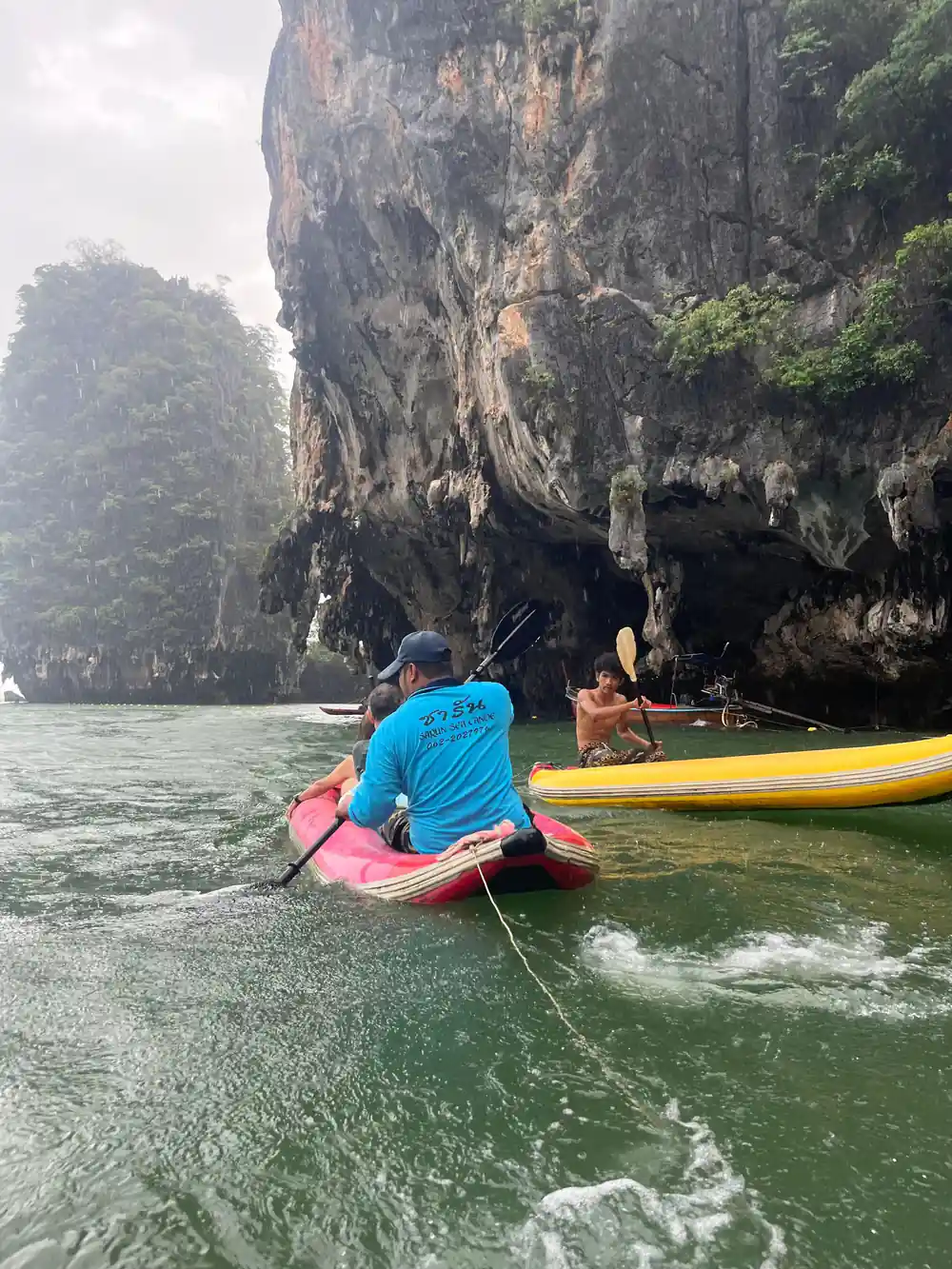
- The enclosed lagoons called hongs sit inside towering limestone cliffs and are reached by kayak through dark, narrow cave passages.[3]
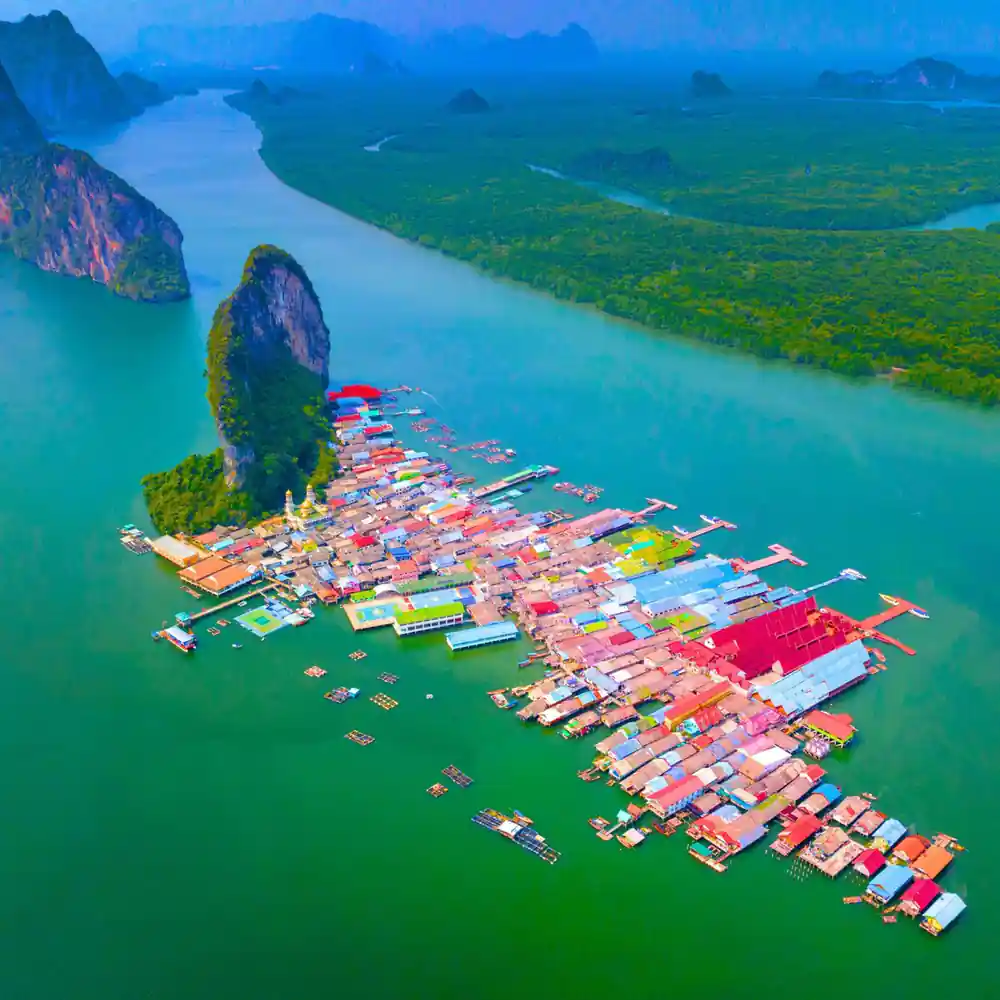
- Koh Panyee is a floating village built entirely on stilts by Indonesian fishermen at the foot of a towering limestone cliff.[4]
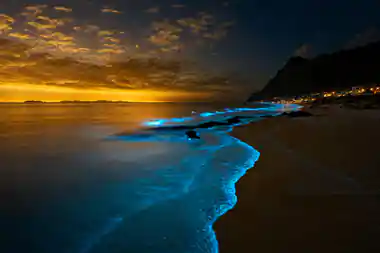
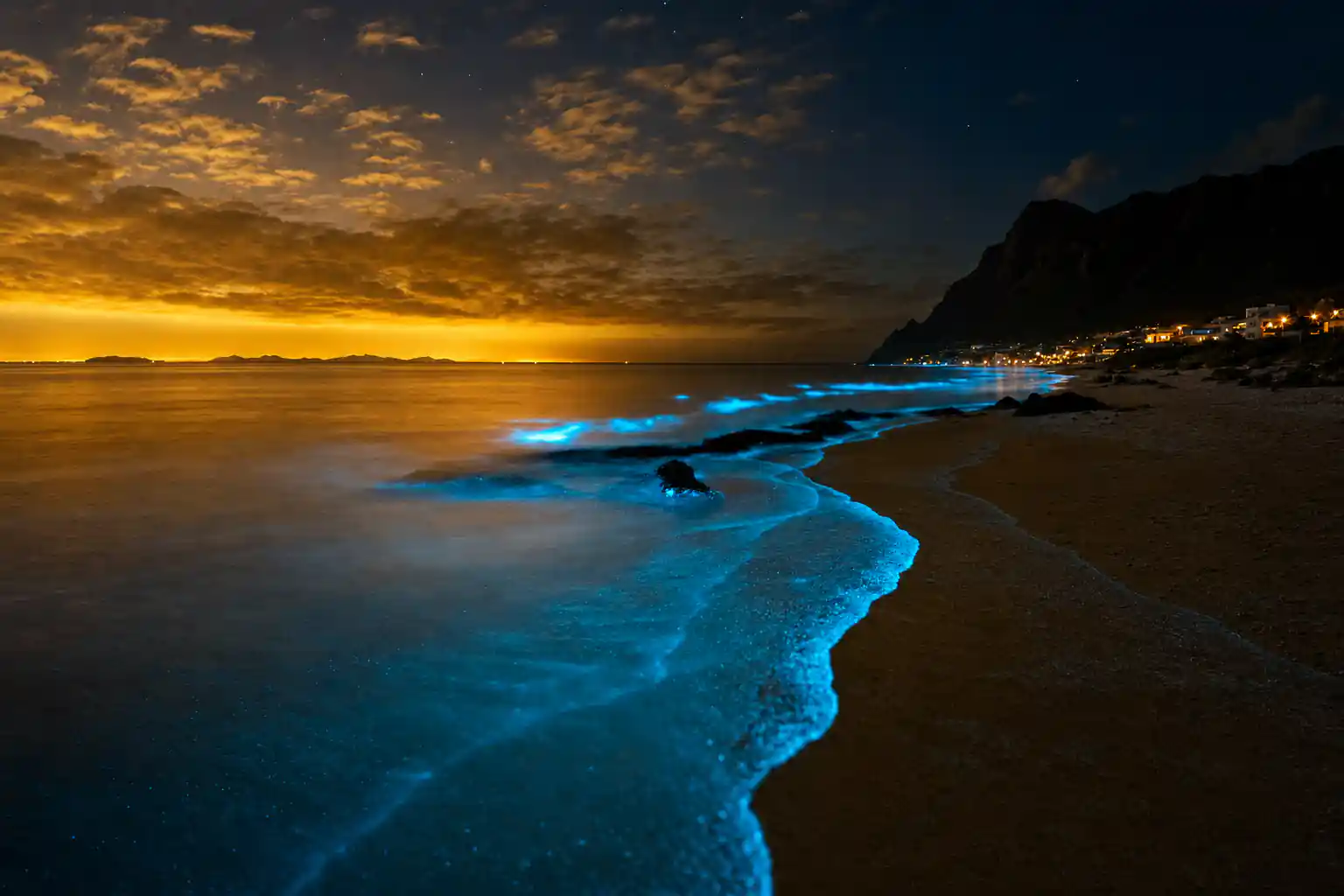
- Bioluminescent plankton in these waters are dinoflagellates that emit blue-green light when disturbed.[5]
- Top choice Bioluminescent Canoes from US$88 Duration8 hours[6]Rated4.77 from 2,619 reviews[6]GuideEnglish, Spanish, German[6]CancellationCancel up to 24 hours ahead[6] Check availability
- Twilight Sea Canoe from US$106 Duration1 day[7]Rated4.90 from 1,954 reviews[7]GuideEnglish[7]CancellationCancel up to 24 hours ahead[7] See this tour
- Big Boat Canoeing from US$48 Duration10 hours[8]Rated4.72 from 4,048 reviews[8]GuideEnglish, Thai[8]CancellationCancel up to 24 hours ahead[8] See this tour
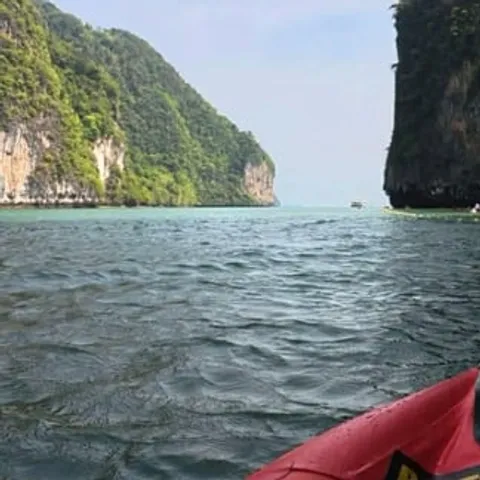
The red and brown drawings can be seen directly on the limestone cliffs and depict animals, boats, and various symbols.
The past is the reason to get on the water
Booking tips
- Pick a date in the sunny months and reserve your seat early, since boats fill up.
- Bring baht for the national park entrance fee, plus small notes for drinks and tips.
- Pack sun cream, a hat and a dry bag for the speedboat ride.
- Read the cancellation terms before you commit and keep a screenshot of your booking.
On the water
- Expect a van transfer to the pier first, then the boat, then the same in reverse.
- Wear quick-drying clothes and shoes that slip off easily at the pier.
- Stay with your guide on cave entries and hong landings, and keep a hand free.
- Keep the evening clear if you want the plankton glow at the end of the day.
When the sea shaped Phang Nga Bay
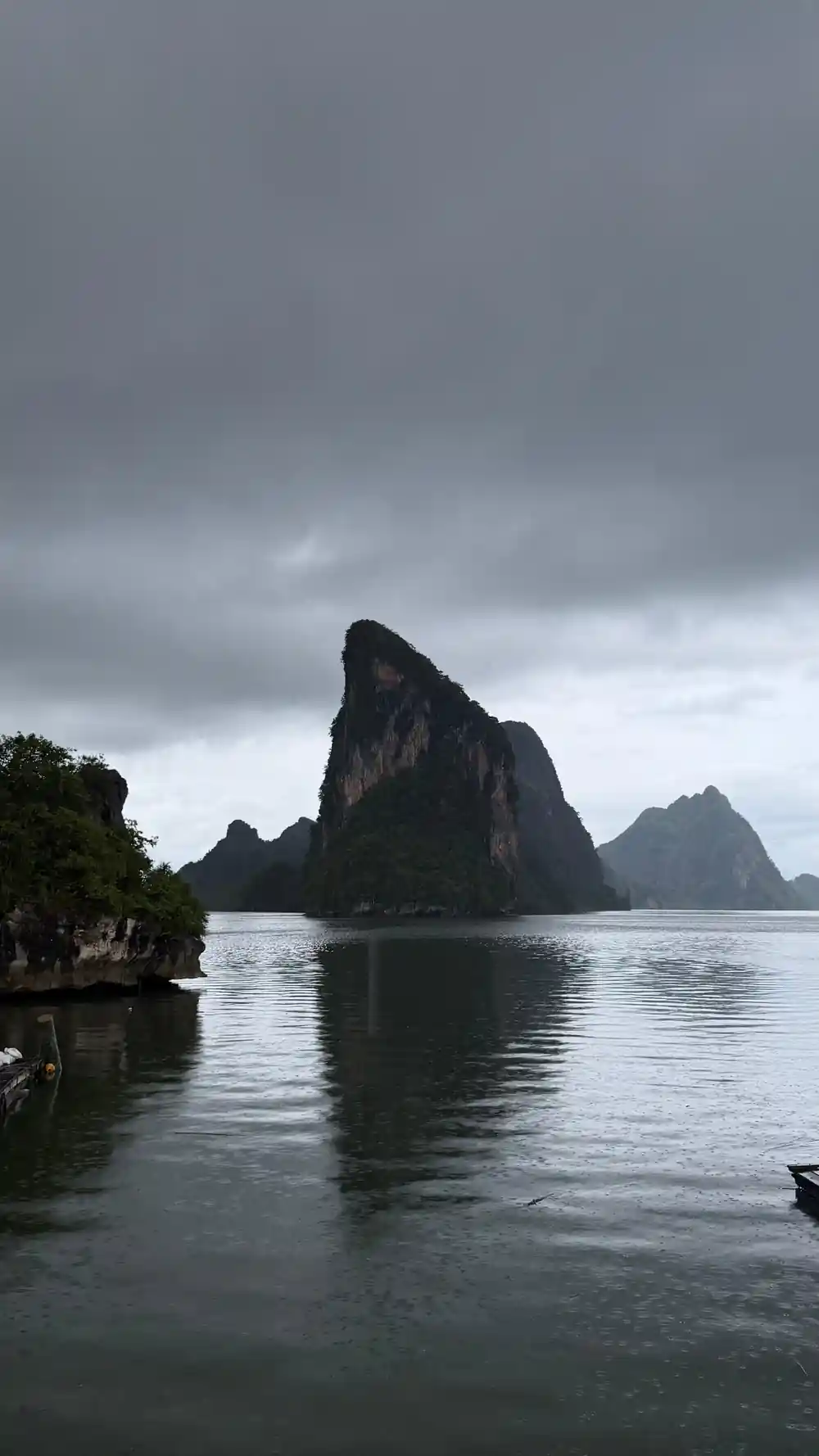
Phang Nga Bay looks like a landscape built to be strange. Limestone islands and towers rise straight out of shallow green water, some as thin as a spire, others wide enough to hide a lagoon inside. The rock began as coral and shell on an ancient sea floor, was lifted and cracked, then dissolved by rain and tide into the karst shapes you see today. Sea levels shifted, caves flooded, roofs fell in, and what remains is the bay that paddlers meet now: pale cliffs at the water's edge with mangrove at their feet.
The bay is protected as Ao Phang Nga National Park, established in 1981 and spanning approximately 154 square miles (400 square kilometers).[2] That protection covers mangroves, islands and the geological formations that hold the region's archaeology. The mangrove plant species found along the Phang-Nga coast include Rhizophora apiculata, Rhizophora mucronata, Avicennia alba, Avicennia officinalis, Bruguiera cylindrica, Bruguiera parviflora, Xylocarpus granatum and Xylocarpus moluccensis.[9] Their roots slow the water, trap sediment and build the soft, dark shorelines where the oldest rubbish heaps in the bay have survived.
History here is mostly a matter of noticing what the rock and mud have kept: shells, bones, charcoal, painted pigment, worn floors and the shapes of caves that people chose to use again and again. None of it was built to be remembered, which is exactly what makes it worth looking at as you paddle past.
Shell middens: the kitchen waste of ancient inhabitants
The oldest stories in the bay are told in rubbish. A shell midden is what the name suggests: a heap of kitchen waste. Oyster and cockle shells, fish bones, crab claws, broken tools and charcoal from cooking fires all collect in a low mound, and with enough seasons the heap hardens into the ground and becomes archaeology.
Middens survive behind beaches, inside cave mouths and on ground that once stood closer to the water. Because the sea has moved since, some now lie a short paddle offshore, and others sit in the cut bank of a channel where you can see the layers. Look for soil that seems darker and greasier than the sand around it.
Reading a midden tells you about a menu and about a season. Big shells from rocky shores point to collecting at low tide, fish bones point to nets, lines or traps, and charcoal points to fire, cooking and long evenings. None of that needs writing, farming or metal, only a working knowledge of tides, weather and which rocks to look under. Walk a beach in the bay and a dark band of shell may represent years of dinners.
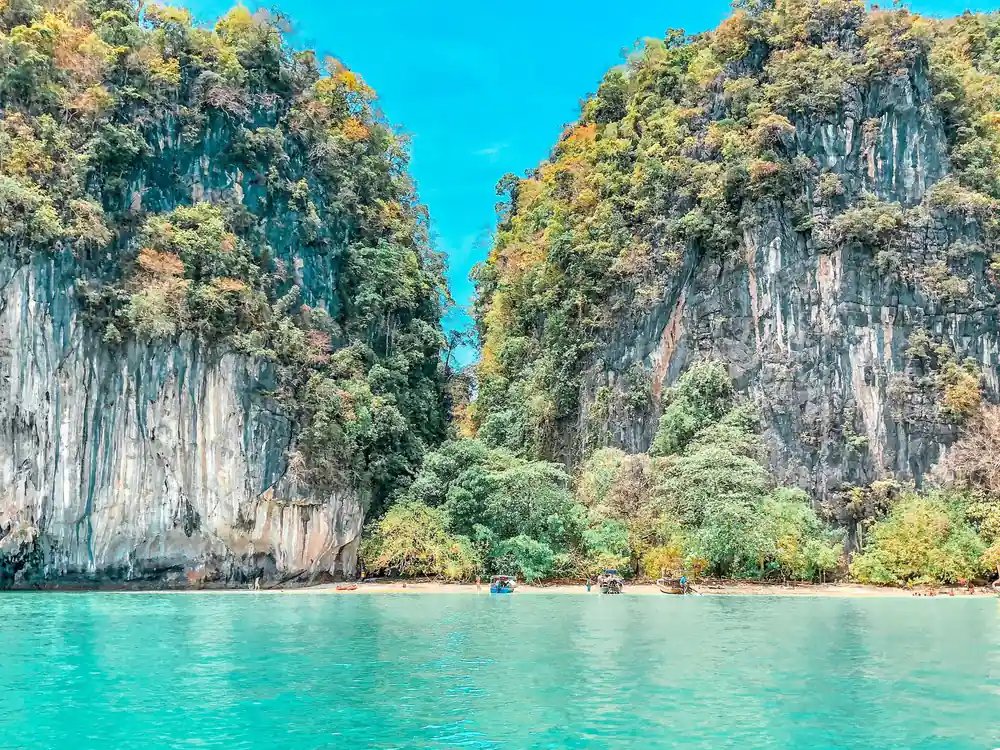
Painted cliffs and hidden lagoons hold the bay's oldest stories.
Life inside the limestone caves
A cave in this landscape is not only a hole in a cliff. Where a limestone tower has a wide, dry mouth above the tide, it gives shade, shelter and somewhere to sleep out of the monsoon. Where water has dissolved a passage through the rock, the same cave can flood at high tide and stay cool through the hottest part of the afternoon. People used both kinds, and the wide dry mouths are the ones most likely to show signs of long occupation.
The enclosed lagoons known in Thai as hongs belong to the same geology. They exist like secret chambers within towering limestone cliffs, and they can only be reached by lying flat in a kayak and paddling through dark, narrow cave passages that open into hidden worlds.[3] Inside, light falls from a ring of sky, mangrove seedlings cling to the rock and the noise of open water disappears. Nothing in a hong is straight: the walls curve, the water is green and still, and the only way out is the way you came in.
Sitting there, it is easy to understand why this coast has been used for so long. Shelter, shellfish on the rocks, shade at midday, a route that hides you from weather and a place to wait out a squall: the bay offered all of it without asking much in return.
Ochre paintings on the bay's ancient cliffs
The clearest trace of the bay's early people is paint. At Khao Khian, prehistoric cave paintings are estimated to be around 3,000 to 5,000 years old and depict animals, boats, and various symbols.[1] The drawings are red and brown, brushed onto limestone that has since been stained, cracked and weathered by salt air.
The subjects matter as much as the age. Boats suggest people who travelled by water, animals suggest hunting, herding or both, and the symbols suggest a shared set of meanings that we can see clearly and no longer read. The figures sit on open rock rather than deep in the dark, which is why they have faded, and also why they can be seen from the water by anyone who knows where to look.
Treat the painted cliffs as the loudest page in a long book. The same coast holds quieter traces, from smoke-stained overhangs to shell heaps that never made it into any story, and together they describe people who lived well on a difficult, generous shore.
from US$88
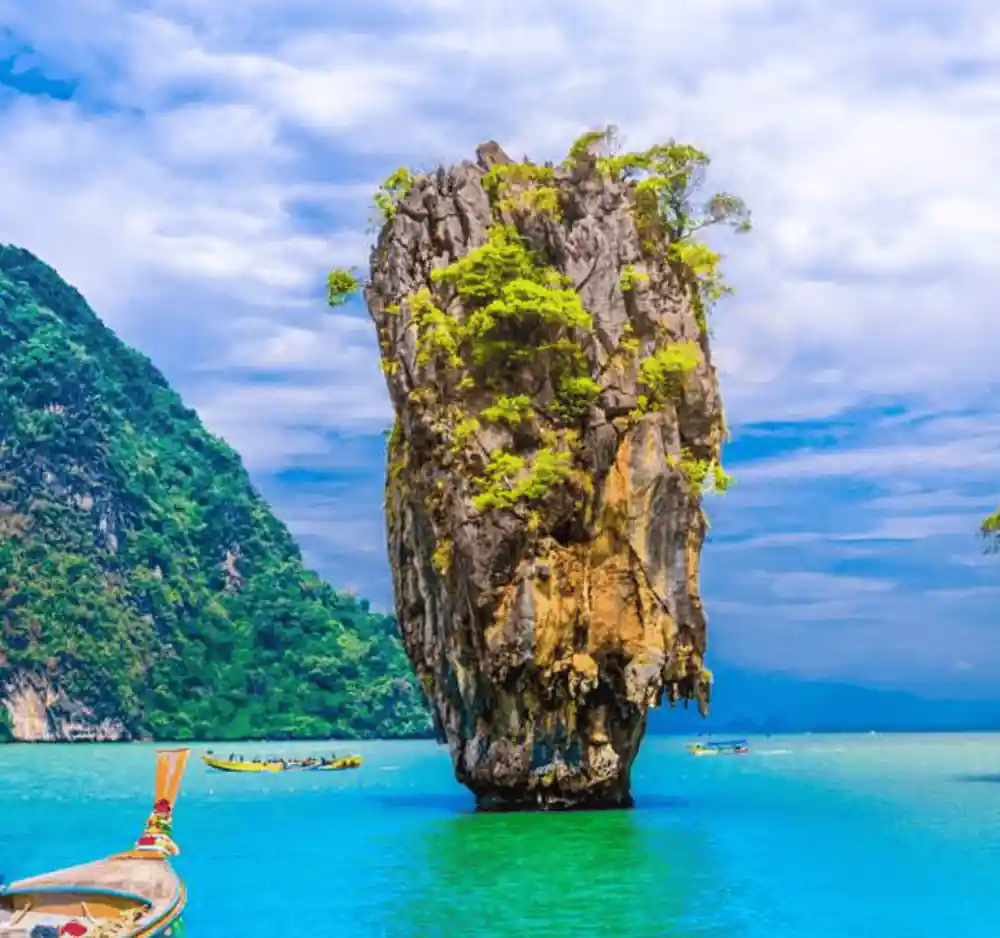
8 hours by speedboat to Panak Island, Ko Hong, James Bond Island and Phang Nga Bay, with pickup available.[6]
The sea nomads of Phang Nga Bay
Later chapters of this history float. Koh Panyee is a floating village in Phang Nga Bay that was built entirely on stilts by Indonesian fishermen, and it sits at the foot of a towering limestone cliff.[4] Houses, walkways and boat moorings stand over the tide, and the whole settlement is a reminder that people here have always treated water as ground.
Sea nomads, often called Chao Leh, and in these waters Moken and Moklen families in particular, have lived on and around the Andaman coast for generations. They moved with the seasons, read the water for fish and shellfish, and knew which coves gave shelter when the wind turned. That kind of knowledge leaves almost no mark on rock or soil, yet it is as much a part of the bay as any painting.
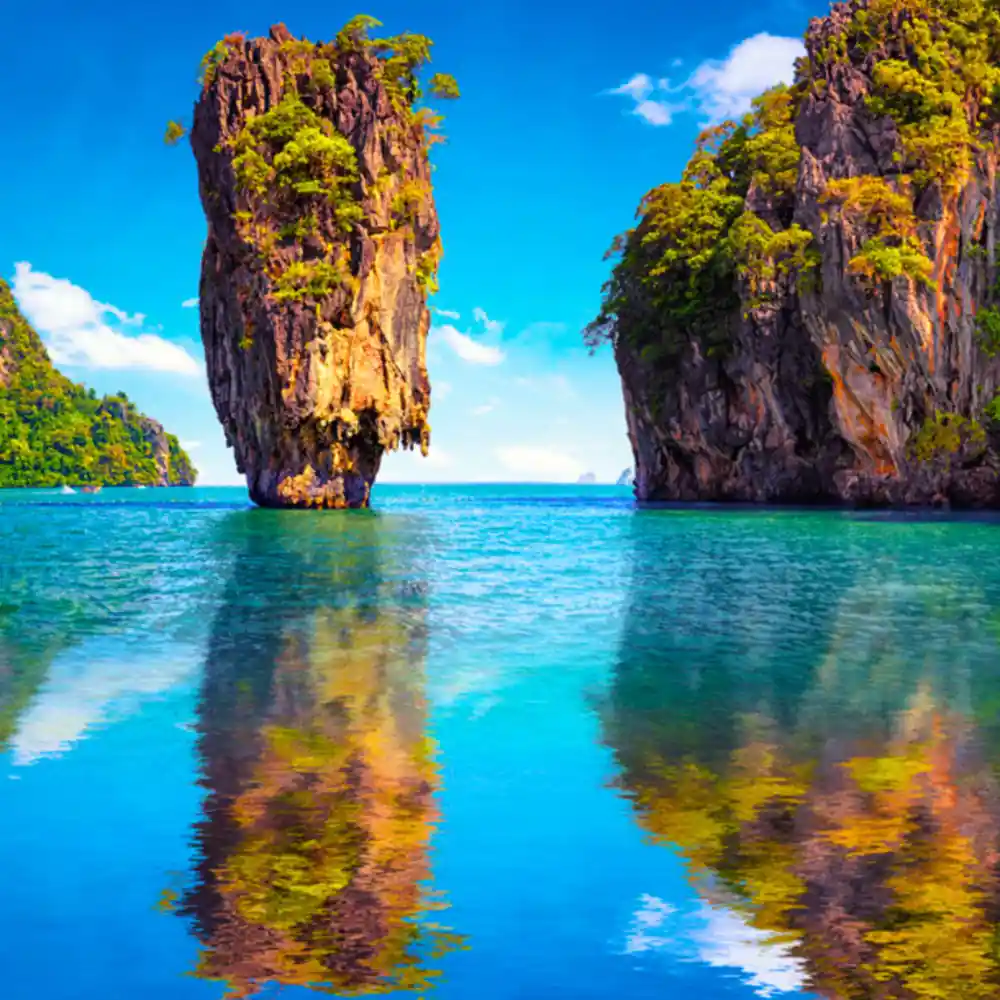
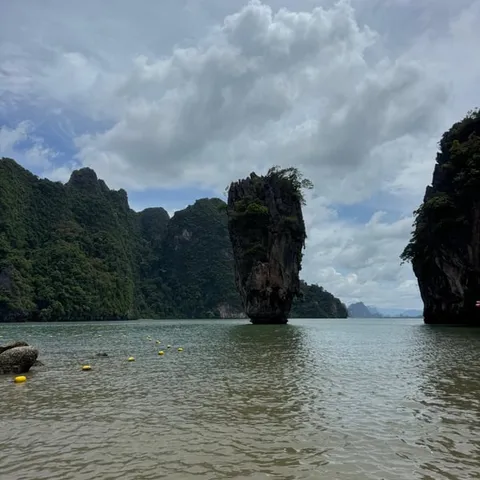
James Bond Island is the newest layer of that story. James Bond Island, officially Ko Tapu on the twin-peaked islet of Khao Phing Kan, is a limestone spire in Phang Nga Bay that was made world-famous by the 1974 James Bond film The Man with the Golden Gun.[10] The spire had been a landmark for boats long before film crews arrived, and it still is one for anyone crossing the bay today.
Reading the paintings from your sea canoe
Sea canoes put you at the height the painters worked from. You sit low, the rock rises above you, and the cave mouths and overhangs that look like dark smudges from a big boat turn into openings you can enter. The tour booked from this site pairs a speedboat for the longer hops with canoes at the islands, and live guiding is available in English, Spanish and German.[6]
Its itinerary covers Panak Island, Ko Hong, James Bond Island and Phang Nga Bay, and the day runs 8 hours, with pickup available.[6] Because the exact route depends on tides and weather, ask your guide early which cliffs and caves are planned and where painted rock sits on your stretch of coast.
A few small things help. Take a compact torch for dim cave entrances and give your eyes time to adjust before you look at pigment. Keep your hands off painted rock, since skin oils and sun cream do lasting damage. Faint red figures read best in soft morning or late afternoon light, so look carefully when the sun is low instead of squinting at noon.
The deep past beneath your paddle
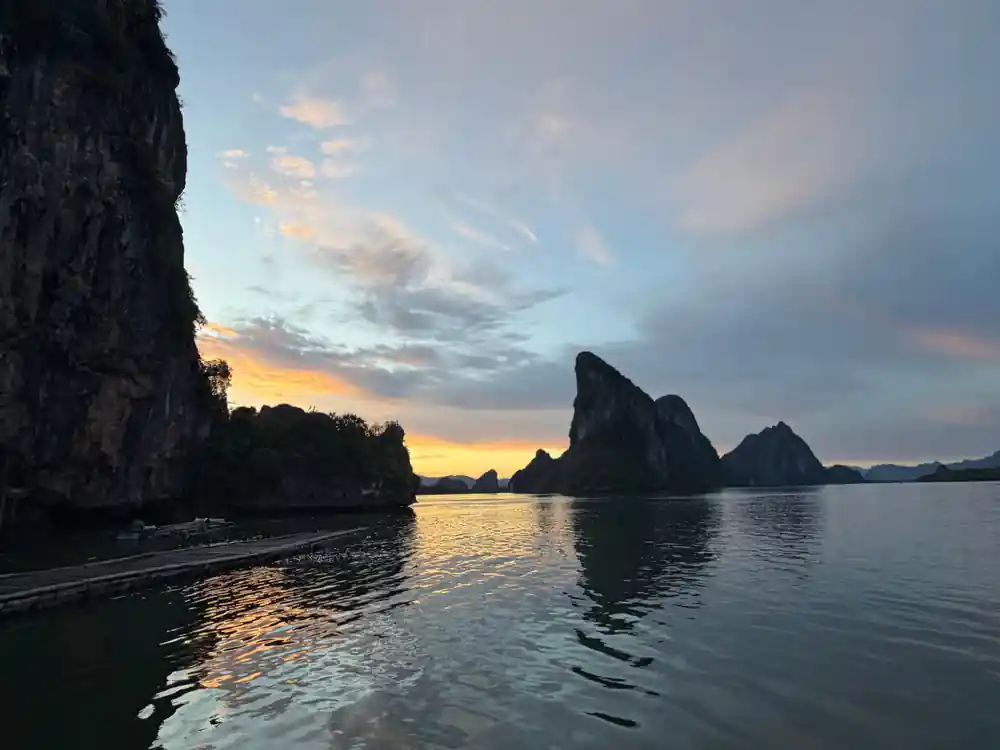
The bay keeps writing. The glow you may see on an evening paddle is made by dinoflagellates, microscopic single-celled organisms that emit blue-green light when disturbed.[5] Some night kayak tours in Phang Nga Bay include a sunset paddling experience under the evening sky where participants can see bioluminescent plankton glowing in the water.[11]
There is a symmetry in that: pigment dried on limestone above the waterline, living light moving in the water below it. One is a message from people who lived here long ago; the other is a natural display that has been running far longer than anyone has been watching. Both are best met slowly, in the dark, without a lot of noise.
Plan the day around the water rather than the clock. Shade for the hot hours, a hong when the swell is low, painted rock in soft light and plankton after dark. Do that and the bay's history stops being a subject in a book and becomes the thing you are floating in.
From prices of Phang Nga Bay boat tours
From prices on the GetYourGuide listings for these Phang Nga Bay tours:[6][7][8][12].
What a Phang Nga Bay boat day costs
US dollar from prices on these GetYourGuide listings:[6][7][8][12].
When to book and when to go
Your day around the bay
Book the right boat
A speedboat covers more ground in a shorter day; a big boat is steadier and easier on anyone who dislikes chop. Match the boat to your group.
Dress for salt and sun
Quick-drying clothes, a hat, sunglasses and shoes you can slip off at the pier. A dry bag keeps phones safe through cave entries and spray.
Learn three shapes
A cliff is a wall, a hong is a room inside it, and a midden is a kitchen heap on the shore. Once you can name the three, the bay reads like a map.
Look before you photograph
Ochre is fragile and fades in strong light and flash. Ask your guide to point the paintings out, then let your eyes adjust before you take a photo.
Save the dark for last
If your day runs into the evening, keep some energy for the plankton watch at the end of the trip, after the boats slow down and the lights go off.
See the painted cliffs, the hidden hongs and the glowing water
from US$89Reserve now & pay later