Quick summary
- Hongs are enclosed lagoons inside towering limestone cliffs, reached by lying flat in a kayak and paddling through narrow cave passages.[1]
- Ao Phang Nga National Park was established in 1981 and spans approximately 154 square miles (400 square kilometers).[2]
- The tour booked from this site runs 8 hours from US$88, with pickup available and free cancellation up to 24 hours in advance.[3]
- November to February is the ideal time for a beach vacation in Phang Nga Bay, with sunny tropical weather and festivals.[4]
- Foreign adults pay a 300 baht entrance fee at Ao Phang Nga National Park, and alcohol is not allowed in Thailand's national parks.[5][6]
- Top choice Plankton and sea canoes from US$88 Rating4.77 from 2,619 reviews[3]Duration8 hours[3]Guide languagesEnglish, Spanish, German[3]PickupPickup available[3]CancellationCancel up to 24 hours ahead[3] Check availability
- Twilight canoe tour from US$106 Rating4.90 from 1,954 reviews[7]Duration1 day[7]Guide languagesEnglish[7]PickupPickup included[7]CancellationCancel up to 24 hours ahead[7] See this tour
- Big boat canoeing from US$48 Rating4.72 from 4,048 reviews[8]Duration10 hours[8]Guide languagesEnglish, Thai[8]PickupPickup included[8]CancellationCancel up to 24 hours ahead[8] See this tour
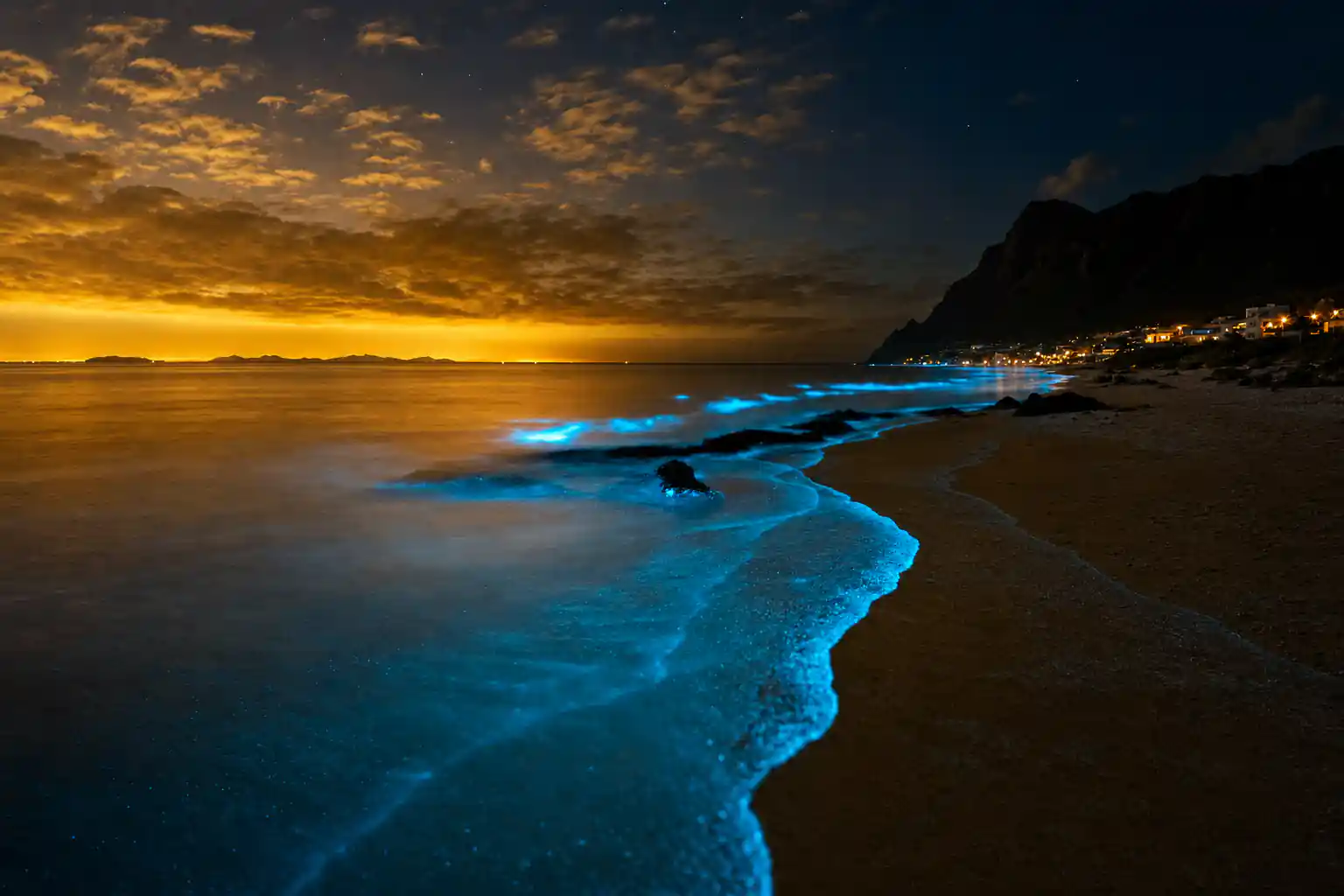
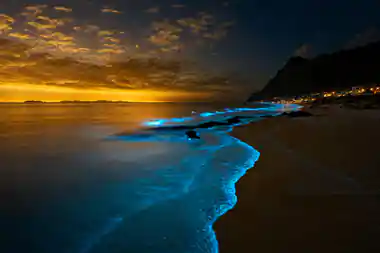
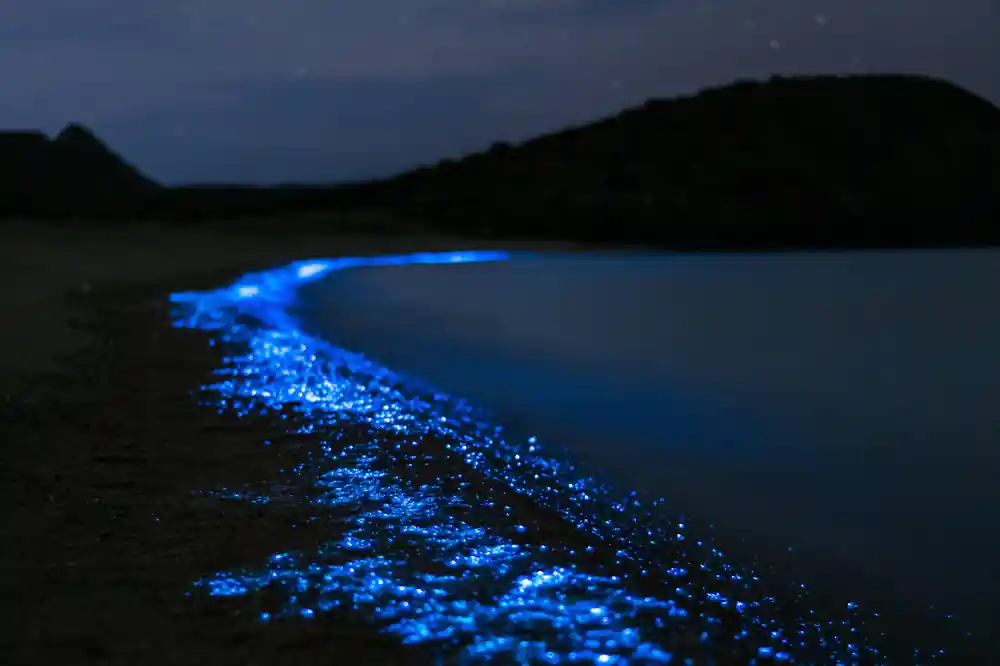
Bioluminescent plankton in Phuket are caused by dinoflagellates that emit blue-green light when disturbed, creating a glowing ocean effect best seen in dark, calm waters.
Is Ao Phang Nga National Park kayaking worth it?
Booking essentials
Park rules and on-water kit
Ao Phang Nga National Park kayaking at a glance
Ao Phang Nga National Park was established in 1981 and spans approximately 154 square miles (400 square kilometers), a drowned landscape of limestone towers, mangrove creeks and shallow green water.[2] From a boat deck the bay looks like a painting. From a canoe you notice the details instead: the tide line on the rock, the smell of the mudflats at low water, the way the cliffs shift from grey to gold as the sun drops. Kayaking puts you at water level, and this is a bay that makes most sense from there.
Most Ao Phang Nga National Park kayak trips start on the Phuket side of the bay, with a van ride to a marina and a crossing out to the islands. A typical day mixes paddling around the rocks with stops at the well known viewpoints, then the run back to the pier and the van home. The canoes used here are stable inflatable craft that sit low in the water, so the limestone rises above your shoulders rather than in front of you, and every overhang looks twice as tall from a canoe seat.
The bay is busy. Speedboats, longtails and big boats all work the same cluster of islands, and the quietest minutes of any tour are usually the ones spent inside a cave or a hong, where only a small paddle craft can follow. That contrast is the whole appeal of canoeing here: bright, crowded water on one side of the rock, and a shadowy chamber on the other.
What a hong is, and why it changes the day
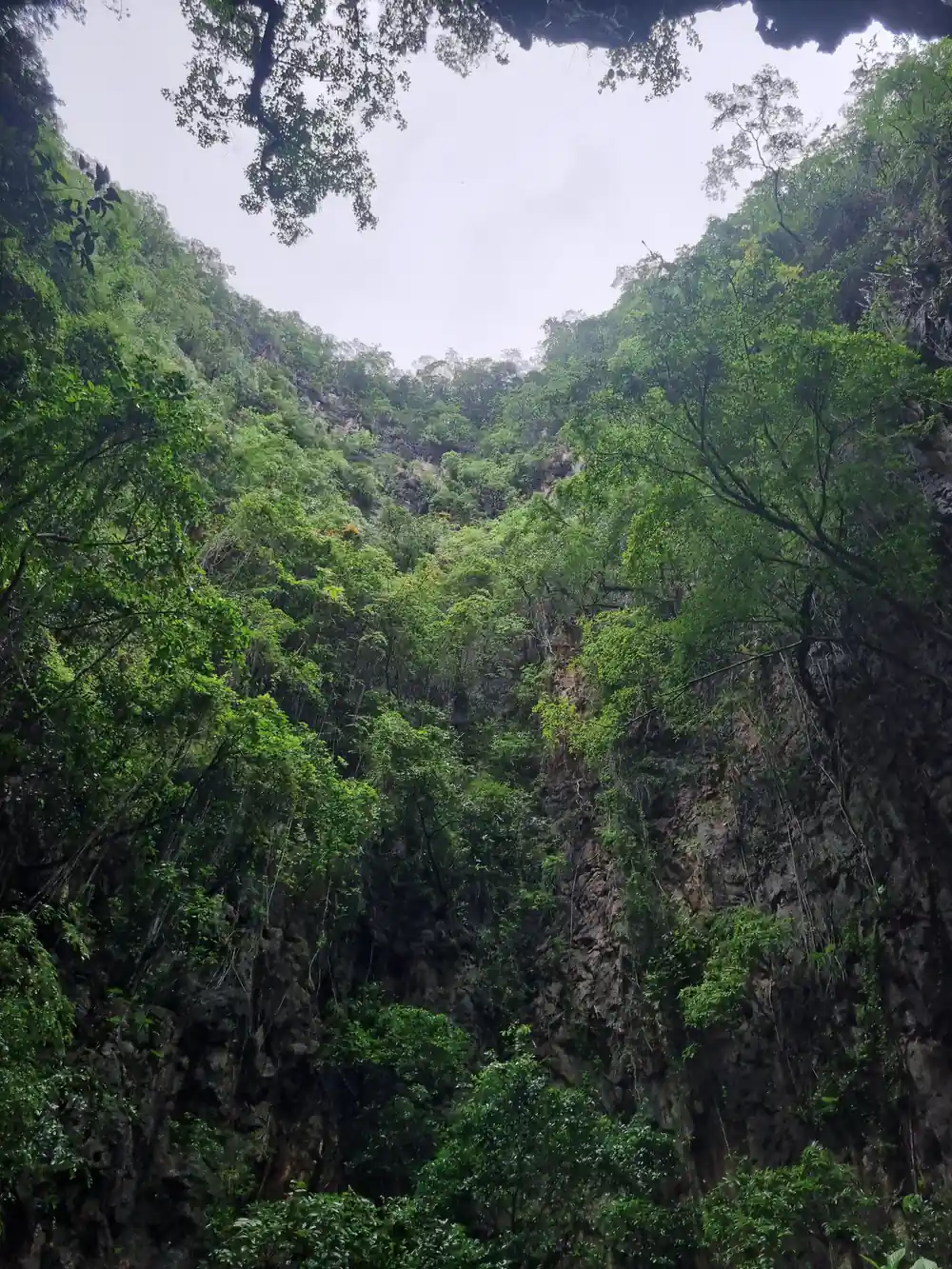
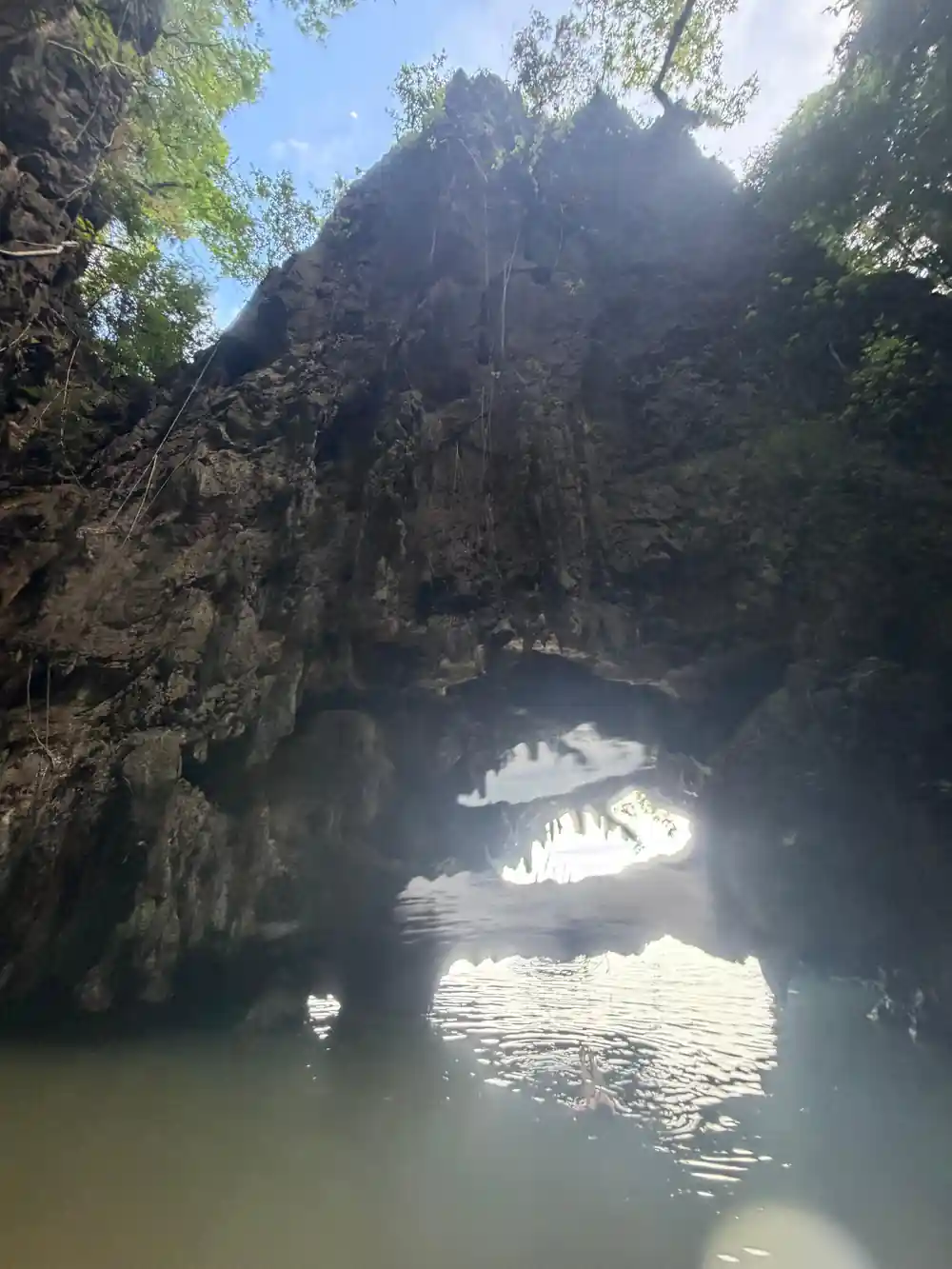
The word hong means room in Thai, and these places do feel like rooms: enclosed lagoons that exist like secret chambers within towering limestone cliffs.[1] They can only be reached by lying flat in a kayak and paddling through dark, narrow cave passages that open into hidden worlds.[1] On the way in you see a slot of shadow, an overhang low enough to duck under, and a few metres of black water. On the way out you are inside a ring of rock with trees on the rim and the sky directly overhead.
Cave entrances are shallow and tidal. A hong visit is never a fixed item on a schedule, and a cautious skipper may swap one stop for another if the swell is running. Some night kayak tours in Phang Nga Bay include a sunset paddling experience under the evening sky where participants can see bioluminescent plankton glowing in the water.[9] If the glow is the reason for your trip, choose a departure that keeps you on the water after dark.
Kayak and canoe are used loosely in Thailand. The craft on these tours is usually an inflatable boat that takes two passengers, low-sided enough to slide under the overhangs, and the same design handles both the tight cave passages and the open crossing back across the bay. Sitting in the front seat means a clear view forward; the back seat gets the wider picture.
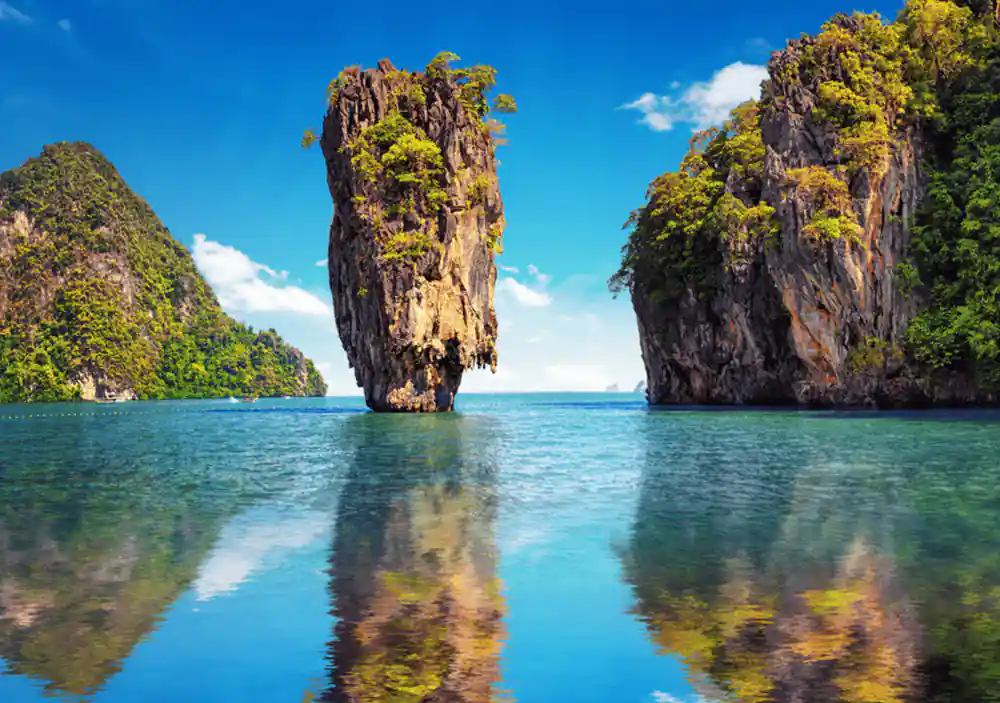
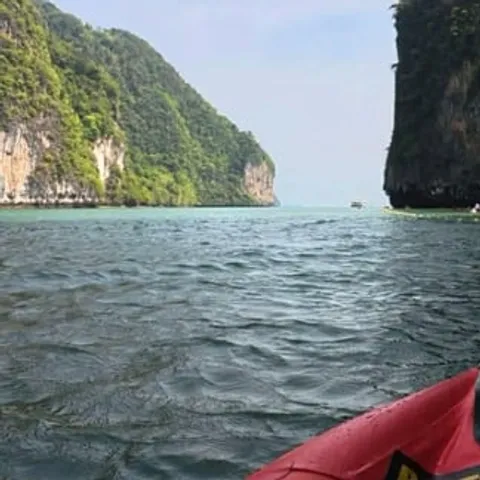
Limestone cliffs and shallow turquoise water on the approach to the hongs
Ao Phang Nga National Park canoeing: the stops
The Phuket: Phang Nga Bay Bioluminescent Plankton and Sea Canoes route runs from pickup by van to Phuket Boat Lagoon, then by speedboat to Panak Island, Ko Hong in Phang-nga Province, James Bond Island and Phang Nga Bay before the return.[3] It is a full loop out into the islands and back, with the paddling spread through the day and the last stretch on the water after the sun has gone.
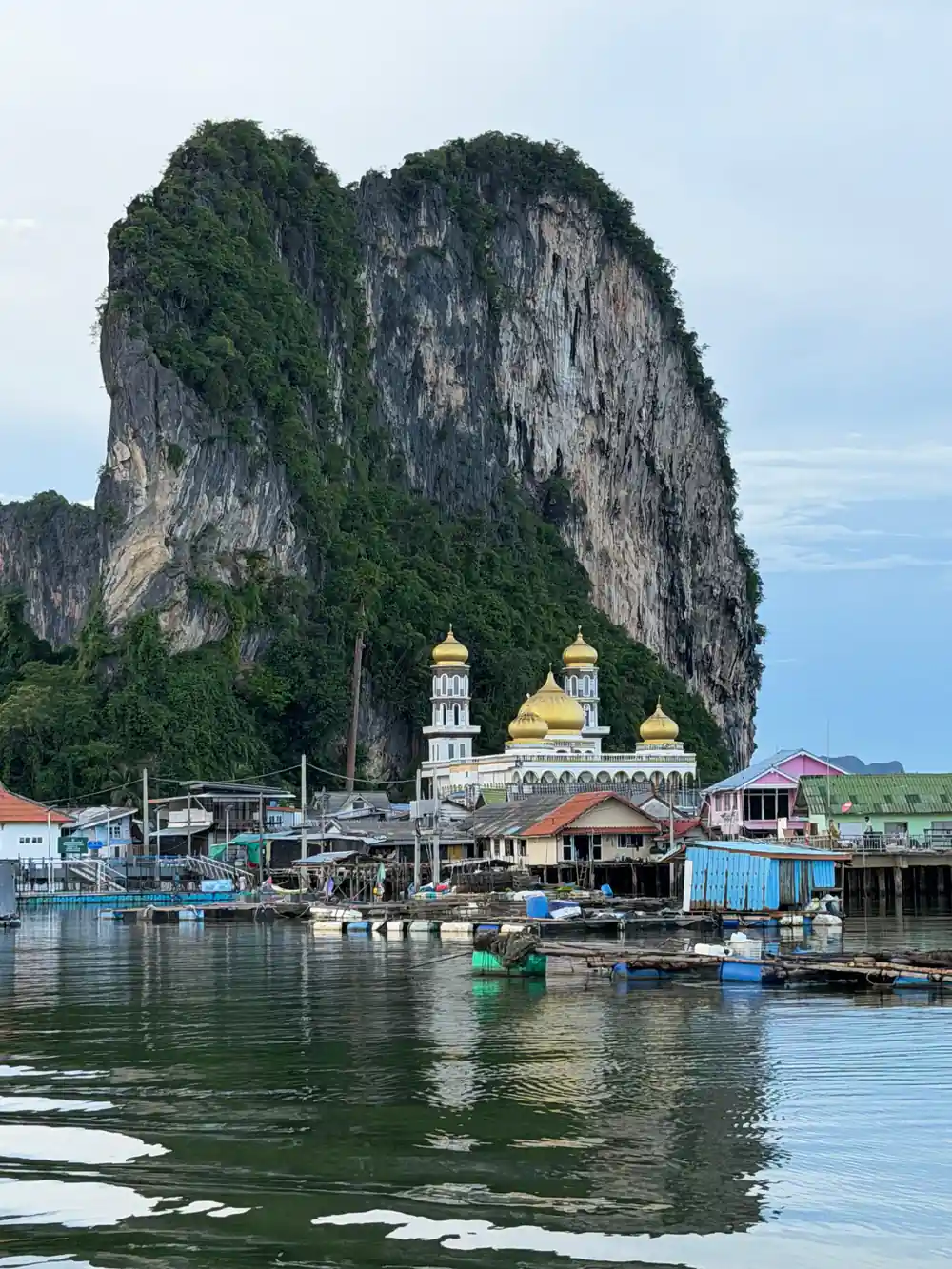
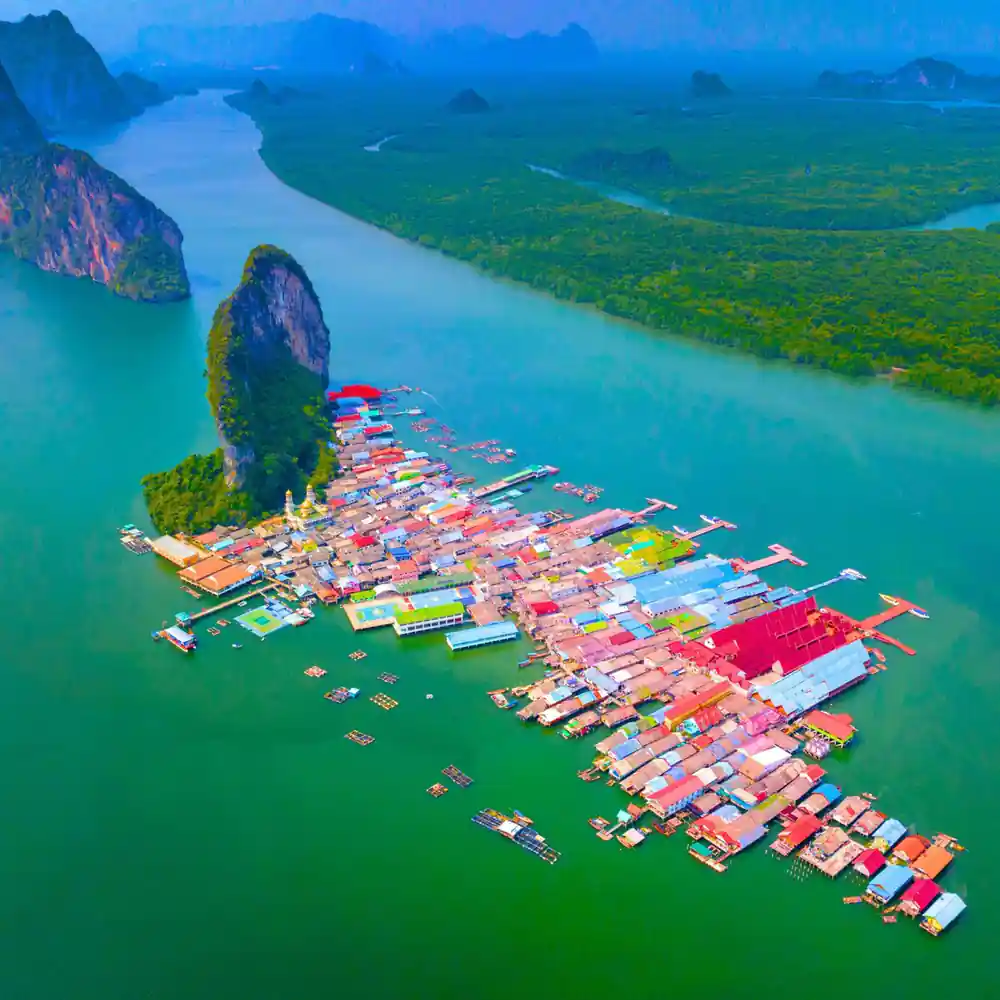
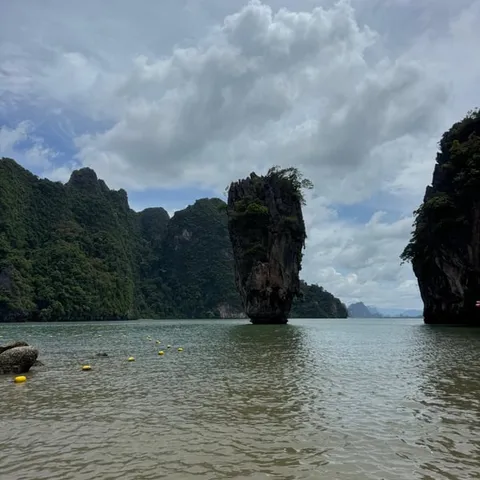
James Bond Island, officially Ko Tapu on the twin-peaked islet of Khao Phing Kan, is a limestone spire in Phang Nga Bay that was made world-famous by the 1974 James Bond film The Man with the Golden Gun.[10] Nearby, Koh Panyee is a floating village in Phang Nga Bay that was built entirely on stilts by Indonesian fishermen and sits at the foot of a towering limestone cliff.[11] From the water you see the whole village standing on posts above the tide, with boats moored between the houses.
Older marks on the bay are easy to miss. Prehistoric cave paintings at Khao Khian are estimated to be around 3,000 to 5,000 years old, and the red and brown drawings can be seen directly on the limestone cliffs, depicting animals, boats and various symbols.[12] They are not on every route, so ask before you book if rock art is something you want to see.
Day canoes, twilight paddles and glowing plankton
The tour booked from this site is listed from US$88 and rated 4.77 from 2,619 reviews, with scores of 4.9 for the guide, 4.8 for transportation and 4.6 for value for money.[3] It runs 8 hours, with a live tour guide in English, Spanish and German, pickup available and free cancellation up to 24 hours in advance for a full refund.[3]
Another way to see the glow is the Phuket: Twilight Sea Canoe and Highlight Glowing Plankton trip, listed from US$106 and rated 4.90 from 1,954 reviews.[7] It runs 1 day, keeps a van in the route, and calls at Phang Nga Bay, James Bond Island and Panak Island.[7]
The big-boat option is listed from US$48 and rated 4.72 from 4,048 reviews, over a 10-hour day with English and Thai guides and a skip-the-ticket-line entry.[8] It leaves from Ao Po Pier and calls at Panak Island, Ko Hong, Phang Nga Bay, James Bond Island and Khao Phing Kan.[8] A larger vessel means more deck space between paddles, which helps if you are travelling with young children or with anyone who prefers a steady crossing to a fast one.
from US$88
The tour booked from this site runs 8 hours, is rated 4.77 from 2,619 reviews and is listed from US$88.[3]
Mangroves, cliffs and reading the water
The park is not only limestone. Mangrove species found along the Phang-Nga coast include Rhizophora apiculata, Rhizophora mucronata, Avicennia alba, Avicennia officinalis, Bruguiera cylindrica, Bruguiera parviflora, Xylocarpus granatum and Xylocarpus moluccensis.[13] These trees grow on stilt roots and knee roots that stand clear of the mud at low tide, and the channels between them are often the calmest water you will paddle all day.
Reading the water is half the fun of a canoe. Glassy patches mean shelter behind a cliff. Ripples crossing a channel mean a breeze funnelling between islands, and a line of foam usually marks a change in depth over a sandbar. Mangrove edges reward slow paddling, because small fish, crabs and birds use the roots as cover, and herons will often hold their ground while you drift past.
If you can choose, paddling early in the day tends to bring calmer water and softer light than the middle of the afternoon. High sun flattens the cliffs, while late light picks out the texture of the rock and turns the shallow water a brighter green.
Fees, rules and what to wear on the water
Budget for the park itself: Ao Phang Nga National Park is a Category 3 national park with a foreign adult entrance fee of 300 baht.[5] One rule catches people out. Alcohol is not allowed in Thailand's national parks, so a cold beer on the boat is not an option.[6] Save the drinks for the hotel.
What you wear decides how much you enjoy the caves. Quick-dry shorts and a light shirt beat denim and heavy cotton, which stay wet for hours. Bring a dry bag for phone, wallet and camera, a waterproof pouch you can hang around your neck, sun cream for the exposed stretches on deck, and a spare set of clothes waiting in the van. Shoes that can get wet are better than loose sandals, and a light long-sleeved top is worth having for the middle of the day.
If you are travelling with children, ask about life jacket sizes before you leave the pier, keep young children between adults in the canoe, and watch your footing on the walkways of a floating village, which can be slippery at low tide. Cameras survive the day far better in a sealed bag than around your neck.
How to book your Phang Nga Bay canoe trip
For a beach holiday, November to February is the ideal time to visit Phang Nga Bay, with sunny tropical weather and festivals to enjoy.[4] That window pairs well with beach days either side of a canoe trip. Where you can, keep your dates flexible, because sea state decides more about a cave and hong itinerary than the calendar does, and a skipper who can move a trip by a day may give you a much better morning on the water.
On the tour booked from this site, pickup is available and you can check availability for pickup options when you reserve, with live guiding in English, Spanish and German.[3] Reserve now and pay later is offered, and free cancellation runs up to 24 hours in advance for a full refund.[3] The day lasts 8 hours and starting times are shown when you check availability, so leave the evening free afterwards.[3]
From-prices for Phang Nga Bay canoe and kayak tours
From-prices per traveller in US dollars for these GetYourGuide canoe and kayak listings.[3][7][8][14][15]
Compare from-prices for two people
From-prices per traveller in US dollars for these GetYourGuide listings.[3][7][8][15]
When to book and when to go
Plan your Phang Nga paddle
Choose your boat
Speedboats reach the islands quickly, while big boats move at a gentler pace with more deck space between paddles.
Book flexibly
Free cancellation up to 24 hours in advance and reserve now pay later apply to the plankton and sea canoe tour.[3]
Pack for water
Quick-dry clothes, a dry bag, a waterproof pouch for your phone and sun cream. Leave the rest in the hotel.
Learn the cave drill
In a hong you lie flat in the kayak and paddle through dark, narrow cave passages, so keep hands inside.[1]
Plan around the dark
The glow comes from plankton that light up when disturbed, and it reads best in dark, calm water.[16]
See the plankton glow from a sea canoe in Phang Nga Bay
from US$89Reserve now & pay later